

Most people describe Cozumel in terms of what they can see. The visibility is excellent. The water is clear. The reefs are healthy. The current carries you along, so you can spend more time observing and tiring your body out. All of that is true. But none of it quite captures or explains the thing divers keep coming back for and what makes Cozumel one of the best dive destinations in the world.
Cozumel is one of the best dive destinations in the world because of three things that rarely exist at the same reef: a consistent current that removes the effort of staying in position, a coral system inside the Mesoamerican Barrier Reef with genuine density and health, and water that holds 100-foot visibility on an ordinary day. Together, they change what the dive feels like from the inside out.
The dive feels different here, not just because of what you see visually, but because of what you experience in your body.
I have been diving these reefs in Cozumel for years, and I’ve gotten used to women expressing some version of “Why did that feel so much easier?” It is worth exploring that feeling because the conditions here are not accidental, and understanding them changes how you prepare for the water.
What the Current Actually Does
Cozumel sits inside the Cozumel Channel, fed by the Yucatan Current, one of the most consistent current systems in the Caribbean. The current generally runs south to north along the western wall of the island, though direction varies by site and conditions, and most reef dives here are drift dives by design. You enter the water, you let the current take you, and you glide past the reef.
For many women, that experience sounds a bit stressful. Current often means unpredictability. Unpredictability can spike anxiety before you even hit the water. But in practice, the opposite happens.
Drift diving in Cozumel actually removes the effort that usually keeps a diver in her head. You’re not fighting to hold a position, and you’re not burning air trying to stay still. The current does the work, and because that work is off your plate, something in the body settles. Breathing slows without you even deciding to slow it. Finning gets quieter. The dive becomes less about managing yourself and more about being present where you already are.
That is one of the reasons women who carry tension underwater find Cozumel genuinely surprising. The conditions do work. If you want to understand exactly how drift diving works before you get in the water, the full breakdown is in Drift Diving in Cozumel: What It Is, How It Works, and What to Expect.

The Reef System and Why Coral Health Matters
Cozumel sits within the Mesoamerican Barrier Reef, the second-largest coral reef system in the world. The reef runs the length of this coastline, and Cozumel’s position within it means the diving here benefits from decades of active protection and coral recovery work.
A healthy reef dives differently from a degraded one. The density of marine life is different, and the color is different. Water moves through living structure rather than over bleached rubble, and you notice that difference even before your eyes have fully adjusted to depth. The same current that carries you through the dive also keeps the water clear. Visibility here ranges from 80 to 100 feet on a normal day, sometimes more.
The Depth Profile and Why It Matters
The reef walls here drop fast. Some sites go from fifteen feet to a vertical wall within a short swim. Others plateau at depth before dropping again. Shallow sections are bright and busy, while wall sections open into blue. The structure changes as you move through it, and because the current is moving you, the change keeps coming. You are not hovering in one place waiting for something to happen. The reef is already doing it.
The Marine Life Is Not Incidental
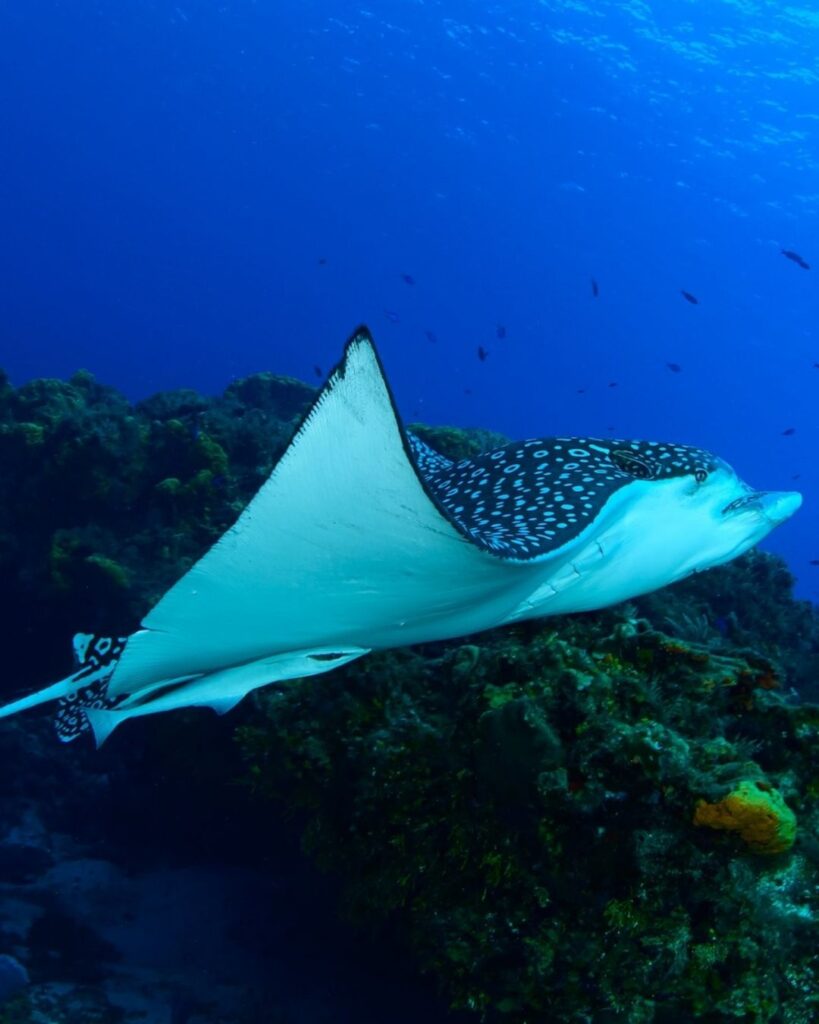
While diving Cozumel, you can expect regular sightings of eagle rays moving through the current and turtles moving through shallower sections of the wall. Splendid toadfish, found almost exclusively in Cozumel, live in the crevices. French angelfish, Nassau grouper, and spotted drum are here, too. The reef is dense and occupied.
Why Cozumel Feels Easier Than Most Reefs
Experienced divers sometimes describe Cozumel as a forgiving environment, and it’s true that many Cozumel dive sites give a lot more than they demand from you.
Water temperature remains between 77 and 84 degrees Fahrenheit year-round, eliminating the thermal stress that affects air consumption and comfort at many other reef destinations. Visibility is consistently high. The drift current means buoyancy is easier to manage because you are not spending energy fighting to hold position. And the dive infrastructure here is well-developed, which means the logistics that usually create background noise before a dive are generally handled.
None of that is a coincidence. Cozumel’s conditions are the product of geography and decades of reef protection, producing the same result. You feel it the moment you drop in.

What This Means for How You Dive Here
If you’ve had dives that felt labored, dives where you were working hard to enjoy yourself, where you felt like you were fighting against the conditions, Cozumel tends to change that without you having to do anything differently.
The current does the moving. The reef provides the structure. The marine life is there without having to hunt for it. What is left is the actual dive, and for most women who come here, it is better than they ever expected.
If you are considering a structured trip, the Rise & Dive℠ Signature Cozumel Dive Trip is built around exactly this kind of diving. Small group. Intentionally paced. Led by someone who knows these reefs well.
To calm and confidence,

Frequently Asked Questions
What makes Cozumel one of the best dive destinations in the world?
Cozumel combines three things that rarely coexist: a consistent drift current fed by the Yucatan Current, exceptional reef health within the Mesoamerican Barrier Reef system, and year-round visibility between 80 and 100 feet. The result is diving that feels easier and more immersive than most destinations.
Is Cozumel good for divers who feel nervous or tense underwater?
It tends to be. The drift-dive format removes the effort of holding position, allowing breathing to settle naturally. Women who carry tension underwater often find that Cozumel’s conditions do that work for them, without any additional technique required.
What marine life can you expect to see while diving in Cozumel?
Eagle rays, sea turtles, French angelfish, Nassau grouper, spotted drum, and the splendid toadfish are found almost exclusively in Cozumel. The reef is healthy and consistently populated. What you encounter depends on depth, site, and season.
What makes Cozumel drift diving different from other destinations?
The current here is predictable and well-understood by local operators. The result is drift diving that feels supported rather than uncertain. You move with the reef rather than chase it, and the consistent flow means sites dive similarly across seasons, making trip planning reliable.
