
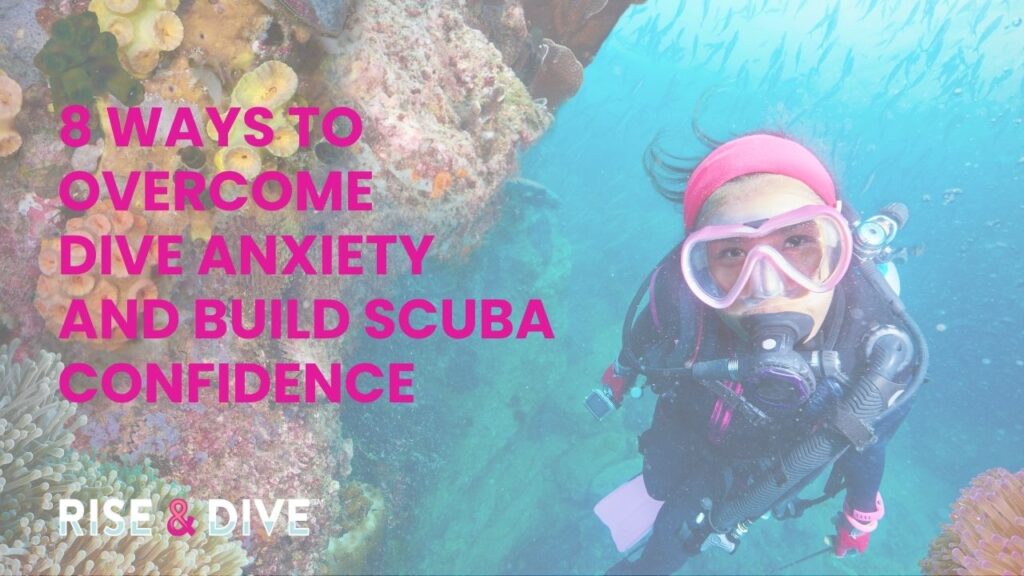
If one of your goals is to learn how to overcome dive anxiety, then you are not alone. Dive anxiety, scuba anxiety, and lack of confidence while scuba diving affect far more divers than most people admit. New divers feel it. Certified divers feel it. Even experienced divers can feel it when conditions change or their confidence gets shaken.
But it’s essential to keep in mind that dive anxiety is not a sign of failure. It is a nervous system response. And you can train your nervous system to become more resilient in the face of anxiety.
Confidence underwater is not about forcing yourself to be brave. It is about learning how to remain calm through experience, breath, and presence. This is the moment when diving itself becomes the teacher.
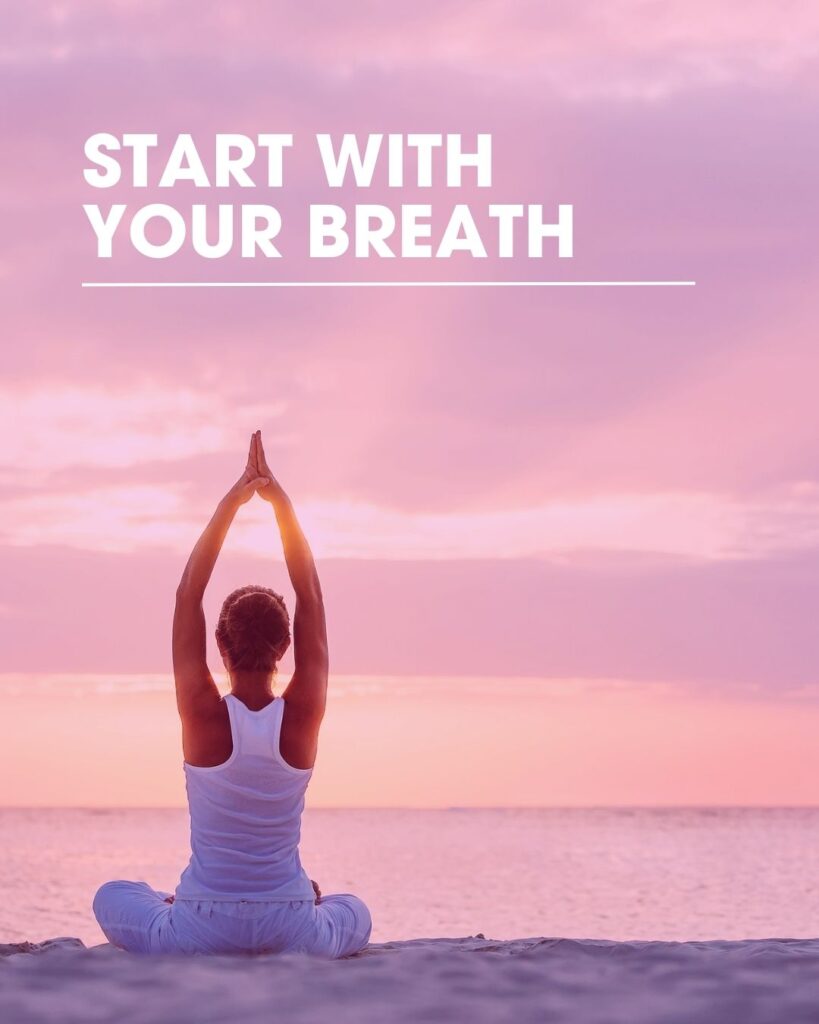
1. Start With Your Breath
Breath is the foundation of calm–whether underwater or on land.
Slow inhales paired with longer exhales support nervous system regulation and steady breathing. This is not just a relaxation technique. It is one of the most effective breathing techniques for divers to overcome scuba anxiety because breath is the fastest way to communicate safety to the body.
What makes this especially powerful is that you do not have to wait until you are in the water to train your breathing. You can practice breathing on land through simple, repeatable habits, such as extended exhales, gentle breath awareness during walks, seated breathing practices, or pairing breath with slow movement, such as yoga or stretching. These practices also directly support control and stability, which is why breath plays such a central role in buoyancy training for divers on land.
Training breath on land helps your body learn calm, control, and balance before you ever put on a mask.
Then, when you return to the water, your body recognizes that state of calm. As your breath slows, your nervous system receives the signal that it is safe. Calm underwater breathing creates stability, improves buoyancy and air consumption, and supports clearer decision-making throughout the dive. Over time, breath becomes an anchor you can rely on both underwater and in everyday life on land.
2. Name the Fear
Dive anxiety often feels overwhelming because it feels vague and uncertain.
Can you put the source of your fear into concrete terms? Are you afraid your mask will leak? Of lack of buoyancy control? Currents? Equipment concerns? The unknown?
When you name the fear, you have the power to turn anxiety into information. You cannot overcome scuba anxiety if you cannot identify and point to what is driving it. Clarity gives you something specific to train for, rather than something abstract to fear.
3. Start Small and Start Slow
Confidence in scuba diving is built through exposure, not pressure.
Shore dives, shallow dives, and skills practiced on land give your nervous system time to adapt. Each calm experience then becomes evidence of safety that you can build on.
Momentum beats perfection. Slow progress is not falling behind. It is how scuba confidence becomes embodied instead of forced.
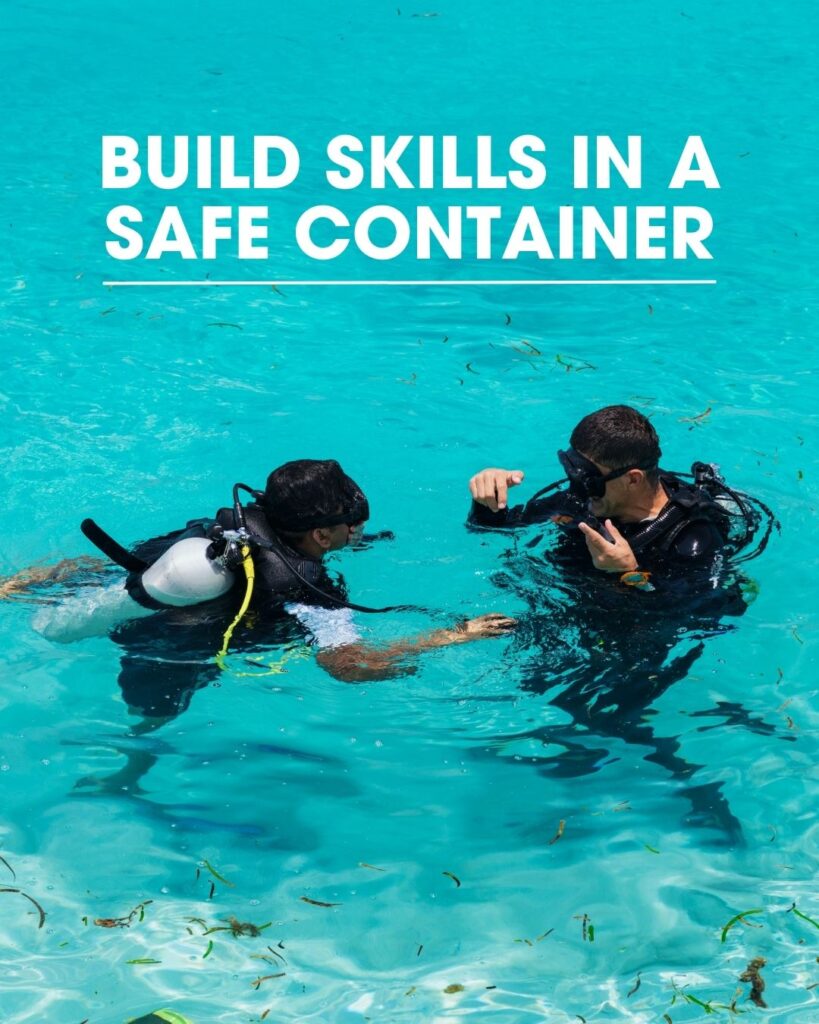
4. Build Skills in a Safe Container
Who you dive with matters.
A supportive instructor or guide creates an environment where learning feels safe. Certification teaches skills, but confidence often develops afterward through one-on-one guidance, refresher sessions, or coaching tailored to your pace.
This is where many divers begin overcoming scuba anxiety, not by doing more, but by feeling supported while doing less.
5. Diving as a Somatic and Meditative Practice
Calm is trainable, and confidence is learnable. One of my favorite parts about diving is that it can be a somatic and meditative practice in motion.
Underwater, you are practicing staying present through slow breathing, body awareness, and controlled movement. Each dive trains your nervous system to respond instead of react. This is somatic diving at its purest.
One of the best parts is that training applies not only to how you react in the ocean. The regulation you learn underwater becomes accessible in your everyday life because your body has learned calm through experience, not theory. It’s a cycle that works in your favor.
6. Use Somatic Awareness to Stay Grounded
Somatic awareness underwater helps you stay present by keeping your attention in your body rather than in the abstract spiral of what might go wrong.
Soft movement, sensory awareness, and a mindful breath cue the nervous system to return to a state of safety. Feeling the water move past your skin, noticing the rhythm of your fin kicks, and sensing your breath moving through your body. These are not distractions. They are anchors. This kind of nervous system regulation, while diving, reduces panic responses and builds confidence through direct experience.
What makes somatics especially powerful is that this awareness can be practiced both in and out of the water. Somatic practices on land help you develop the ability to notice tension, regulate breath, and return to the present moment. Diving then becomes a living, moving extension of that practice. Each reinforces the other, a relationship explored in greater depth in my article on somatics and scuba-diving empowerment.
Together, somatic awareness and diving create a steady feedback loop. Calm builds confidence. Confidence builds trust. Trust allows you to stay grounded, both beneath the surface and in everyday life.
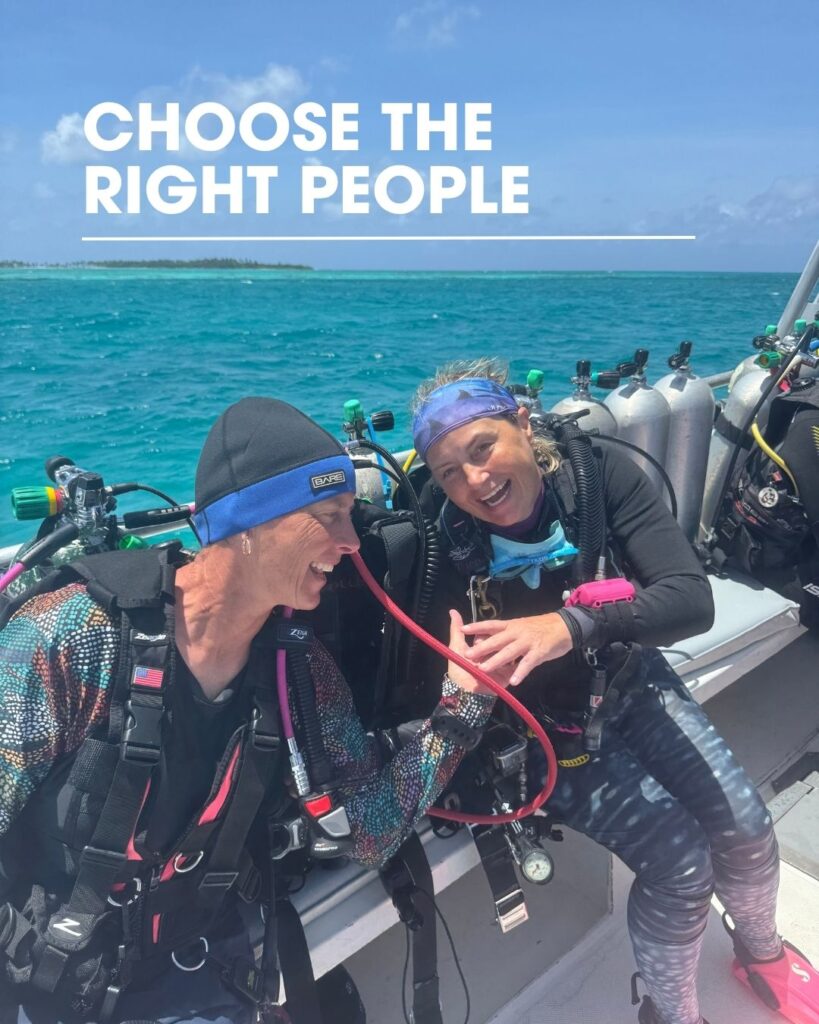
7. Choose the Right Dive People
Not every dive group helps confidence grow. Some environments rush, minimize concerns, or treat anxiety like something to push through. That does the opposite of what your nervous system needs.
If scuba diving anxiety is part of your experience, who you dive with matters. Confidence builds faster when the people around you respect pacing, welcome questions, and value emotional safety as much as skill.
This is where structured group trips led by experienced, trusted hosts change everything. Well-designed experiences, such as Rise & Dive group trips, are created to reduce uncertainty and pressure. Clear planning, thoughtful logistics, and supportive group dynamics remove guesswork before it ever shows up underwater. Less unpredictability means the nervous system can settle.
When you feel safe with the group and supported by the host, your attention shifts naturally. Breathing slows. Awareness sharpens. The dive becomes the focus, not managing stress or expectations. The right dive buddies and the exemplary leadership turn anxiety into trust, and trust into ease. That is how confidence grows, quietly and sustainably, one calm dive at a time.
8. Remember You Are Not Alone & You Are Not Behind
Remember: there is no timeline for confidence.
Every calm breath matters. Every small dive counts. You are allowed to learn this gently and deliberately, and at your own pace.
And you do not have to navigate dive anxiety alone. Women In Scuba Empowered (WISE) exists to support women divers as they build calm, confidence, and trust both in and out of the water. Inside the community, you will find grounded conversation, shared experiences, practical tools, and encouragement from women who understand what it is like to work through fear at your own pace.
WISE also hosts supportive dive trips through Rise & Dive that offer opportunities to practice these skills in real dive environments, with structure, intention, and community. These experiences are designed to reinforce confidence, ease, and reduce pressure or performance anxiety.
The WISE dive retreats are a space for learning, connection, and growth. On land. Underwater. And everywhere in between.
Rising with every breath.

Frequently Asked Questions About Dive Anxiety
What is dive anxiety, and is it common?
Dive anxiety is a normal nervous system response to unfamiliar sensations, perceived risk, or loss of control underwater. It is very common and affects new divers, certified divers, and even experienced divers. Feeling anxious does not mean you are a bad diver. It means your body is trying to keep you safe.
How do I overcome dive anxiety?
Learning how to overcome dive anxiety starts with working with the body instead of pushing through fear. Breath regulation, gradual exposure, skill practice in supportive environments, and somatic awareness all help train the nervous system to feel safe underwater. Confidence builds through repetition, not pressure.
Can breathing techniques really help with scuba anxiety?
Yes. Breathing techniques are one of the most effective tools for managing scuba anxiety. Slow, controlled breathing signals safety to the nervous system, improves buoyancy and air consumption, and helps prevent panic responses. Practicing breath control on land through exercises similar to buoyancy training for divers enables you to access calm underwater.
Can I work on dive anxiety on land?
Absolutely. Many tools for managing scuba diving anxiety can be practiced on land. Breathwork, somatic awareness, and buoyancy-focused exercises help train the nervous system before entering the water. This preparation often makes dives feel calmer and more controlled.
Does somatic awareness help with scuba diving anxiety?
Yes. Somatic awareness helps divers stay present by focusing on physical sensations rather than fear-based thoughts. This reduces panic and builds confidence through direct experience. Diving itself becomes a somatic and meditative practice, reinforcing calm both underwater and in everyday life. This process is explored in greater depth in the article on somatics and scuba diving empowerment.
Is dive anxiety the same as panic underwater?
No. Dive anxiety often shows up as nervousness, anticipation, or tension, while panic is a stronger fight-or-flight response. Anxiety can escalate into panic if it is ignored or pushed through. Learning regulation skills early helps prevent panic from developing.
Should I keep diving if I feel anxious?
That depends on the level of anxiety and the environment. Mild anxiety can often be worked through with proper pacing, guidance, and skill practice. If anxiety feels overwhelming, it is essential to slow down and seek supportive instruction rather than forcing yourself to continue.
Do group dive trips help or worsen dive anxiety?
It depends on how the trip is structured. Rushed or unstructured group diving can increase anxiety. Structured group trips with experienced hosts, small groups, and an emphasis on pacing and emotional safety can significantly reduce dive anxiety. Well-held experiences like the Rise & Dive group trips are designed to support calm, confidence, and connection rather than pressure.
Can dive anxiety improve over time?
Yes. Dive anxiety often improves as the nervous system gains more positive, regulated experiences underwater. With breath training, somatic awareness, and supportive diving environments, many divers find that their confidence grows steadily, and anxiety becomes more manageable.
Is it okay to be an anxious diver?
Yes. There is no timeline for confidence in diving. Many skilled and thoughtful divers have experienced anxiety at some point in their journey. Learning calm, trust, and regulation is part of becoming a confident diver, not a sign that something is wrong.
