
Perimenopause and Menopause Scuba Diving
During perimenopause and menopause, declining estrogen and progesterone directly affect the nervous system’s stress response. This can increase baseline anxiety, slow recovery from activation, and change how a woman experiences the demands of a dive, even when her skills are solid and conditions are normal.
She has been diving for years. She knows the kit, knows the hand signals, knows what to do when a dive goes sideways. And then, somewhere in her late forties, something shifts. Not the skills, but the body.
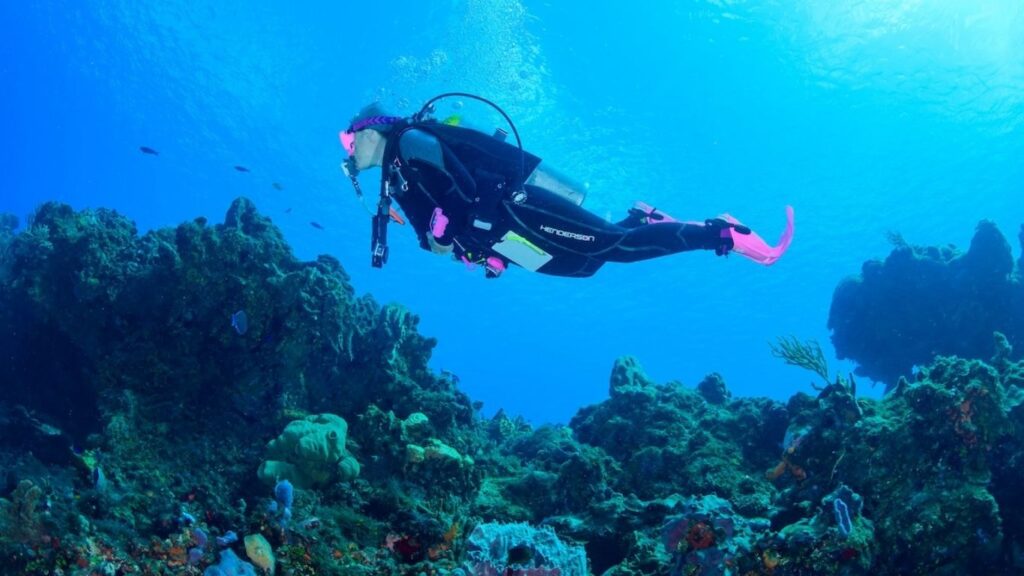
The descent feels harder than it used to. Her heart is moving faster on dives that didn’t spike her heart rate a few years ago. She surfaces tense when the conditions are just fine. There is something running just under the surface of every dive that was not there before, and she doesn’t know how to name it.
She wonders if she is losing her nerve. But she isn’t. Her nervous system is simply going through a change she hasn’t yet settled into. The truth is that menopause and perimenopause change your dive anxiety and how you respond underwater, but the more you know about how it works, the more you can learn to work with your body instead of against it.
This is one of the least-talked-about intersections in women’s diving. So let’s get into what happens to the nervous system during this hormonal transition, why it shows up so specifically in the water, and what it means for how a woman experiences her dives.
What Perimenopause and Menopause are Actually Doing to a Woman’s Nervous System
Perimenopause is not a single event. It is a transition, often spanning several years, during which estrogen and progesterone fluctuate and eventually decline. Menopause is the point at which that decline becomes permanent. Most women recognize the more obvious symptoms for both stages. Sleep disruption, hot flashes, mood shifts, irregular cycles. What gets less attention is how these changes affect the nervous system.
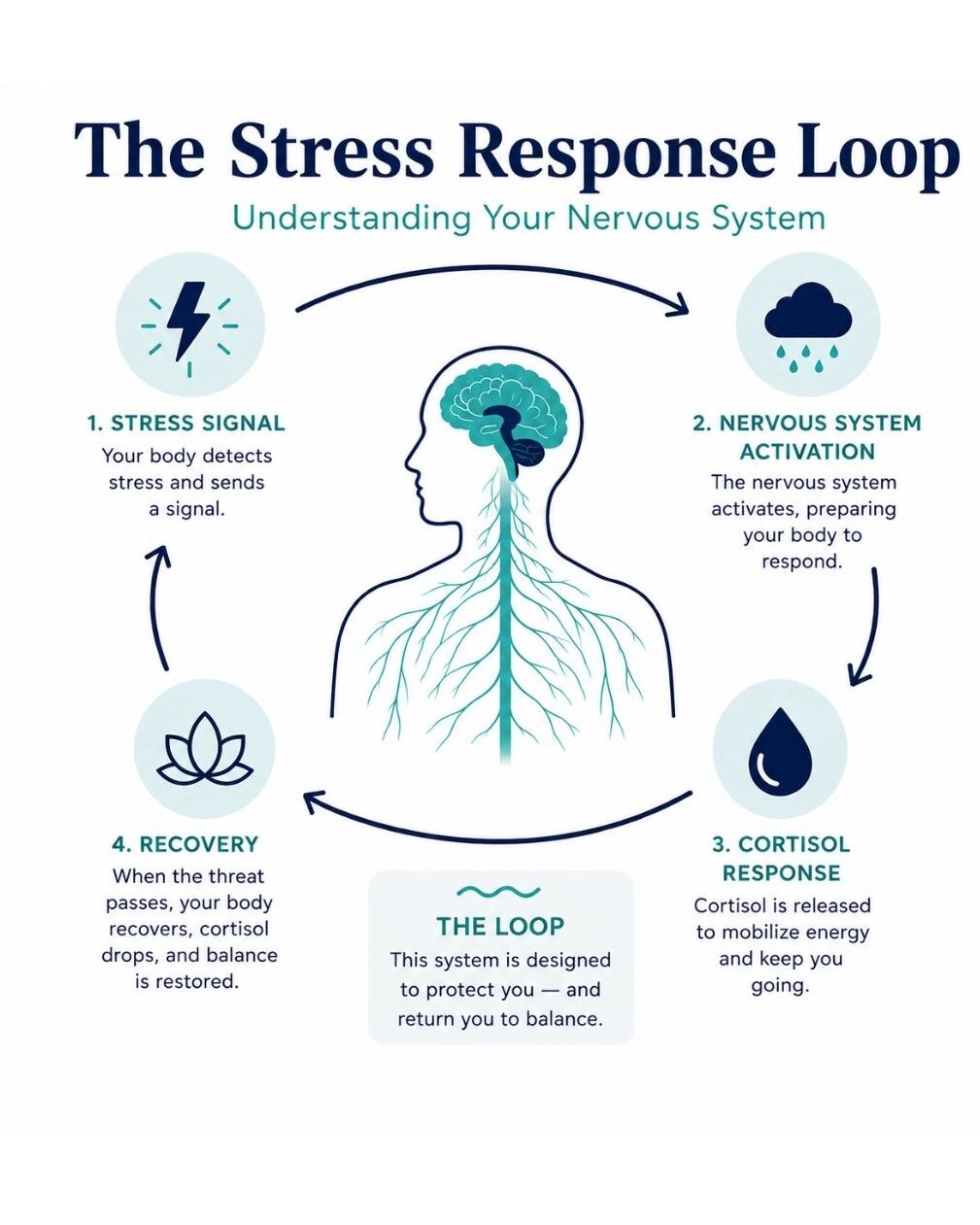
First, estrogen has a direct relationship with cortisol, the body’s primary stress hormone. When estrogen is stable, it helps buffer the cortisol response. When it fluctuates or drops, that buffer weakens. The autonomic nervous system becomes more reactive. It takes less to trigger a stress response, and it takes longer to come back down from one.
Progesterone has its own role. It acts on the GABA receptors in the brain, the same receptors that anti-anxiety medications target. When progesterone drops, some women notice a rise in baseline anxiety that has no obvious source. It’s not that they’re more stressed. The nervous system is just running a little hotter than it used to.
Underneath all of this is the HPA axis, the hypothalamic-pituitary-adrenal system that governs the body’s stress response. Hormonal changes during this transition alter how this system is calibrated. The result is a nervous system that is more easily activated and slower to settle. This is true throughout perimenopause, into menopause, and beyond. Not broken, but recalibrated.
None of this is unnatural, and none of this is a disorder. It is basic physiology. But it absolutely affects how the body responds to stress, including the demands of scuba diving.
Why Do These Symptoms Show Up in the Water?
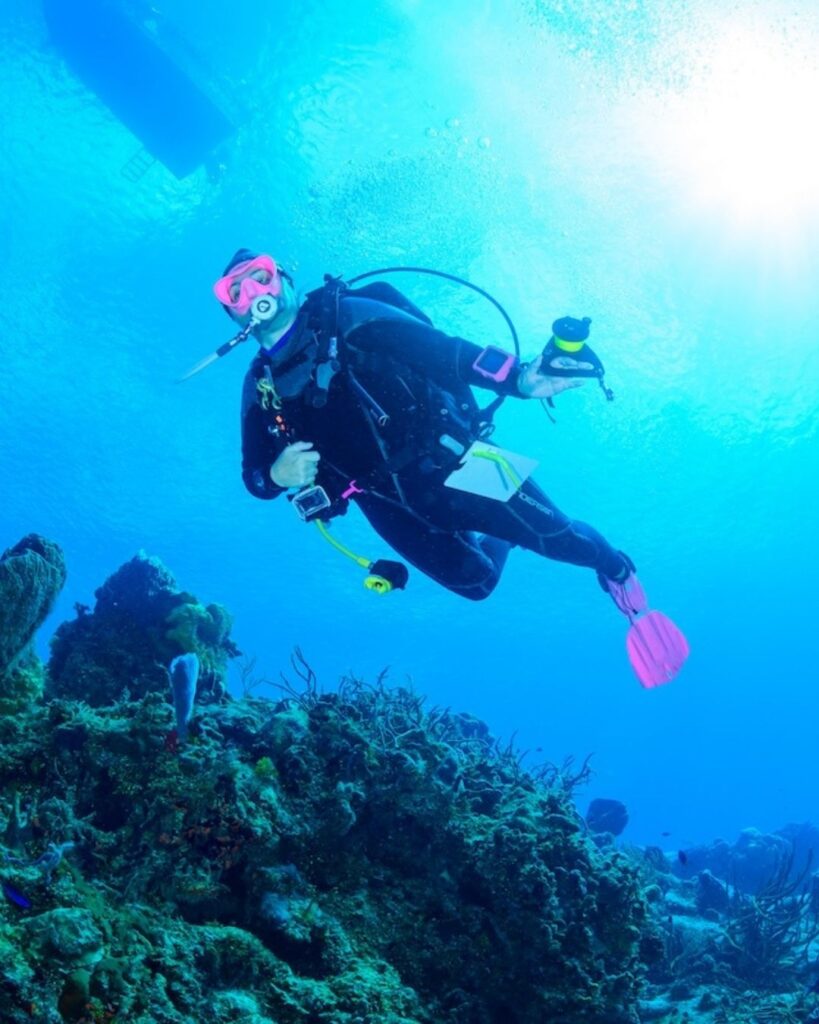
Diving is not a high-stress activity for most experienced divers. But it is a demanding one. The nervous system is constantly processing new information underwater, from depth. pressure changes, and equipment feedback to current, visibility, and other divers. The body is making micro-adjustments to all of it, automatically, beneath the level of conscious thought.
When the nervous system is more reactive than usual, that processing load lands differently. Small things register with more urgency. The heart rate ticks up faster at the surface. The first few feet of descent, when the water is still shallow, the ears have not equalized, and the buoyancy is not yet settled, feel more loaded than they should.
For a woman in perimenopause or menopause, this can feel like anxiety. And it is, in a technical sense. But it is not a psychological weakness. It’s also not a sign that she should dive less. It is her nervous system responding to a changed hormonal landscape with the same protective instincts it has always had, now just calibrated differently.
The Specific Ways Menopause and Perimenopause Change Dive Anxiety and Show Up in Diving
Not every woman notices changes in her diving during this transition. For some, the shift is subtle. For others, it’s hard to ignore. But generally speaking, these are the patterns that come up most often.
Descent anxiety that was not there before. The first five to ten feet feel harder. The ears, the pressure, the adjustment to the environment. A diver who was comfortable with this process for years finds herself hesitating at the surface or holding tension on the way down.
Faster air consumption. When the nervous system is activated, the breath shifts. Breathing might become shallower or faster. Air consumption rises on dives, even when it is never an issue. A menopausal woman may notice she is reaching reserve earlier than her buddy, under conditions that should be straightforward.
A general sense of watchfulness that does not settle. It can look like constant scanning. Not for anything specific. Just watching. The relaxed quality of a good dive, the one where attention widens, and she can actually be present to the reef, feels harder to reach.
Sleep disruption affects dive readiness. Poor sleep raises cortisol. Raised cortisol levels mean the nervous system is already more activated before she reaches the water. A run of bad nights can make a dive feel harder in ways that have nothing to do with conditions or skill.
Heat sensitivity on the surface. Hot flashes or changes in thermoregulation add a layer of physiological discomfort before a diver even enters the water. Sitting on a boat in a wetsuit in direct sun while already running warm is not a neutral experience for the nervous system.
What Perimenopause and Menopause Are Not Doing to A Woman’s Diving
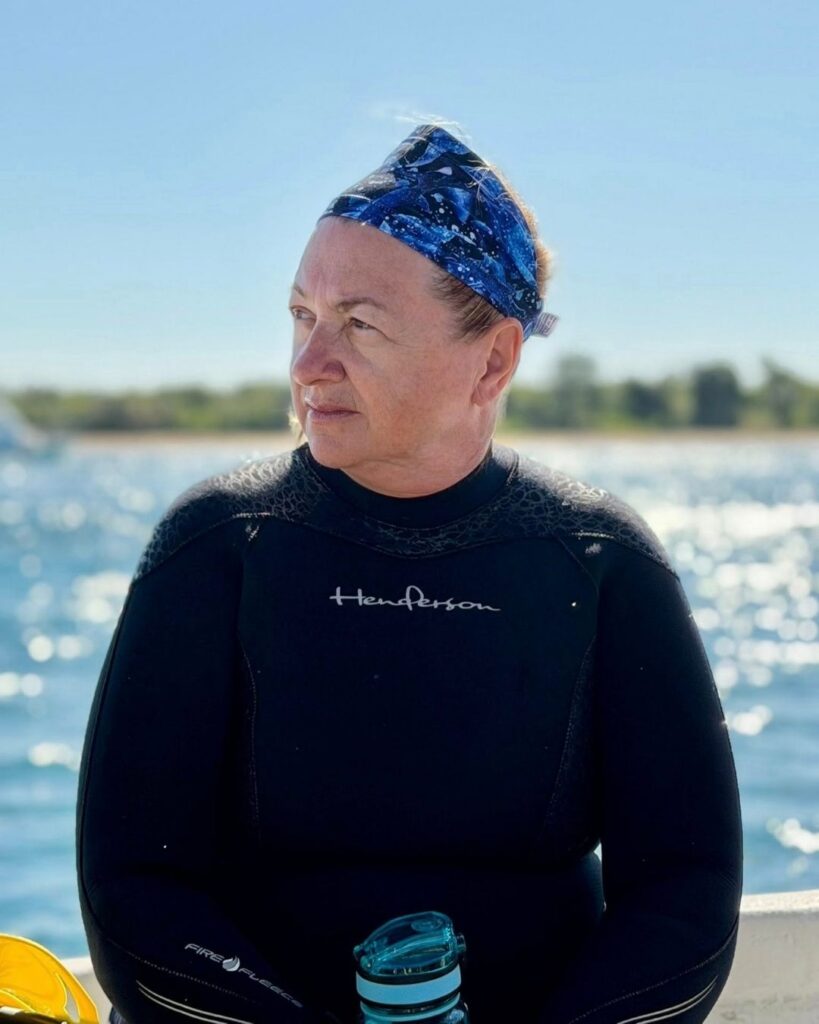
The nervous system changes that come with perimenopause and menopause are not a sign that a woman should stop diving. These shifts are not permanent. And they are not something she caused by being anxious or being too much in her head.
Perimenopause and menopause are transitions, not endpoints. The nervous system is responsive, meaning it adjusts, and the adjustment is not passive. The good news is that there are real, body-based things a woman can do to support her nervous system through this period that directly affect how she experiences the water.
But what doesn’t help is trying to push through without understanding what is happening. This could look like diving harder, telling herself to stop being ridiculous, or gripping the anxiety and trying to override it with willpower. The nervous system does not respond well to force. It responds to information, steadiness, and conditions that allow it to settle.
What Actually Helps: Working With the Nervous System, Not Against It
Understanding what is happening in the body is the first step. The next step is learning to work with these physical changes rather than around them. That is what Somatic awareness offers, and it is exactly what Dive Somatics™ was built for.
Dive Somatics™ is a body-based practice that works in both directions. First, what she brings to the dive, and second, what the water gives back. For a woman whose nervous system is recalibrating during this transition, that framework is not a nice-to-have perk. It is practical, specific, and grounded in what is actually happening physiologically.
The free Dive Somatics™ Guide is the place to start. Download it at Rise & Dive.
The Dive that Feels Harder Is Still Worth Taking
Women in perimenopause and menopause sometimes start quietly diving less. Not because they want to. But because the water stopped feeling like relief and started feeling like work, and nobody told them why.
This does not have to be your story.
The nervous system is not fixed. This transition is not a permanent shift in what is possible underwater. It is a period that asks for a different kind of attention. More preparation. More patience with the descent. More willingness to treat the dive as the nervous system practice it already is, rather than something to push through.
The water still does the same thing it always did. It is still one of the most reliable nervous system regulators she has access to. That has not changed. What has changed is how much intention it takes to get there.
Where To Go From Here
The free Dive Somatics™ Guide is a good next step. It walks through what the nervous system is doing before, during, and after a dive, and offers two simple practices to bring to your next time in the water. Written for divers who want to understand their body, not fight it.
And if you want to be in a room, or at least a group, with women who are navigating this same intersection, Women In Scuba Empowered (WISE) is where that conversation is already happening.
With calm and confidence,

Frequently Asked Questions
Can perimenopause and menopause cause anxiety during scuba diving?
Yes. Both affect the hormones that regulate the stress response, including estrogen and progesterone. When these decline or fluctuate, the nervous system becomes more reactive. This can show up as heightened anxiety during diving, particularly on descents, even for experienced divers who have never had this issue before.
Why is my air consumption worse than it used to be?
Air consumption is directly tied to the breath, and the breath is directly tied to the nervous system. When the nervous system is activated, breathing tends to become shallower and faster. Hormonal changes during perimenopause and menopause can raise baseline nervous system activation, which shows up as higher air consumption even on dives that feel manageable.
Should I stop diving during perimenopause or menopause?
No. There is no medical reason why either should prevent diving. Some women benefit from adjusting their approach to dives during this transition, giving the nervous system more time to settle before and during dives. Stopping is not necessary. Understanding what is happening is.
What is the connection between hormones and dive anxiety?
Estrogen helps regulate cortisol, the body’s main stress hormone. Progesterone acts on the brain’s GABA receptors, which have a calming effect on the nervous system. When both decline during perimenopause and menopause, the HPA axis, the system that governs the stress response, becomes more easily triggered and slower to settle.
Does this affect buoyancy or descent control?
Indirectly, yes. Nervous system activation affects muscle tension, breath depth, and proprioception, all of which feed into buoyancy control. A diver whose nervous system is running hot may notice her buoyancy is less precise than usual, particularly on descent. Her skills are fine. Her body is just running differently right now.
