
I spend most of my time in Cozumel, even when I am not leading trips. I have dived these reefs in more seasons and under more conditions than I can count. The question I get asked more than any other from women planning to dive Cozumel typically has to do with the specific dive sites: what are the sites actually like, how do they differ, and how do I know which ones are right for my experience level?
Most dive site guides answer that with a depth range and a species list. But that’s not what I would tell someone standing on a dock about to get in the water for the first time. What actually matters is how the current runs, how the reef is structured, what the conditions mean for a diver at your level, and which sites come up consistently on Rise & Dive trips because the diving holds up.
I’m going to be covering seven Cozumel dive sites, ranging from the shallowest reef on the island to one of the most demanding walls. But first, I want to spend some time on what sets Cozumel dive sites and its conditions apart.
How Cozumel’s Current System Works
Cozumel sits within a current system that generally moves northward along the island’s western coast. That is the direction most dives are planned around. But it is not a guarantee. It can shift, slow, or run the other way depending on wind, the season, and conditions further out in the channel. What makes Cozumel dive sites different from most destinations is that the current is a feature of the dive, not an obstacle. The entire operation- site selection, entry timing, and boat pickup is designed around moving with the water rather than working against it.
In places where tidal pull dominates, current spikes and drops in ways that can be hard to anticipate, even for experienced divers. But here in Cozumel, the variability tends to be subtler. Operators monitor conditions before every dive and adjust site selection based on how the water is behaving that morning. You go in knowing which way you are likely going and what you will pass through because someone has already done the reading for you.
When the current is running well, the effect on a dive is measurable. Air consumption drops because the body is not fighting anything. Women who routinely surface with 700 PSI at other destinations often finish Cozumel dive sites with considerably more. The drift takes effort off the table and puts the dive itself back in focus. For more on how Cozumel’s conditions affect the overall dive experience, this post on Cozumel diving conditions covers the patterns in depth.
Drift Diving in Cozumel: How It Works and What to Expect
Drift diving means moving with a sustained current along the reef rather than swimming against it or anchoring to a fixed point. The current carries you while you manage your depth and position.
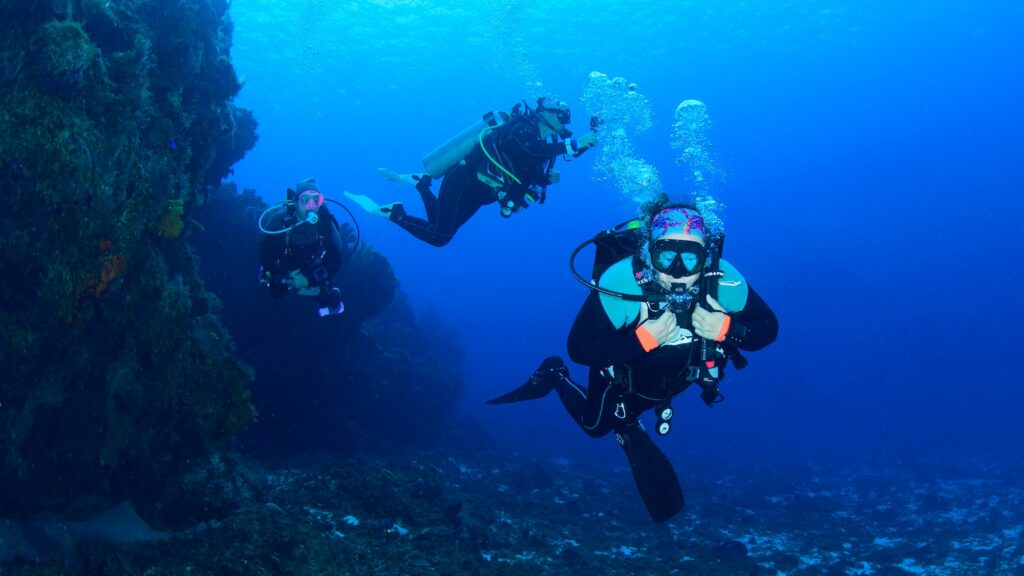
If you have been drift diving somewhere else and found it stressful, Cozumel dive sites tend to be a different experience. On a good day, when the current is moving consistently, most divers settle into it within the first few minutes. They stop finning hard when they realize the water is doing the work. Women come up from those dives talking about that quality specifically: moving through the water without fighting it in a way they do not after most other dives.
The walls here drop fast, and the visibility is exceptional, often 80 to 100 feet or more on a clear day. Drifting along a wall in that kind of water, with the reef dropping away below you and open blue on the other side, is a different spatial experience from most recreational diving. If you want the full picture of what to expect before your first drift, this post on what drift diving in Cozumel actually feels like covers it.
Cozumel Dive Sites: What Each One Actually Delivers
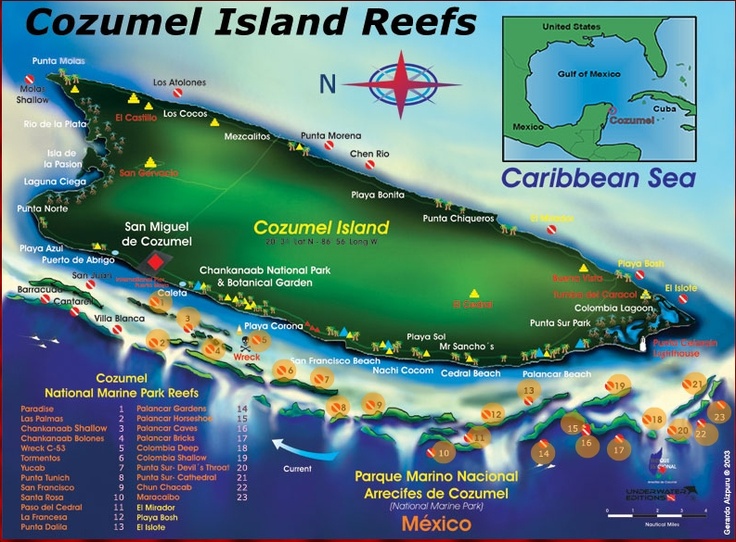
Cozumel has more than 30 named dive sites along its western and southern coasts. What follows is not a complete inventory, and it’s not meant to be. These are simply the sites that come up most consistently on Rise & Dive trips, the ones that best represent the range of what diving here looks like, and the ones suited to the range of women who dive with us. Some of the island’s most famous sites, like Punta Sur’s Devil’s Throat, Maracaibo, and the deeper sections of Colombia, are spectacular but also not right for every diver. We go where the dive serves the woman in the water. If you want the full map of what exists, a good local dive operator will know these reefs better than any written guide.
Paradise Reef
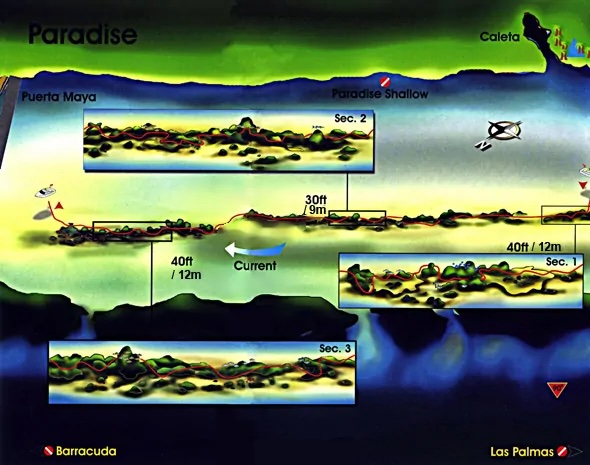
Most people overlook this site because it’s so shallow, yet it makes for a near-perfect first dive on any trip and is packed with more life than other reefs twice its depth. Divers chasing walls tend to wave it off, which is their loss. Paradise runs as three parallel reef sections at the northern end of the Cozumel Marine Park, with a mild current that rarely pushes hard enough to notice. It works for every experience level and rewards whoever actually shows up.
Those 45 feet hold sergeant majors, angelfish, grunts, and snappers moving in schools that part around you as you drift, lobster tucked into every crevice. If you slow down and look into the darker gaps under the coral ledges, you may find the Splendid Toadfish, Cozumel’s own endemic species that lives here and nowhere else on earth. For anyone arriving still carrying the fog of travel, the forgiving conditions make it easy to shake off the journey, remember how the gear feels, and settle in without pressure. You’re surface-ready for whatever comes next.
After dark, it becomes something else entirely. The octopus comes out, the lobster roam, and the toadfish croak from somewhere in the reef you cannot quite locate. If a night dive has been on the list for a while, this is the right place to finally do it.
Palancar Reef: Know Which Section You Are Diving
Palancar Reef is the site most people have heard of before they ever book the trip. It’s why a lot of women put Cozumel on their list in the first place, and it earns that reputation. What most guides do not tell you is that Palancar is not just one dive, but four, and the section you are on changes everything about what you experience in the water.
The reef system runs along the southwest coast of Cozumel, built around caves, canyon walls, and boulder formations that open into natural passages as you drift through. Depths range from 15 to 130 feet, depending on where you are. The four sections share that underlying structure and diverge almost entirely in everything else.
Palancar Gardens
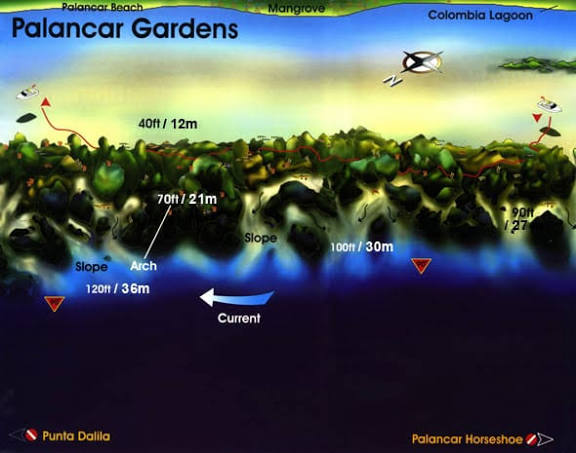
Palancar Gardens runs from 15 to 50 feet with a gentle current and a wide coral platform dense with color, turtles, and reef fish. Newer divers and returning divers find their footing here, and it is genuinely beautiful at that depth without needing to go any deeper. The Gardens hold up entirely on their own.
Palancar Caves
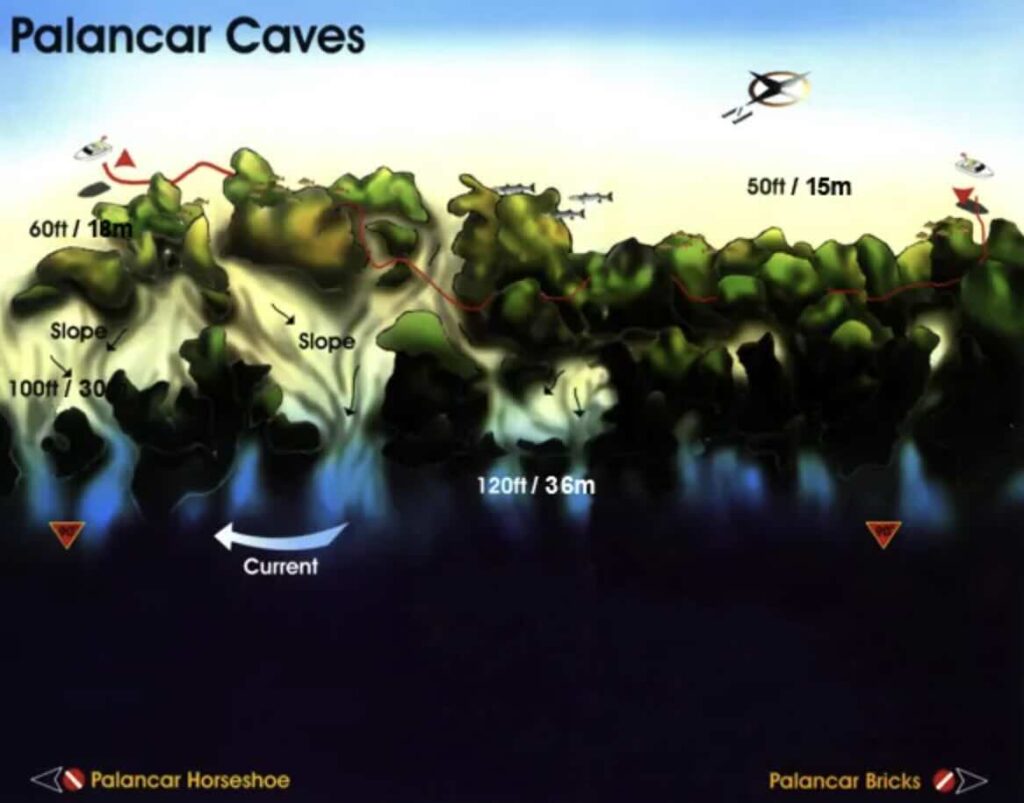
The Palancar Caves are the section most people are picturing when they hear the name. Natural passages and overhangs at 50 to 90 feet slow the drift just enough to let you hover and look, and the light that comes through from above is the kind that underwater photographers return to year after year.
Palancar Horseshoe and Bricks
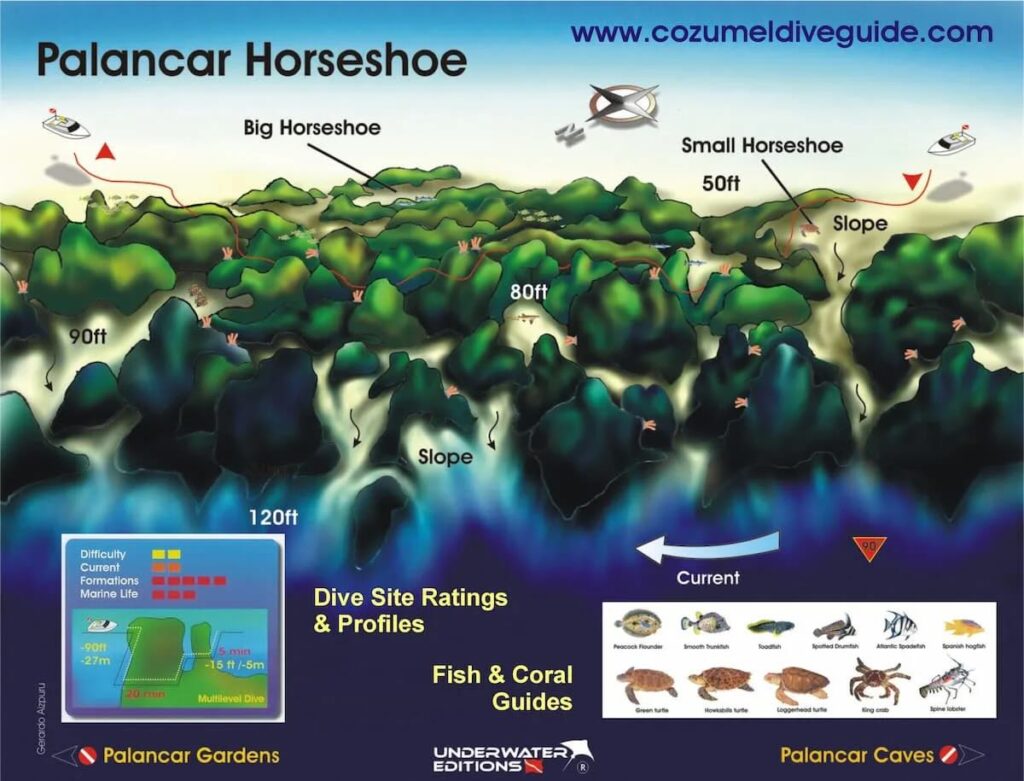
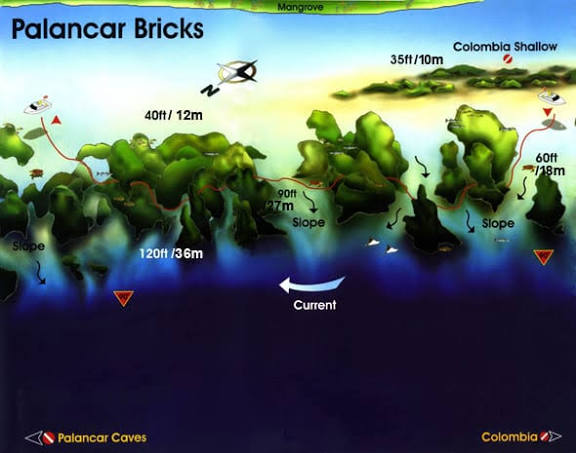
Palancar Horseshoe and Bricks go deeper and pull more current. For divers comfortable at depth who want the full wall experience, these sections deliver. For anyone still building that comfort, the Gardens and Caves are not a lesser version of Palancar. They are a different dive entirely, and the right one for where you are.
San Francisco Reef
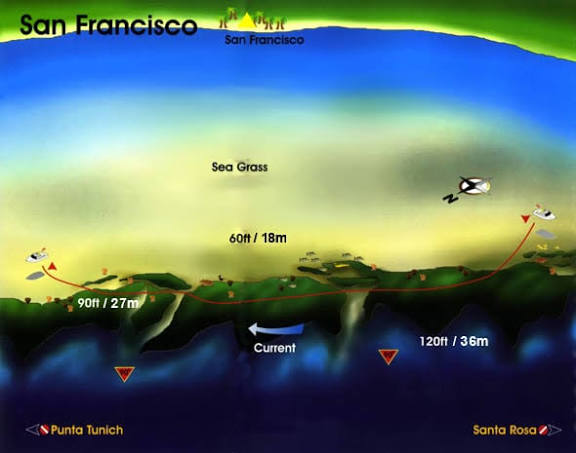
San Francisco Reef is Cozumel’s shallowest wall dive, running from around 20 feet at the top of the reef down to depths well beyond recreational limits. The most rewarding section sits between 35 and 50 feet, where the reef opens differently as you move through it: low and spread out in the south, wide tunnels through the middle, and swimmable passages and caves at the northern end. Current runs mild to moderate, making it accessible to intermediate divers.
San Francisco sits where most dive progressions actually need a site: past the gentle patch reefs but short of the full wall exposure. Divers who have done Tormentos and Yucab and are ready for more structure, real tunnels, real current, without the scale of Santa Rosa yet, will find this reef land at exactly the right moment in a trip.
The marine life runs deep into the crevices. Eagle rays cruise through regularly. Grouper hold in the tunnels. Barracuda hang in the water column above the reef. And on a good day, nurse sharks rest in the sand below the wall’s base. It is not the most famous site on the island, which means it rarely gets crowded, and a reef that does not get crowded in Cozumel is worth knowing about.
Santa Rosa Wall
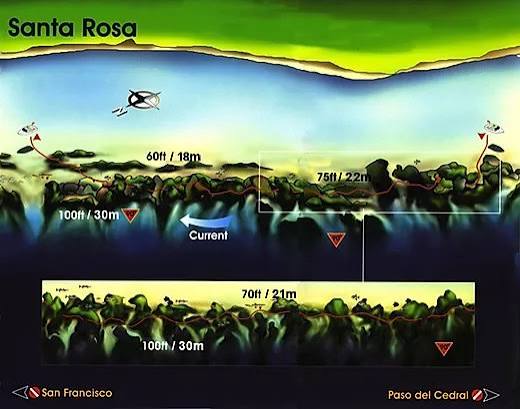
Santa Rosa Wall is one of the most dramatic of Cozumel dive sites, a steep vertical wall that starts around 50 feet and drops well beyond recreational limits. The reef is densest between 60 and 100 feet. That is right where you want to be. Current along the wall tends to be consistent and sometimes brisk, making it best suited to divers with drift experience who are comfortable moving at depth.
Diving this site involves drifting along the edge with the wall to one side and open blue to the other. The coral life on the wall is dense, with sponges in unreal colors, sea fans spreading wide into the current, and schools of fish that move alongside you for a stretch, then dissolve into the blue.
For divers comfortable with current, Santa Rosa is one of the most satisfying dives on the island. The pace of it, the scale of the wall, and the sense of moving through something genuinely alive mean there’s nothing else quite like it on the western reef.
Colombia Reef
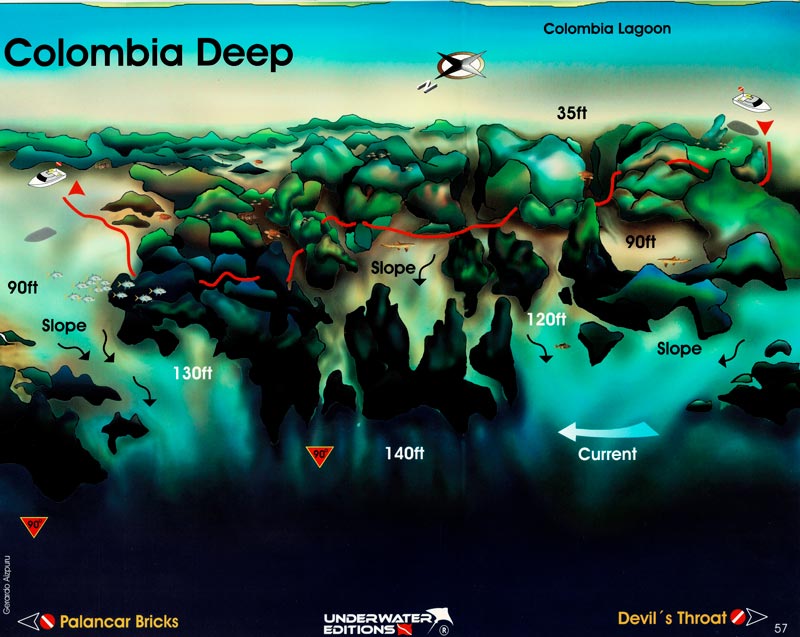
Colombia Reef sits at the southern end of Cozumel’s western coast. The boat ride out is longer, which usually means you arrive at a less crowded reef. Depths range from around 50 feet in the coral garden sections down through tunnels that reach 80 to 100 feet. The current runs more easily here than in Santa Rosa. It’s not necessarily a beginner site, but it’s not demanding either.
The structure here is varied: open gardens, dramatic formations in the deeper sections, and enough going on at every depth that slowing down pays off. Turtles are common, with eagle rays also passing through. The sheer number of species visible on a single drift is one of the reasons Colombia is consistently considered among the best Cozumel dive sites.
It is a reef that gives more the slower you move through it. Divers who want the full drift experience without the intensity of Santa Rosa tend to love it for exactly that reason.
Yucab
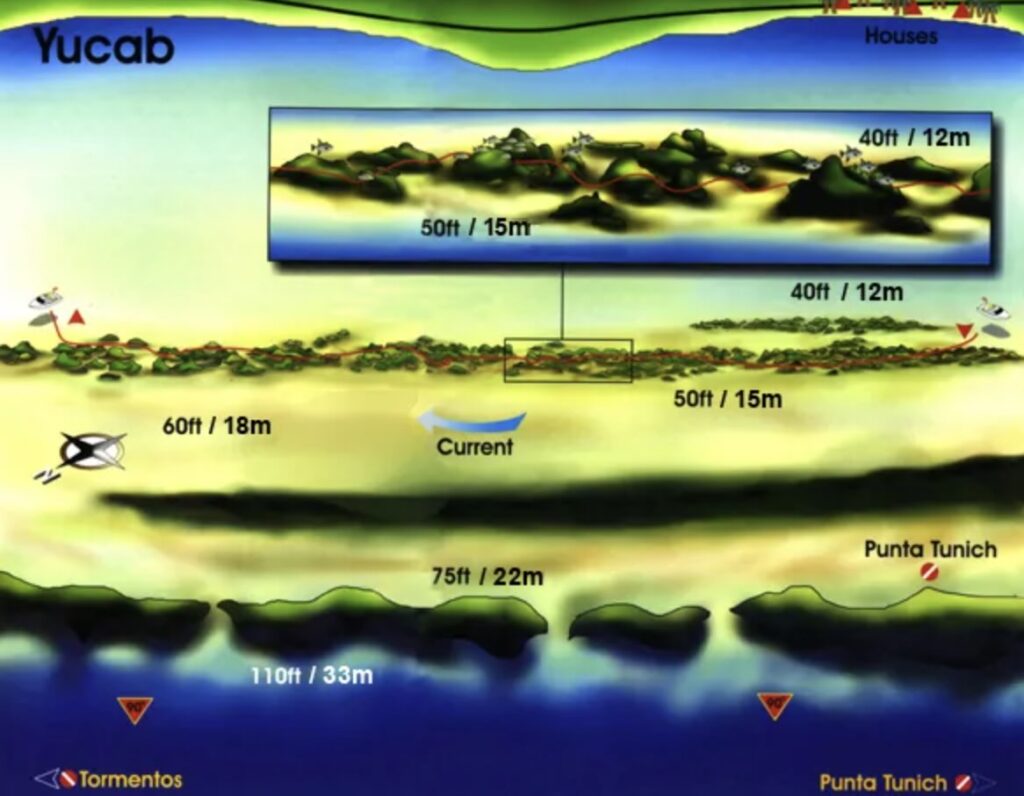
Yucab is a shallow reef at a depth of 40 to 60 feet, with a dense, low-profile structure and currents ranging from mild to moderate. It is almost always dived as a second dive of the day, after something deeper, and it is consistently the dive that women talk about on the boat ride back.
The marine life here is dense and unhurried. Grey angelfish hold still long enough to actually look at you, seahorses appear if you’re paying attention to what you’re passing, and flamingo tongues dot the sea fans in small clusters of orange and white. Stingrays rest on the sand between coral heads, and tucked into the base of the reef, the Splendid Toadfish turns up again, Cozumel’s own endemic species, which is impossible to mistake for anything else.
Yucab is the dive that makes photographers slow down and miss their exit. It is not dramatic, but it’s the reef equivalent of a conversation you did not expect to have and didn’t want to end.
Tormentos
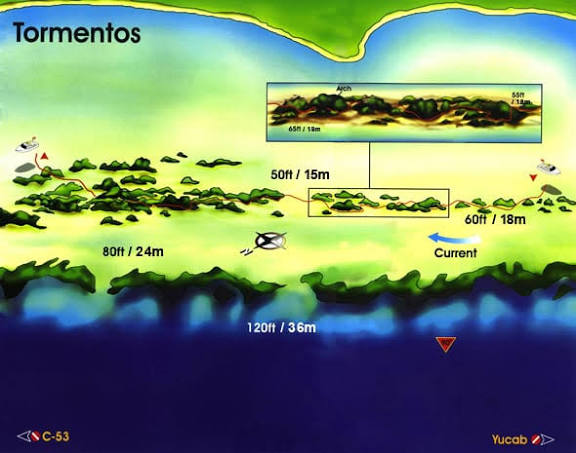
Tormentos is a series of coral heads between 30 and 50 feet on Cozumel’s western reef system, with mild current and more marine life packed into those heads than the depth would suggest. It is the one people are still talking about at dinner.
The cleaning stations here are active. If you hold still long enough, you will watch fish line up to be attended to by small shrimp and cleaner wrasse. The walls get the attention, but the Tormentos keep the divers.
At this site, the current is gentle enough to feel supportive rather than demanding. If it is someone’s first drift, this is a good reef to start on. Of all Cozumel dive sites, this one is forgiving and offers conditions that feel supportive. A strong first drift dive for any level.
What Ties These Sites Together
These are reefs I have dived across many different seasons and conditions, and the way they feel changes depending on current, visibility, and time of year, but the way they are built does not. That consistency is part of what makes Cozumel dive sites worth returning to.
There is a site here for every woman in the water, from a diver on her first trip to someone who has been doing this for twenty years. Women who have spent years working harder than they needed to underwater tend to notice it quickly here: the water is working for you, not against you.
If you are ready to dive Cozumel dive sites and reefs with intention, with amazing people, and a leader who knows these waters intimately, the Rise & Dive℠ Signature Cozumel Dive Retreat may be the trip for you.
See you under the surface

Frequently Asked Questions About Cozumel Dive Sites
What is drift diving in Cozumel like for beginners?
Cozumel’s current is steady rather than unpredictable, making it one of the most accessible drift-diving environments in the world. Sites like Tormentos offer gentle current in 30 to 50 feet of water, making them a natural starting point for divers new to drift who want to build comfort before moving to the more exposed walls.
Which Cozumel dive sites is best for seeing turtles?
Turtles show up on most of the reefs covered here. Palancar Gardens and Colombia Reef produce the most consistent encounters, with reef structure and depth that turtles favor for feeding and resting. Paradise Reef also has reliable turtle sightings at shallower depths.
Do you need advanced certification to dive in Cozumel?
Most popular Cozumel dive sites are accessible to Open Water certified divers. Sites like Santa Rosa Wall and the deeper sections of Palancar Reef are better suited to divers with experience in current and at depth. A good dive operator will talk you through conditions before you get in the water and steer you toward the right site for where you are.
How does Cozumel’s current affect air consumption?
Working against the current burns through the air faster. Because Cozumel drift dives move you with the current rather than against it, most divers find their air consumption noticeably lower here. Relaxed body, relaxed breathing, more air in the tank across the dive.
What is the visibility like at Cozumel dive sites?
Visibility at Cozumel dive sites regularly reaches 80 to 100 feet or more under good conditions. The current keeps the water moving, and the clarity shows it. That combination is one of the reasons Cozumel is considered among the top scuba diving destinations in the world.
What depth are most Cozumel dive sites?
Cozumel dive sites cover a wide range. Paradise Reef and Palancar Gardens run from 15 to 50 feet and suit all experience levels. Yucab and Tormentos sit between 40 and 60 feet with mild to moderate current. San Francisco Reef starts around 20 feet and offers its best diving between 35 and 50 feet before dropping further. Colombia and Palancar Caves reach 50 to 100 feet. Santa Rosa Wall starts at 50 feet and drops well beyond recreational limits, with the best coral life concentrated in the 40-60-foot range.
What is the water temperature in Cozumel for diving?
Water temperature in Cozumel ranges from approximately 75°F in winter to 84°F at the height of summer. Most divers are comfortable in a 3mm wetsuit year-round. If you run cold, a 5mm is worth bringing for the winter months, particularly for multiple dives in a day.
Which Cozumel dive sites should I dive first?
For a first dive of any trip, Paradise Reef is the most reliable choice regardless of experience level. The current is mild, the depth ranges from 30 to 45 feet, and the marine life is dense enough to make it genuinely worthwhile. It also gives you time to settle into Cozumel’s drift pattern before moving to more demanding sites. Tormentos is the other strong option for first-time drift divers who want gentle current and a forgiving environment.
