
Some dive destinations impress you. Diving in the Philippines changes how you dive entirely.
Scuba diving in the Philippines is considered among the best in the world because of how its biodiversity, geography, and human warmth come together in a way few places can match. Located in the Coral Triangle and spanning more than 7,000 islands, the country offers extraordinary marine biodiversity, varied reef systems, and warm, year-round waters that support divers at every level.
At the heart of the Coral Triangle, one of the most biodiverse marine regions on Earth, the Philippines delivers reefs layered with life and teeming with constant movement. Its vast island geography creates distinct coastlines, current patterns, and underwater environments, producing a remarkable variety within a single destination.
Conditions are consistently comfortable, allowing divers to focus less on temperature and more on awareness and control.
And above the surface, the experience is shaped by genuine hospitality. Filipino culture is known for warmth and attentiveness, and that energy carries into the dive experience. When you feel supported on land, you relax more easily underwater.
Biodiversity. Range. Human connection. Together, they create steadiness underwater.
And steadiness builds confidence.
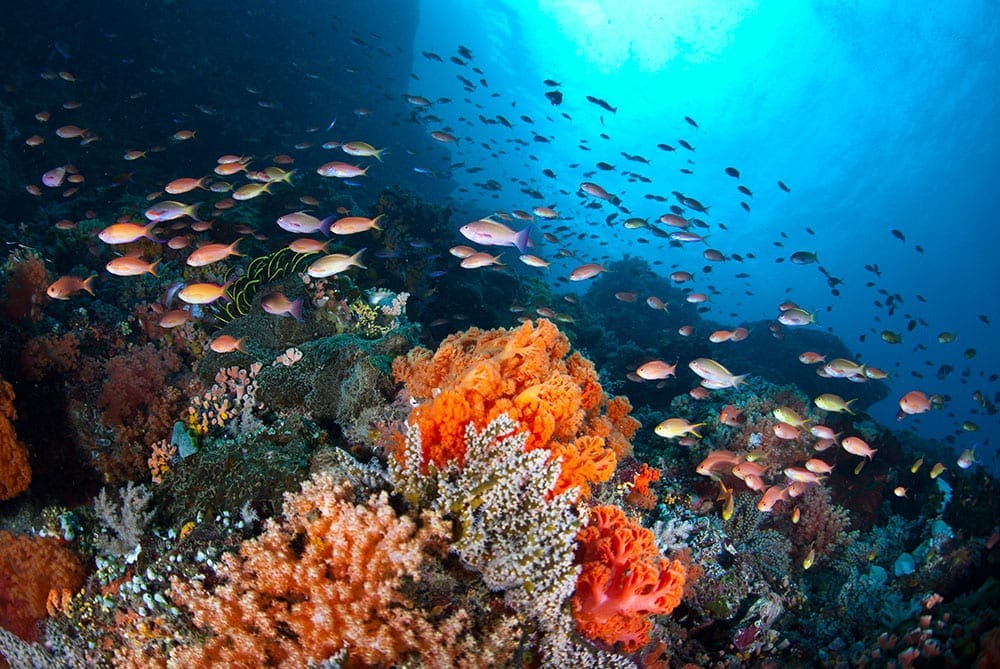
The Philippines sits at the center of the Coral Triangle, one of the most biodiverse marine ecosystems on Earth.
The Power of the Coral Triangle
The Philippines sits at the heart of the Coral Triangle, home to over 75 percent of the world’s coral species and more than 2,000 species of reef fish. Marine scientists and organizations such as the Coral Triangle Initiative recognize this region as the global epicenter of marine biodiversity.
That density shapes scuba diving in the Philippines in a way few destinations can match.
When you dive in the Philippines, you are not descending into empty blue water. You are entering a layered ecosystem. Coral structures create natural orientation points. Fish density increases environmental awareness. Macro life rewards patience.
Presence becomes easier.
And presence is where confidence is built.
What Makes Scuba Diving in the Philippines Some of the Best in the World
What makes scuba diving in the Philippines some of the best in the world is not a single feature. It is the way everything works together.
The country stretches across thousands of islands, each with different underwater topography and current systems. That geographic variation is what creates range.
In one region, you might experience drift diving, such as in Puerto Galera, where currents can carry you along coral-covered slopes. In another, you might see dramatic wall diving, such as at Verde Island, that drops into deep blue. Near Dumaguete, volcanic black-sand sites often create macro-rich habitats where small, intricate marine life is the focus.
At Apo Island, protected coral gardens are known for healthy reef systems and sea turtles gliding through the shallows. In current-swept channels across various regions, pelagics may appear. In calmer sites, slow and deliberate macro diving rewards patience and control.
Different geographies create distinct underwater experiences, often within the same overall itinerary.
Protected marine areas support reef health. Healthy reefs support biodiversity. Biodiversity supports immersion.
Add in a culture rooted in genuine hospitality, and the experience feels supported rather than transactional.
It’s not just about the number of species, but also about the biodiversity supported by geography, structure, and human care.
That is what makes it powerful.
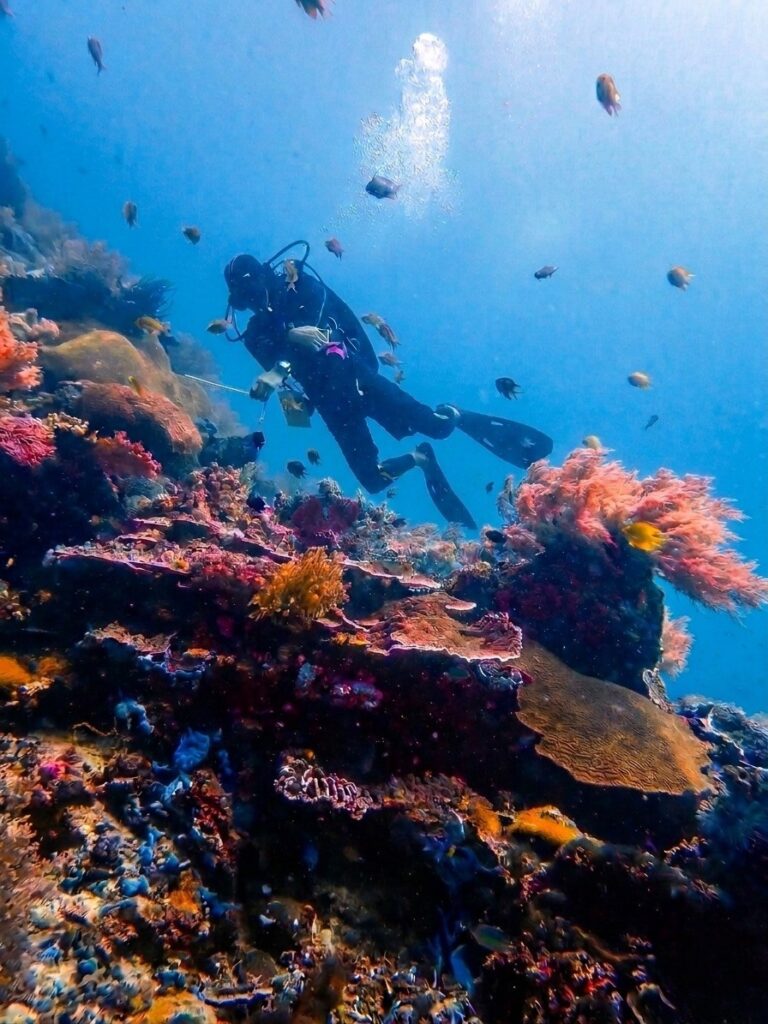
Photo Credit: Atlantis Philippines Dive Resort
Locations like Puerto Galera offer drift diving experiences where currents guide divers along vibrant coral slopes.
Dive Conditions That Support Confidence
Scuba diving in the Philippines benefits from water that stays comfortably warm year-round across much of the country. Visibility often ranges from 40 to 100 feet, depending on the region and season.
Short boat rides reduce fatigue. Predictable operations reduce surface stress. Well-established dive infrastructure reduces logistical overwhelm. All of this contributes to calm assuredness.
And when the environment feels stable, your nervous system settles. When your nervous system settles, buoyancy improves. Breath slows. Awareness expands.
That is why scuba diving in the Philippines provides the perfect environment and support for divers who want to see growth in the water and beyond it.
Suitable for Both Beginner and Advanced Divers
The range of scuba diving in the Philippines supports a wide spectrum of experience levels.
Gentle reef slopes allow newer divers to build comfort. Structured boat diving supports returning divers rebuilding trust. Walls, drift dives, and deeper profiles offer a challenge for advanced divers without requiring chaos
As a dive instructor and scuba retreat leader who designs structured international dive experiences, I look for destinations where biodiversity and accessibility intersect.
The Philippines not only meets that standard, but goes above and beyond.
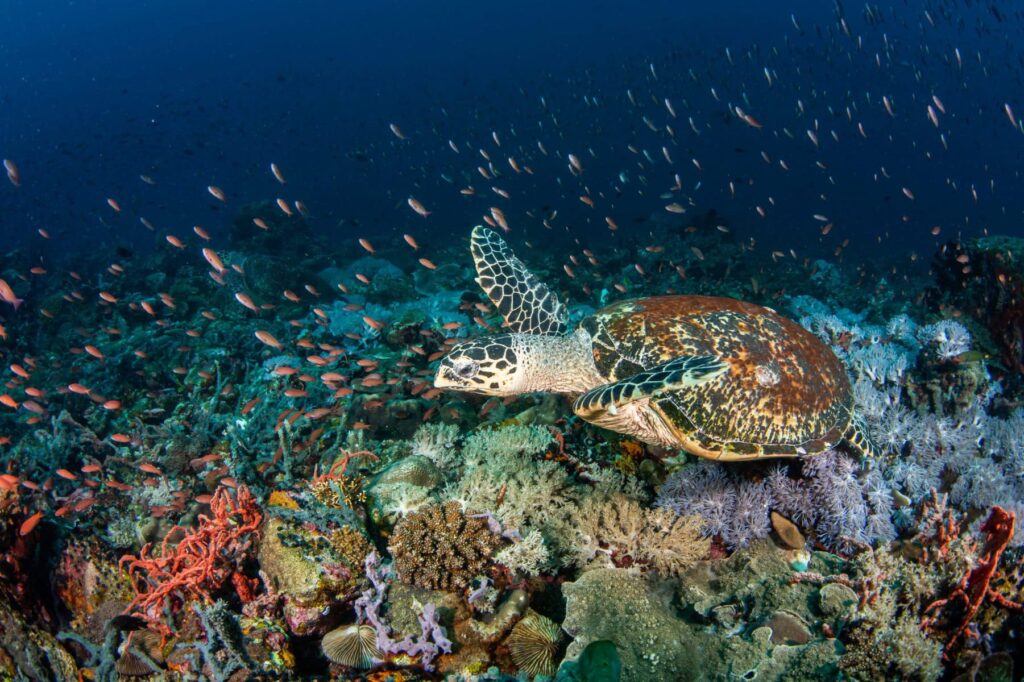
Apo Island’s protected marine sanctuary is known for healthy coral gardens and frequent sea turtle encounters.
Is the Philippines Calling You?
This Philippines dive adventure was created for exactly this kind of experience. Organized and hosted by Rise & Dive and led by me, PADI Instructor Nicole Harrison. This trip brings together two of the country’s most extraordinary dive regions, Puerto Galera and Dumaguete, into one intentionally paced journey through the Coral Triangle.
Rise and Dive trips are designed with women at the center, while remaining open to partners and family members who want to share in the adventure. Divers and non-divers alike are welcome to join the journey.
From the moment you arrive in Manila, the logistics, planning, and transitions are thoughtfully coordinated by the Rise & Dive team and me so you can focus on the experience itself.
Come for the biodiversity. Stay for the confidence, connection, and growth that happen both in and beyond the water.
If you want to stay connected to the women drawn to experiences like this, the Women in Scuba Empowered (WISE) community is where those conversations continue.
With courage and bubbles,

Continue the Philippines Diving Series:
- The Best Time to Dive in the Philippines
- How to Travel to the Philippines for a Dive Trip Without Stress
- Women Scuba Diving in the Philippines: Why This Destination Delivers
Want the full guide? Explore the complete Philippines scuba diving guide here.
Why is scuba diving in the Philippines considered among the best in the world?
It sits inside the Coral Triangle, home to over 75 percent of the world’s coral species. Divers experience dense biodiversity, varied underwater topography, and warm tropical conditions across thousands of islands.
Where is the best scuba diving in the Philippines?
Regions such as Puerto Galera, Verde Island, Dumaguete, and Apo Island are widely recognized for reef density, marine sanctuaries, drift diving, wall diving, and macro habitats.
Is scuba diving in the Philippines suitable for beginners?
Yes. Many areas offer calm reef slopes, accessible boat diving, and structured dive operations that support divers from beginner to advanced.
What marine life can you see while scuba diving in the Philippines?
Divers may encounter reef fish, sea turtles, nudibranchs, macro critters, pelagics, and dense coral reefs due to the country’s location in the Coral Triangle.
