

Macro diving in the Philippines is considered some of the best in the world because of the density, accessibility, and variety of small marine life found across its reefs and sandy dive sites.
Most divers move through a reef looking for the next big thing. A shark on the edge of visibility, a turtle passing overhead, something large enough to photograph from a distance. Macro diving in the Philippines asks you to do the opposite. To really appreciate the abundance of marine biodiversity, you have to stop, get closer, and pay attention to what is already right in front of you.
The Philippines sits at the heart of the Coral Triangle, one of the most biologically dense marine regions on the planet. A significant portion of that life exists at a scale most divers overlook. This is what scuba diving in the Philippines offers, in the most specific terms. Not more reef, but more of what the reef is actually made of.
Macro diving in the Philippines refers to detail-focused diving that highlights small marine life such as nudibranchs, frogfish, shrimp, and seahorses. The country’s location in this region creates an environment where this type of diving is not occasional but consistent.
That shift in attention changes how you dive. It requires steady buoyancy, controlled breathing, and precise movement. Those same skills build real confidence underwater and develop naturally in this environment.
Why Macro Diving in the Philippines Is Different
The distinction is not just about how many species exist here. It is about how concentrated they are within a single dive. One site can hold multiple habitats, each supporting different types of marine life within a small area.
Diving in Puerto Galera and exploring sites near Dumaguete makes this clear as soon as you descend. Reef slopes, coral structures, sandy patches, and volcanic substrate all occur within short distances of one another, creating constant variation without long transitions.
Warm water, short boat rides, and a relaxed daily structure allow you to stay in one place long enough to actually observe what is there, rather than moving past it.
The Creatures That Define Macro Diving in the Philippines
Macro diving in the Philippines is defined by the kind of marine life that blends into its surroundings until you train your eye to recognize it.
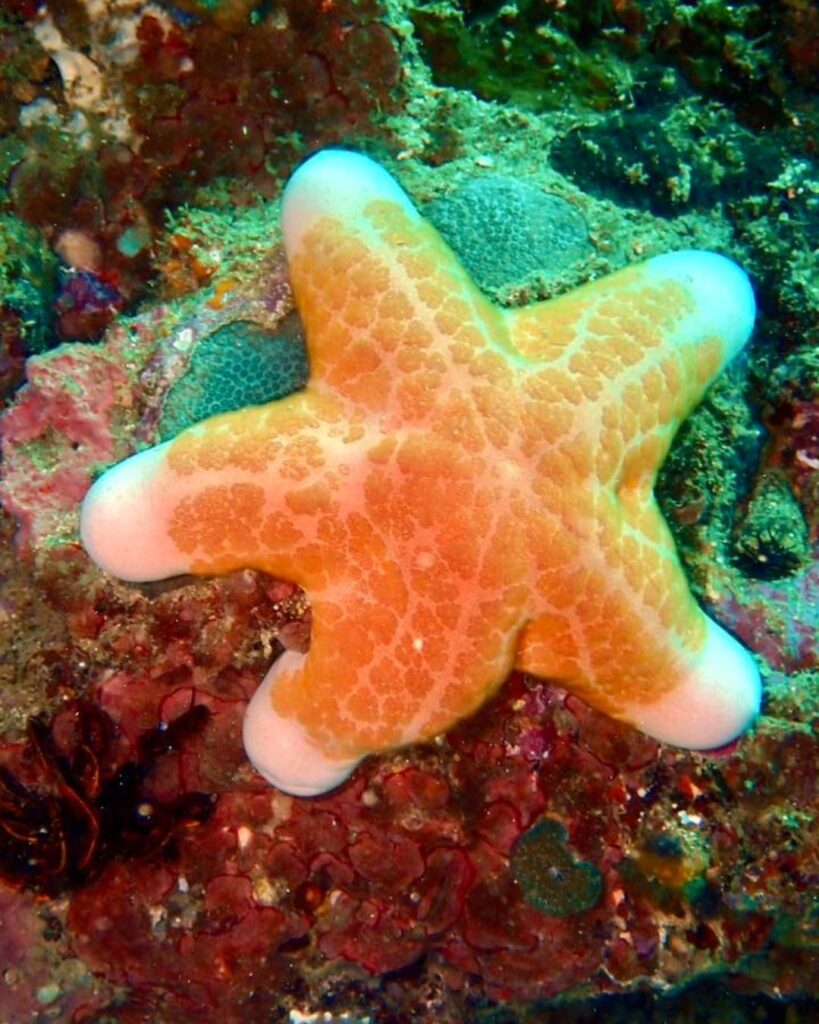
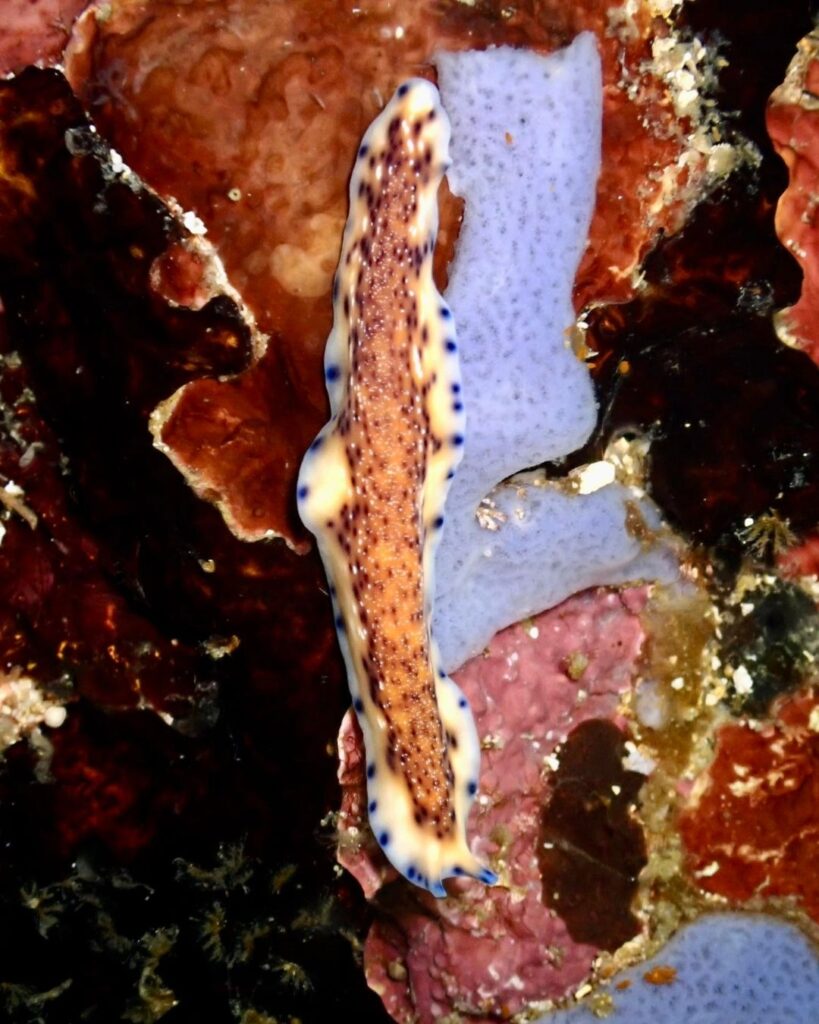
Nudibranchs appear in a wide range of colors and patterns across a single dive. Frogfish match the sponge and rock so closely that they can be missed even when you are looking directly at them. Seahorses hold position on soft coral with minimal movement, while tiny shrimp reveal themselves only when light and attention line up.
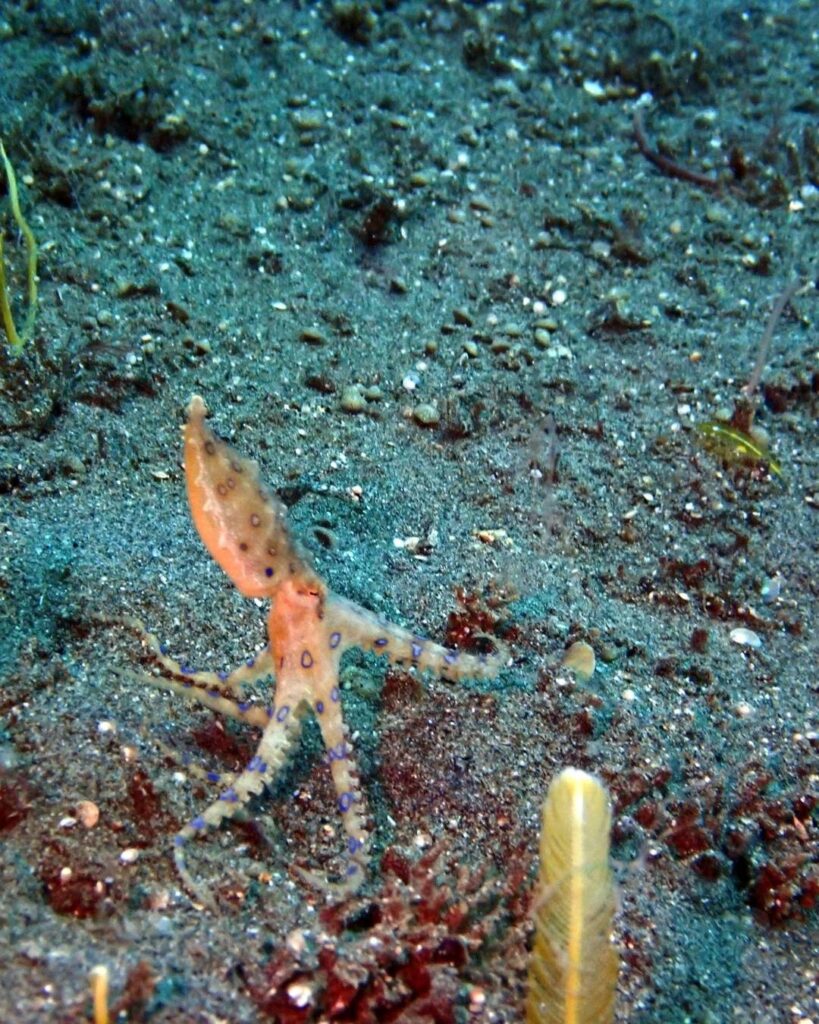
Species such as the blue-ringed octopus, flamboyant cuttlefish, and ghost pipefish contribute to this region’s global recognition for its marine biodiversity. These are not rare sightings here. They are part of what becomes visible when your awareness improves.
This style of diving changes how you move underwater. Instead of covering distance, you learn to refine your positioning. You hover more steadily, make smaller adjustments, and begin to notice how your breathing affects everything around you. As that awareness increases, confidence follows in a way that feels stable rather than forced.
Skill Level for Macro Diving in the Philippines
Macro diving in the Philippines does not require advanced certification, but it does require a keen attention to detail. Divers benefit from steady buoyancy, patience, and a willingness to move more deliberately.
Many macro dive sites feature manageable depths and calm conditions, making them well-suited for divers who are refining their skills or returning after time away from the water. The environment supports repetition without pressure, which is where real improvement happens.
It’s a great environment to gradually build up confidence. Small adjustments lead directly to better control, reinforcing both skill and self-trust.
Why Photographers Love It
Macro diving in the Philippines and the photography opportunities that come with it consistently rank among the best in the world due to its high species density. Divers are not spending long stretches searching for a single subject. Multiple subjects often coexist within a small area, allowing for focused work and repeated attempts to capture detail.
Backgrounds are often clean, subjects remain relatively still, and experienced guides know how to locate what is otherwise invisible. For photographers, this creates a clear path to improvement and exciting artistic and professional opportunities.
Even for divers who are not interested in photography, the same conditions change the experience. The focus shifts from covering ground to observing detail, creating a calmer and more intentional way of diving.
Puerto Galera vs Dumaguete for Macro Lovers
While both Puerto Galera and Dumaguete offer stunning macro diving in the Philippines, there are some distinctions. Puerto Galera offers a better balance between reef structure and macro opportunities. Coral slopes provide visual depth while still supporting a wide range of small marine life tucked into the reef. It is a strong entry point for divers who want to build awareness across varied terrain.
On the other hand, Dumaguete macro diving is more specialized. Sandy slopes and volcanic substrate create conditions in which camouflage-dependent species thrive. This is where frogfish, shrimp, and the kind of subjects that make underwater photographers stop mid-dive become the focus. If muck diving in the Philippines is on your list, Dumaguete is where it stands out the most.
Keep in mind that both regions reward the same skill: the ability to observe carefully. They simply apply it in different environments.
What This Means for How You Dive
Macro diving in the Philippines is not reserved for advanced divers or photographers. It is a way of diving that builds awareness, control, and consistency, skills that carry into every environment.
Experiencing both Puerto Galera and Dumaguete within the same Philippines dive adventure gives you that range. Reef structure and sandy terrain require different approaches, and learning to adjust between them is where real progression happens.
This is how the Rise & Dive Philippines Adventure is designed. It is a small-group dive experience operated by Rise & Dive and structured around calm conditions, intentional pacing, and real skill development in the water. It grows out of the Women In Scuba Empowered (WISE) community, and partners and family members are welcome.
Macro diving changes how you dive. You refine control, sharpen awareness, and start to see what most people miss.
If you are looking for a Philippines dive adventure that blends structure, confidence-building, and extraordinary marine life, this upcoming Philippines experience was designed for you.
To courage and clarity,

Continue the Philippines Diving Series:
- Scuba Diving in the Philippines: Why It Ranks Among the Best in the World
- What Is Diving in the Coral Triangle Really Like?
- Puerto Galera vs Dumaguete: Which Philippines Dive Destination Fits Your Style
Want the full guide? Explore the complete Philippines scuba diving guide here.
Frequently Asked Questions
What is macro diving in the Philippines?
Macro diving in the Philippines focuses on small marine life, such as nudibranchs, frogfish, shrimp, and seahorses, which are found in high densities across reef and sandy dive sites.
Where is the best macro diving in the Philippines?
Puerto Galera and Dumaguete are two of the best macro-diving regions, offering a combination of reef-based and muck-diving environments.
Is macro diving suitable for beginners?
Yes. Many macro dive sites have calm conditions and shallow depths, making them accessible for divers who are still building buoyancy control and confidence.
Is Philippines muck diving the same as macro diving?
Muck diving is a type of macro diving done over sandy or silty substrate rather than a reef. The Philippines, particularly Dumaguete, is one of the world’s best muck-diving destinations.
