
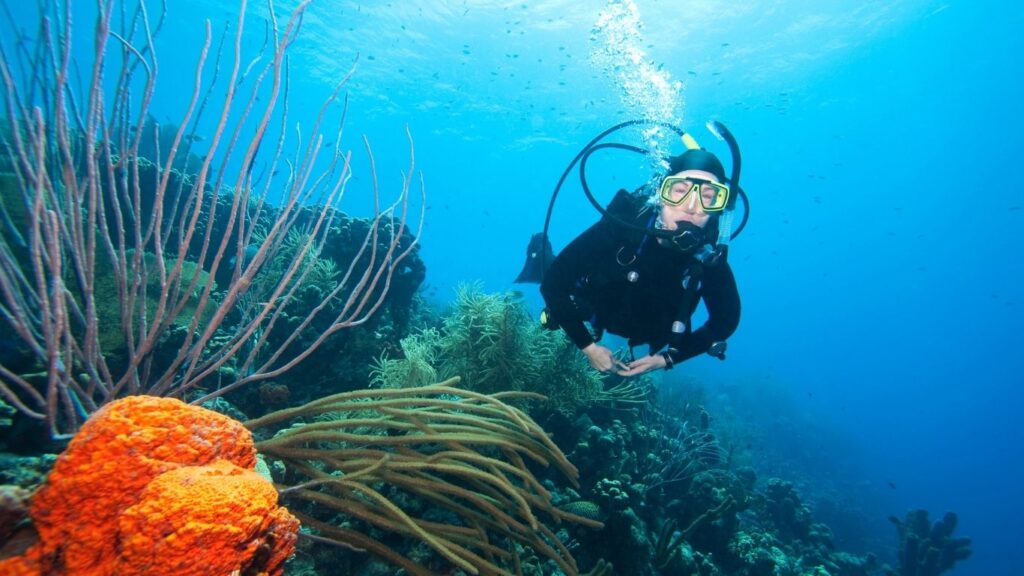
I have watched divers pack for Bonaire diving conditions after reading “warm water, great visibility, minimal current” and arrive with no real sense of what any of that means in the water. The numbers are accurate. They are also incomplete. What the data does not tell you is what those Bonaire diving conditions actually feel like dive after dive, what to watch for even in favorable conditions, and how to make the most of an environment that genuinely is forgiving but is not effortless.
That is what this post is for.
Here is what the numbers surrounding Bonaire diving conditions actually mean in practice.
The water temperatures in Bonaire range from 78 to 82°F year-round, with especially good conditions in October. Visibility regularly reaches 60 to 100 feet on the West Coast, with minimal current on the sheltered sites where most guided boat diving happens. For divers who want to focus on diving rather than managing conditions, Bonaire consistently delivers. But there are still some factors you have to keep in mind.
The Bonaire Diving Conditions Data Block
These are the five numbers that matter most when considering what kind of gear you need. Each one gets its own section below, because a number without context is just a number.
| Condition | Range | What to Know |
|---|---|---|
| Water Temperature | 78–82°F (26–28°C) | Consistent year-round. Minimal seasonal variation. |
| Visibility | 60–100 ft (18–30 m) | West coast typical. Highly site-dependent. |
| Current | Minimal on the West Coast | Occasional surge on the north and east coast sites. |
| Wetsuit | 3mm full suit recommended | Some divers prefer 5mm if they run cold. |
| Best Months | Year-round | October: post-peak, excellent conditions, lower crowds. |
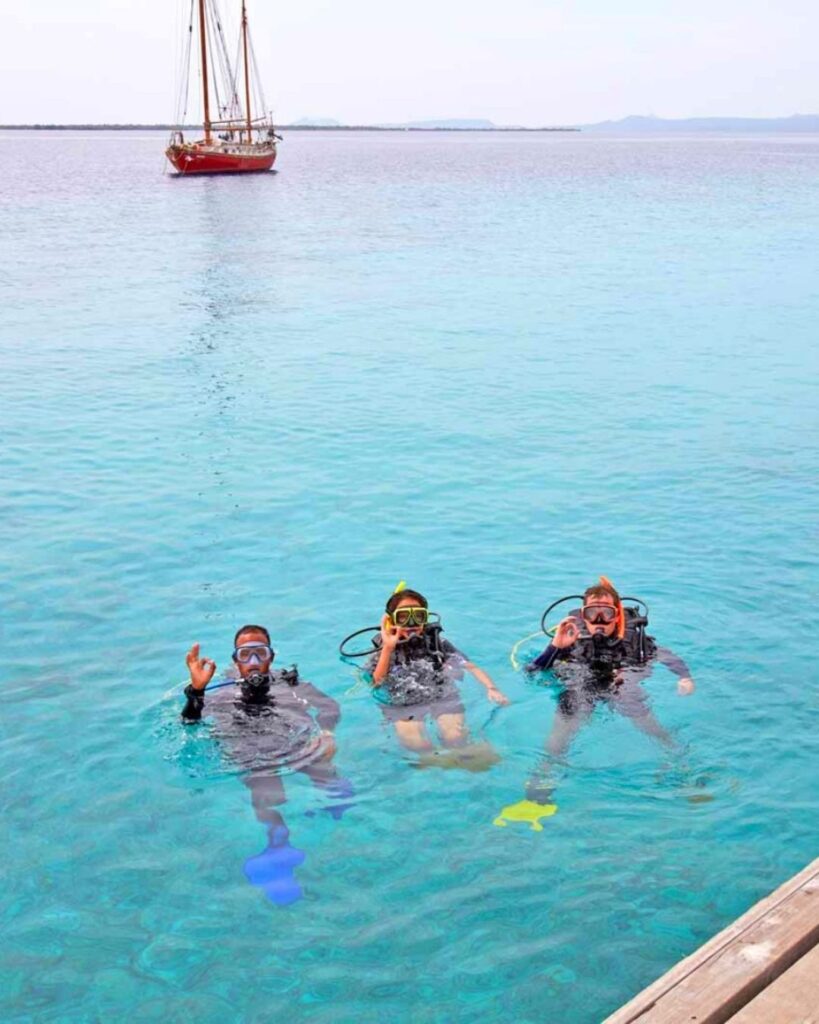
Warm water is a key part of Bonaire diving conditions, allowing for longer, more comfortable dives.
Water Temperature: 78–82°F
Bonaire sits outside the Caribbean hurricane belt and benefits from consistent easterly trade winds year-round. Water temperatures range from 78 to 82°F, with very little variation between seasons, making it one of the most consistent thermal profiles among Caribbean scuba diving destinations. That is warm enough for most divers to dive comfortably in a 3mm wetsuit, and warm enough that you will not cut dives short because you are cold.
What this means in practice: you can focus on the dive. Not on managing discomfort, not on watching your teeth chatter on the surface interval. The water temperature in Bonaire is simply one less thing to think about, which matters more than it sounds.
If you run cold in the water, bring a 5mm. The difference in bulk is minimal, and you will log longer bottom times without losing focus. You can also opt to layer with items, such as a beanie, vest, rash guard, leggings, socks, etc. My recommendation is to have more layers than fewer; it’s better to have options than be stuck feeling cold.
Visibility: 60–100 Feet
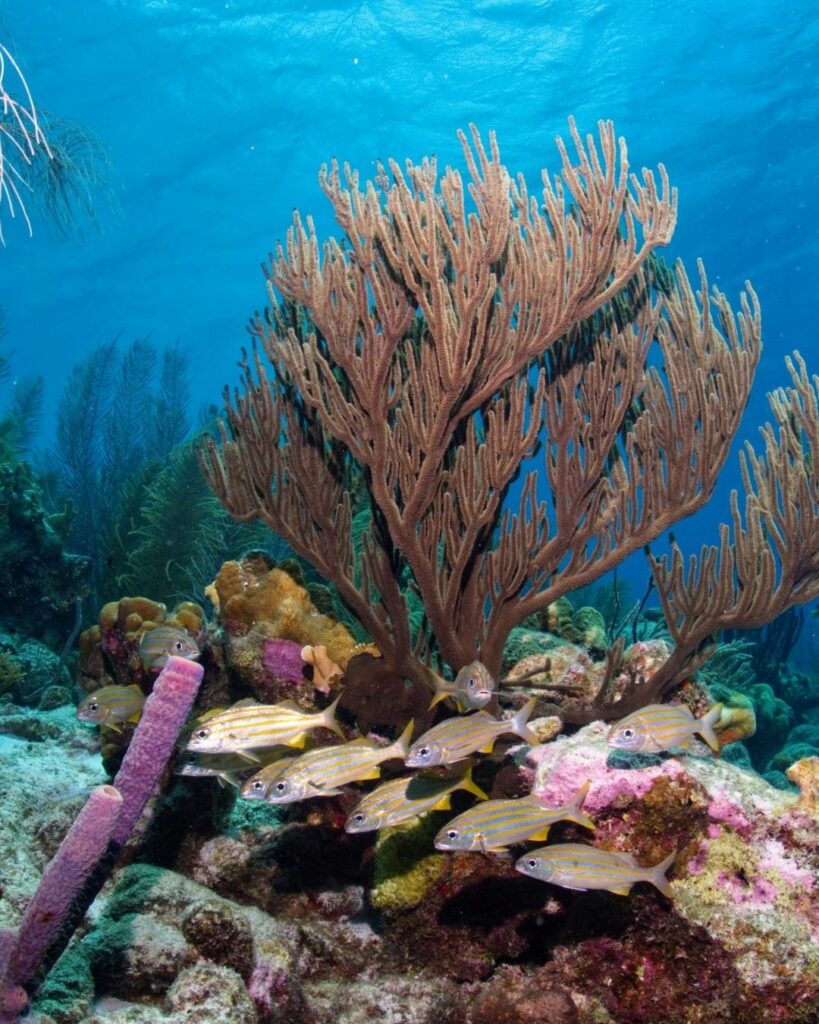
Bonaire diving conditions often include visibility up to 100 feet on the west coast.
Visibility in Bonaire is routinely cited as one of its strongest draws, and it earns that reputation over and over. On a clear day on the west coast, you are looking at 80 to 100 feet of clean, blue water. That kind of visibility lets you watch a green turtle long before it reaches you, track your buddy without crowding, and orient yourself on a reef without constantly checking your compass.
What affects visibility in Bonaire: plankton blooms (occasional, short-lived), run-off after heavy rain, and depth. Visibility is typically best in the mid-water column, 30 to 80 feet, which is also where most of Bonaire’s reef life concentrates.
For a diver who has experienced murky water or poor visibility elsewhere, Bonaire’s clarity tends to feel like a reset. Disorientation is one of the primary triggers of anxiety underwater. When you can see clearly in every direction, the underwater environment stops feeling confusing and starts feeling like somewhere you belong.
Current: Read the West Coast Differently Than the North and East
This is where most descriptions of “easy conditions” tend to oversimplify.
On Bonaire’s west coast, where the majority of boat dive sites are located, the current is genuinely minimal. These sites are sheltered from the dominant easterly trade winds by the island itself. Most dives are slow, drift-free reef dives where you choose your own pace and spend bottom time however you like. This holds whether you are on a guided boat dive or shore diving, Bonaire’s famous yellow rock entries independently.
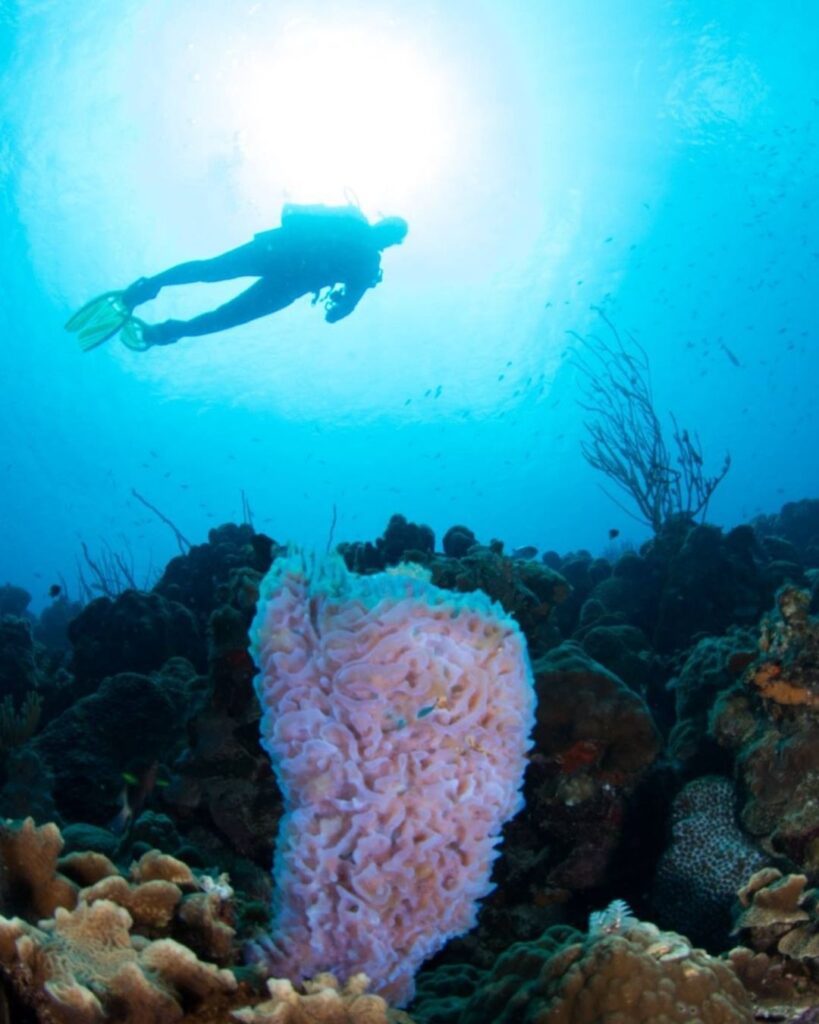
Minimal current is one of the defining features of Bonaire diving conditions on the west coast.
But fair warning: the north and east coasts are a different story. Karpata and some of the northern wall sites can carry surge, particularly when swell builds from the north. Klein Bonaire, the uninhabited island offshore and accessible only by boat, is sheltered but can carry a light drift on its exposed faces.
On a guided trip, current conditions at each site are assessed before descent. You will not be directed to a site that does not match the group’s comfort level. That assessment is part of what structured boat diving removes from your list of things to manage on your own.
One thing worth knowing about surface Bonaire diving conditions: the same easterly trade winds that keep Bonaire’s underwater environment calm also create consistent light chop on the open water between sites. This doesn’t make it rough, but if you tend toward motion sensitivity, eating something light before morning departures can make it easier on yourself. Fortunately, the boat rides are short, and feeling steady when you hit the water matters more than what you had for breakfast.
For a closer look at how boat access affects which sites you reach and how site conditions are managed, the boat-versus-shore diving comparison goes into detail.
The Wetsuit: What Actually Works for Bonaire Diving Conditions
The standard recommendation for Bonaire is a 3mm full wetsuit, and it holds up well for most divers doing two to three dives per day. If you are planning four dives in a day or diving into the late afternoon, add a skin or a 1mm base layer. Chill accumulates across multiple dives even in warm water, and your last dive of the day should feel as good as your first.
A hood is not necessary unless you run very cold. Booties are worth bringing if you are gearing up on a boat deck or doing any shore entry on Bonaire’s rocky coastline. Gloves are technically permitted in Bonaire’s marine park as long as you do not touch anything, though most divers skip them entirely.
If you have not dived in a couple of years and you are uncertain about your buoyancy, come in your wetsuit rather than a rashguard. Thermal comfort affects focus. A diver who is cold tends to spend time managing cold instead of managing her dive, and that is not where you want your attention to go.
What Makes Bonaire Forgiving, and What Still Requires Attention
Forgiving does not mean effortless; it simply means the margin for error is wider.
What Bonaire gets right: the terrain is clear and readable, depths are consistent (most west coast sites max out around 100 feet before the drop-off), entries and exits on a boat dive are clean, and the reef structure itself is well-documented. Part of why it is so readable is the protection behind it. Stichting Nationale Parken Nederlandse Antillean (STINAPA), the Netherlands Antilles National Parks Foundation, governs Bonaire’s marine park. Anchoring is prohibited at all reef sites, so coral formations remain intact, and the landscape remains consistent dive after dive. When I assess sites for a Rise & Dive trip, reef condition matters as much as water conditions. Bonaire holds up on both.
What still requires attention: depth profiles on wall-adjacent sites can creep deeper than you plan if you follow the reef rather than your gauge. Nitrogen loading across multiple dives is real regardless of how warm or clear the water is. And visibility that extends 80 feet in every direction can make it easy to drift further from the boat than you intended.
For a diver returning to the water after time away, or someone still building comfort with underwater navigation, these are the Bonaire diving conditions to consider before you dive. Not as reasons to stay home, but as things to have a plan for.
Why I Chose These Conditions for This Trip
Stable water temperature means no energy spent managing cold, reliable west-coast visibility means less disorientation underwater, and minimal current on boat dive sites means the pace is yours to set. Boat access means you are not hauling gear across a rocky shoreline or making navigation decisions from a roadside parking spot.
These Bonaire diving conditions reduce what your nervous system has to manage between entering the water and actually diving. That is not a small thing. It is part of why I chose this destination.
If you want to understand what diving in Bonaire feels like rather than what the numbers say, check out Why Bonaire Diving Feels Different. And if you are specifically wondering about the Bonaire diving conditions during October, The Best Time to Dive Bonaire breaks it down.
For everything in one place, the Women’s Scuba Diving in Bonaire: Complete Guide covers Bonaire diving conditions, guided versus independent diving, what the experience is like for women specifically, and how the trip is structured.
If you want to dive in Bonaire them alongside women who get it, check out our upcoming trip here.
Until the next dive,
Frequently Asked Questions
How clear is the water in Bonaire?
Visibility on the west coast typically ranges from 60 to 100 feet, with 80 feet a reasonable expectation on most boat dives. Clarity is strongest in the mid-water column between 30 and 80 feet, where reef life concentrates.
What wetsuit should I bring to Bonaire?
A 3mm full suit works for most divers doing two to three dives per day. If you run cold or plan to do four dives daily, add a skin or a 1mm base layer for later dives. Booties are useful on boat entries. A hood is not required.
Are there currents in Bonaire?
On the west coast, where most guided boat dives operate, the current is minimal. The north and east coast sites can carry surge or light drift, particularly in swell. On a guided trip, site conditions are assessed before entry, and the group is never directed into conditions that do not match its comfort level.
Do Bonaire diving conditions make it a good place to dive year-round?
Yes. Water temperature, visibility, and current patterns are consistent across all twelve months. Bonaire sits outside the Caribbean hurricane belt, so there is no meaningful rainy season impact on diving. October, in particular, offers excellent conditions with fewer visitors than the peak summer months.
