
The best time to dive in Bonaire is almost any month of the year. The island sits outside the hurricane belt, where water temperatures remain consistently warm, and visibility rarely drops below 60 feet, even in the quieter months. But if you want the specific combination of peak water temperature, excellent visibility, and the quietest boats, you’ll want to consider October.
Most guides point you toward the summer months, and they’re not wrong for doing this. But the best time to dive in Bonaire, given the conditions and space on the water, is a different answer, and October is a time more people should be making a case for. So I’m going to!
July and August are peak season for good reason: school breaks, vacation windows, and the momentum that pulls everyone toward the same months. What those months do not give you is quiet. The boats fill, the popular sites see more traffic, and the dive operations run at full capacity. October is a different kind of month. The crowds thin out. The water temperature sits at its annual peak. And because most “best time to dive in Bonaire” guides are written around summer, October barely gets mentioned.
That is a gap worth filling.
Bonaire Conditions, Month by Month
Here is what the conditions look like throughout the year, with a note on who each window tends to suit best.
| Month | Water Temp | Visibility | Crowd Level | Best For |
|---|---|---|---|---|
| January | 77°F / 25°C | 60–80 ft | Low | Experienced divers who want quiet water |
| February | 77°F / 25°C | 60–80 ft | Low–Moderate | Returning divers, shoulder season value |
| March | 78°F / 26°C | 70–90 ft | Moderate | Spring break overlap begins |
| April | 79°F / 26°C | 70–90 ft | Moderate | Good conditions, manageable crowds |
| May | 80°F / 27°C | 80–100 ft | Moderate | Visibility peaks; pre-summer sweet spot |
| June | 81°F / 27°C | 80–100 ft | High | Summer begins; busier boats |
| July | 82°F / 28°C | 80–100 ft | Very High | Peak season; excellent conditions, most traffic |
| August | 82°F / 28°C | 80–100 ft | Very High | Peak continues; book early or wait |
| September | 82°F / 28°C | 70–90 ft | Low–Moderate | Post-peak drop-off; underrated window |
| October | 82°F / 28°C | 80–100 ft | Low–Moderate | Peak water temp, low crowds, excellent visibility |
| November | 80°F / 27°C | 70–90 ft | Low | Quiet season; slight cooling begins |
| December | 78°F / 26°C | 60–80 ft | Low–Moderate | Holiday surge at the end of the month |
The water temperature in October matches the peak of summer without the summer traffic. Visibility holds up well through October on the west coast, where most diving happens. And because Bonaire sits outside the Atlantic hurricane corridor, there is no rainy season equivalent to worry about. When September storms are tracking elsewhere in the Caribbean, Bonaire diving tends to go on as normal.
The Case for October
The reason October works so well has a lot to do with what has just passed and what has yet to arrive.
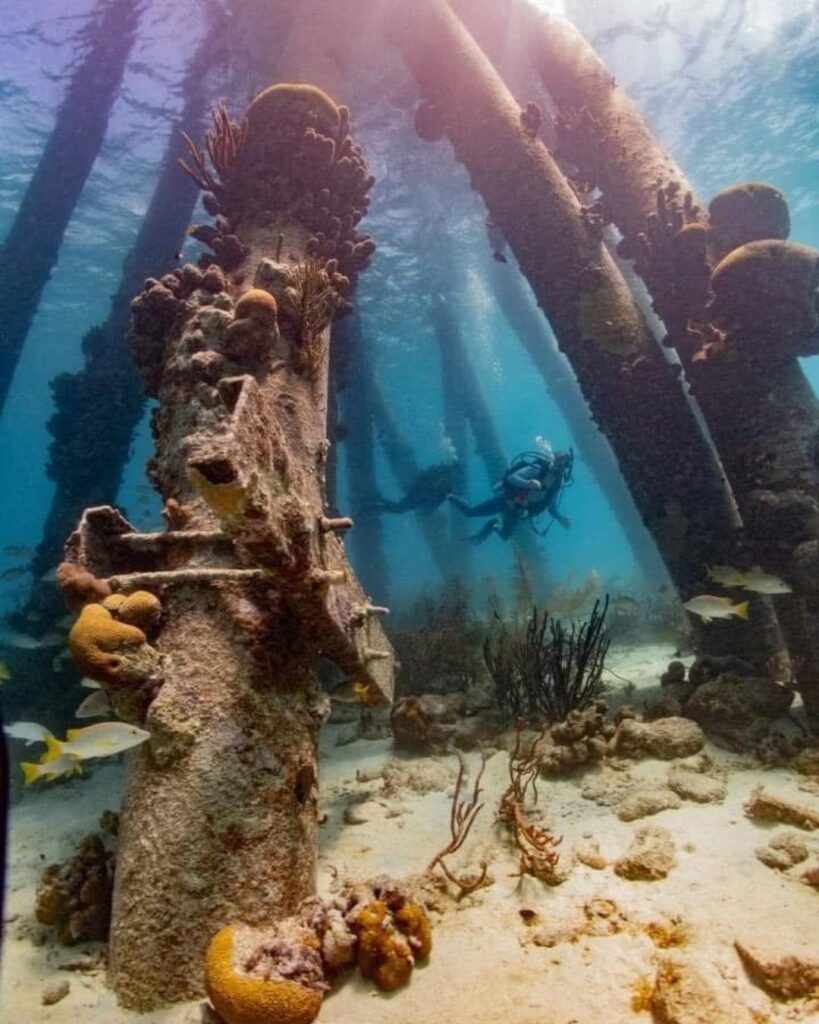
The summer peak is over. The operators are not running at maximum capacity. Sites like Salt Pier and Karpata are less congested. You can take your time at depth without another group hovering behind you. That pace matters more than it sounds, especially if you are diving with intention rather than rushing through a checklist of sites.
The water at 82°F is genuinely comfortable, so a 3mm wetsuit is sufficient for most divers. You are not cold, which means your attention stays on the dive rather than on managing your body temperature.
That comfort at the reef level means you are not rushing a dive to warm up. You are not watching a bottom timer with one eye because the group needs to surface and regroup.
The reef at Klein Bonaire and the 1000 Steps come into focus differently when you have time to be still in them. Turtles pass. A spotted drum moves along the base of the coral. You notice what is there because nothing is pulling your attention away. That quality of presence is what Bonaire is built for, and October is one of the months where the dive conditions completely reflect that level of presence.
Even the light in October has a quality that summer does not. The sun angle shifts, and afternoon dives offer a different kind of illumination through the water column. These are elements you won’t necessarily find in a conditions report, but once you have dived Bonaire in October, you will know exactly what I mean.
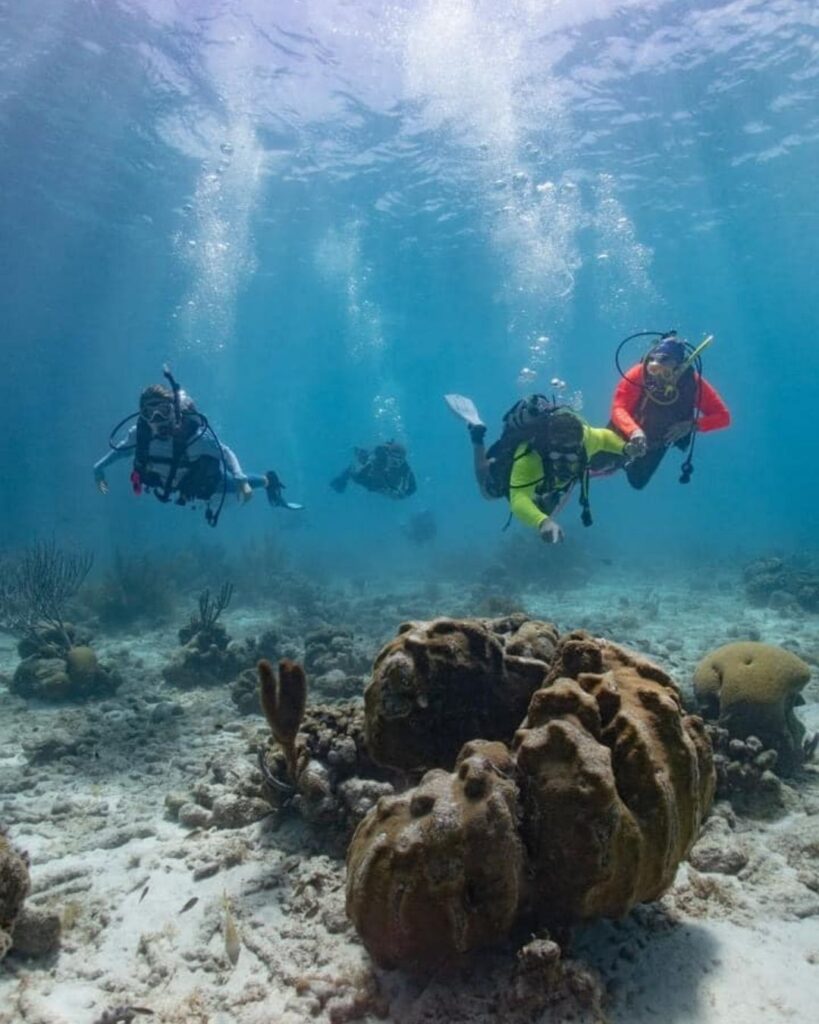
And then there is the simple fact of the calendar. October is a realistic travel window for women who cannot take extended time off during peak summer, as well as for professionals and recently retired women building a new rhythm into their year.
That last point matters to me personally. When I was planning the timing for the Rise & Dive Bonaire trip, October was not a date I compromised on; It was the first choice.
I needed conditions that would accommodate a small group of women with varying levels of experience. Some may be coming back to diving after a gap. Some intermediate divers may be ready to deepen their practice. That means forgiving visibility so no one feels disoriented, water warm enough that the body stays relaxed rather than tense, and dive sites that are not so crowded they create pressure or comparison.
October checks every one of those boxes. The boats are less full. The divemasters have more bandwidth to give individual attention. The pace of the week can breathe.
There is also something about October that matches the energy of the group I tend to lead. These are not women racing through summer vacation. They are women who made a deliberate decision to show up for themselves, to carve out time in a year that asks a lot of them. October reflects that kind of intention. The women who choose it always know exactly why they are there.
If you want the full picture of what the Rise & Dive Bonaire trip includes and who it is designed for, you’ll find it on the Women’s Bonaire Dive Trip page.
If you want to go deeper on conditions, Bonaire diving conditions: what the numbers mean for your dive covers visibility, current, and water temperature in plain terms. And for everything about diving Bonaire as a woman, including what to expect if you are returning to diving or diving over 50, the Women’s Scuba Diving Bonaire guide is where to start.
If you want to hear about future trips before they go public, the Women In Scuba Empowered (WISE) community is where you’ll hear about them first.
Until the next dive,
Frequently Asked Questions
What is the best month to dive in Bonaire?
Bonaire is diveable year-round with consistent conditions. But October and May are both considered the best time to dive in Bonaire because they are two of the most underrated windows, offering peak or near-peak water temperatures and visibility, with significantly lower crowds than in summer.
Is Bonaire good in October?
October is one of the better months and a best time to dive in Bonaire. Water temperature sits at 82°F, visibility runs 80 to 100 feet on the west coast, and post-summer crowd levels drop significantly. You get peak conditions without the peak volume.
What is visibility like in Bonaire in October?
Visibility in October typically ranges from 80 to 100 feet at west coast dive sites. Bonaire’s marine park protections keep the reefs healthy and the water clean, and October conditions generally maintain that level of visibility.
Is Bonaire affected by hurricanes?
Bonaire sits well south of the Atlantic hurricane belt, below the primary hurricane track. It does not have a meaningful hurricane risk compared to other Caribbean destinations. Storms in September and October that affect other islands typically do not impact Bonaire’s conditions.
