
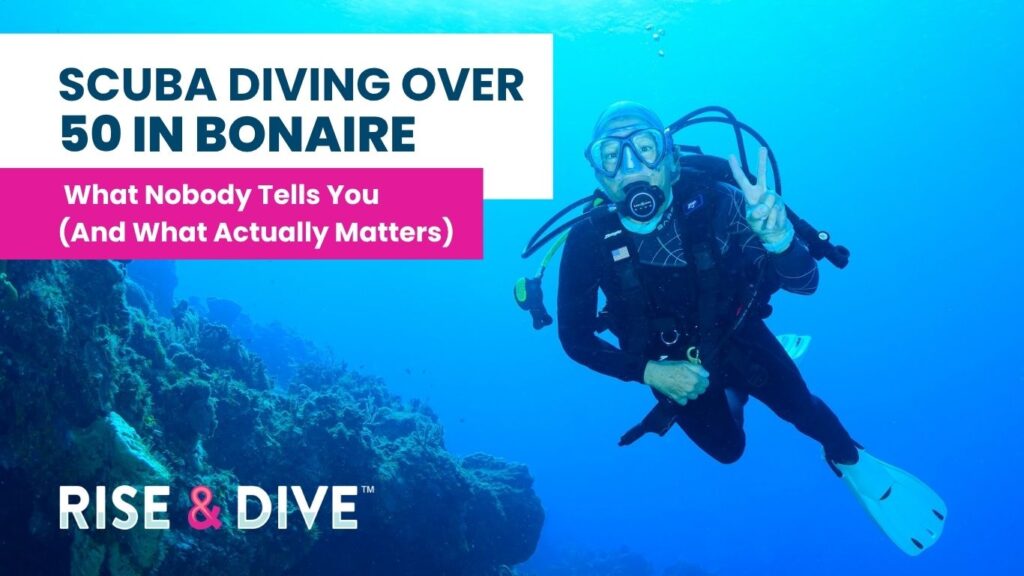
At 50, my diving has never been better.
Not because I am fitter than I was at 35, or braver, or more technically polished. But because I stopped trying to prove something underwater and started actually diving. My attention now goes where it should. On the reef. On my breath. On what is right in front of me.
That shift is real, and it is not unique to me. The women I lead into the water in their 50s and 60s are some of the most present, most aware divers I dive with. They know how to read their bodies. They ask good questions. They are not white-knuckling their way through a dive just to say they did it.
Bonaire, as a destination, tends to reward that kind of diver. The conditions here, which include clear water, calm sites, and stable year-round temperatures, are designed for divers who prioritize presence and intention. This is a destination that gives back what you put in, and at this point in your diving life, you have a lot to put in.
Here is what actually matters about scuba diving over 50 in Bonaire.
What Bonaire Gets Right for This Stage of Diving
The beauty of scuba diving over 50 in Bonaire is that it does not require you to prove anything. To be clear, that isn’t a description or indicator of the difficulty level. The diving here is genuinely engaging, the reefs are healthy, and the marine life is abundant. What I mean is that the conditions are not fighting against you. It looks like minimal current on the west coast sites, visibility that regularly hits 80 to 100 feet, and water temperature stable at 78 to 82 degrees year-round. Best of all, on a well-run trip, the pace is set by the group, not by someone else’s agenda.
When the environment is not working against you, something in your nervous system opens up. You stop dividing your attention between managing conditions and actually being present in the dive. That is when scuba diving over 50 becomes what it should be: calm, clarifying, and enjoyable.
5 Reasons Scuba Diving Over 50 in Bonaire Works for Women
1. Guided boat diving means your energy goes to the dive, not the logistics.
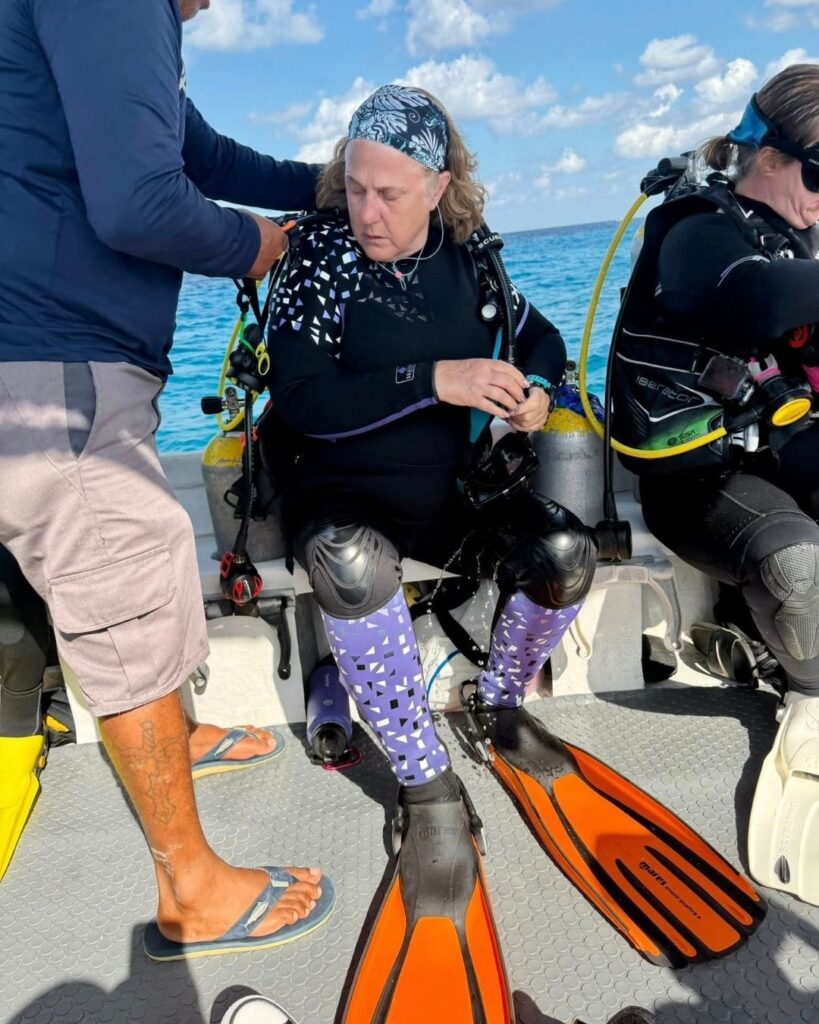
On the Rise & Dive trip, you dive from a boat operated by operators I personally know and trust. Your tanks are set up. The site is chosen. The underwater environment is familiar to the people leading you. For a woman returning to diving after time away, or still building underwater comfort, that structure removes a specific kind of drain before you ever hit the water.
The pace belongs to the group, not to a stranger’s ambition. There is no performance pressure on how quickly you gear up or how long you want to be on the surface between entries. The trip is designed for women at this stage of their diving lives, so the structure reflects that pace and set of desires.
2. The visibility reduces disorientation.
Bonaire consistently runs 60 to 100 feet of horizontal visibility. For older divers who have experienced murky water or low-viz conditions elsewhere, that clarity changes things at a physiological level. You can see what is around you, your dive buddy, the reef extending ahead, the sandy bottom below, and the surface above. That orientation reduces the cognitive load of diving, which directly affects how comfortable and present you feel in the water.
Disorientation underwater is a significant contributor to dive anxiety. Clear water removes one of the most common triggers.
3. The water temperature means your body is not working against itself.
Bonaire lies outside the Atlantic hurricane belt, so conditions are stable year-round. Water temperature runs 78 to 82 degrees Fahrenheit, and a 3mm wetsuit is typically sufficient. You are not cold, which means your body is not managing cold stress on top of everything else involved in diving. For a woman who has had a chilly dive leave her tense and exhausted before she was ready to be done, that difference is immediate.
4. The current is minimal on the primary dive sites.
The west coast sites, where most of the structured diving on this trip happens, have minimal current. You are not fighting water to stay on the reef or dealing with a drift that demands constant navigation. For an intermediate or returning diver still getting comfortable, that gives you the conditions to be fully in the experience rather than managing it throughout.
Scuba diving over 50 in Bonaire still requires something of you, but the demands come from your skill and your presence, not from external conditions working against you.
5. The itinerary is built around recovery, not volume.
This trip is not a race to log the most dives. I deliberately build recovery into the structure: surface intervals long enough to matter, a pace that gives your body what it needs. You are not pressured to do a fourth dive when three was already the right number for the day.
For a woman who has spent decades in environments that asked her to push through her own signals, a trip that takes your body’s input seriously is not a small thing. You dive the amount that is right for your experience level on that particular day. That is the whole point.
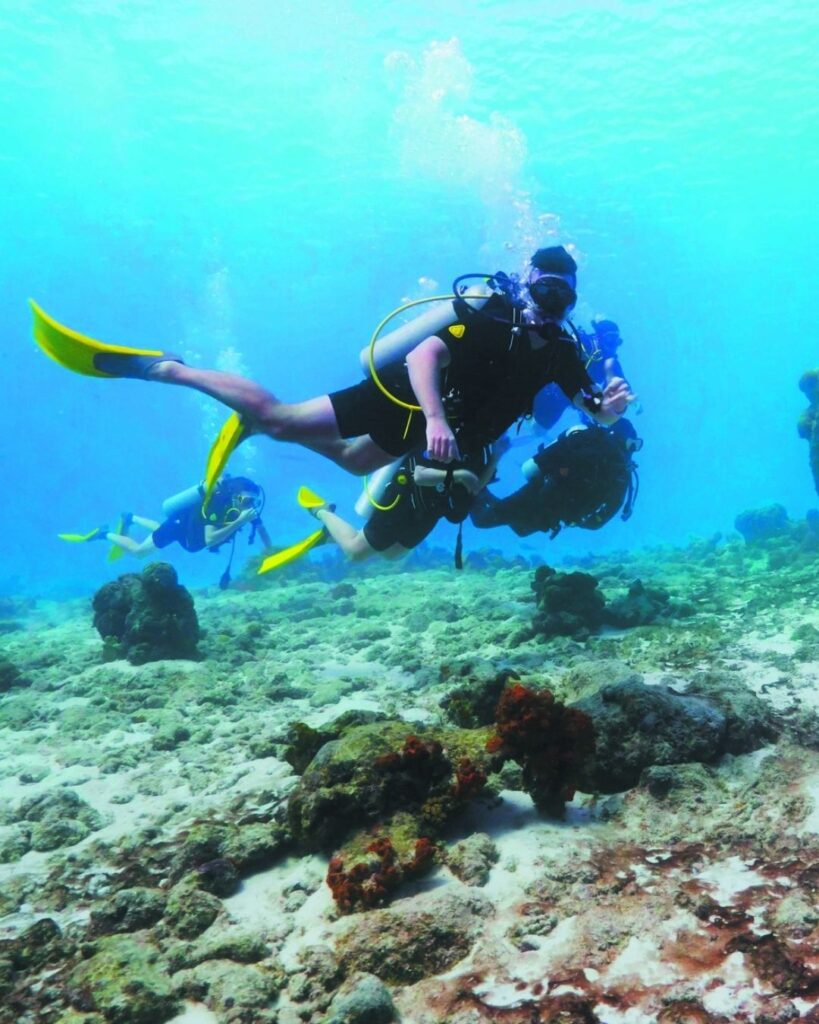
Clear visibility in Bonaire helps reduce disorientation and supports a more relaxed dive experience.
What Nobody Tells You About Returning to Diving
Coming back to scuba after time away, whether that is a year, five, or longer, is its own kind of experience. The skills are often more intact than you expect. Equalization, buoyancy, breathing underwater: these come back with surprising speed when the conditions are right, and the environment around you is supportive rather than indifferent.
The body retains more than you think. I have watched women who had not dived in years settle into clear, calm water and find their way back within a single dive. They didn’t need more oversight or instruction. They just needed the right environment and the right people by their side.
What tends to take longer to return is trust. It means trusting that your questions are reasonable, that the person beside you is paying attention to your experience rather than just tolerating it. Fortunately, that is what a well-structured women-only trip gives you. The support is specific, the pace is appropriate, and your experience matters to the people who designed it.
The Fitness Question of Scuba Diving over 50 in Bonaire
You do not need to be an athlete to scuba dive over 50, or over 60, or over 70, for that matter. The women who dive with me in their 60s and into their 70s are not exceptional cases. They are the norm. What they share is not exceptional fitness. It is the willingness to show up and trust the process.
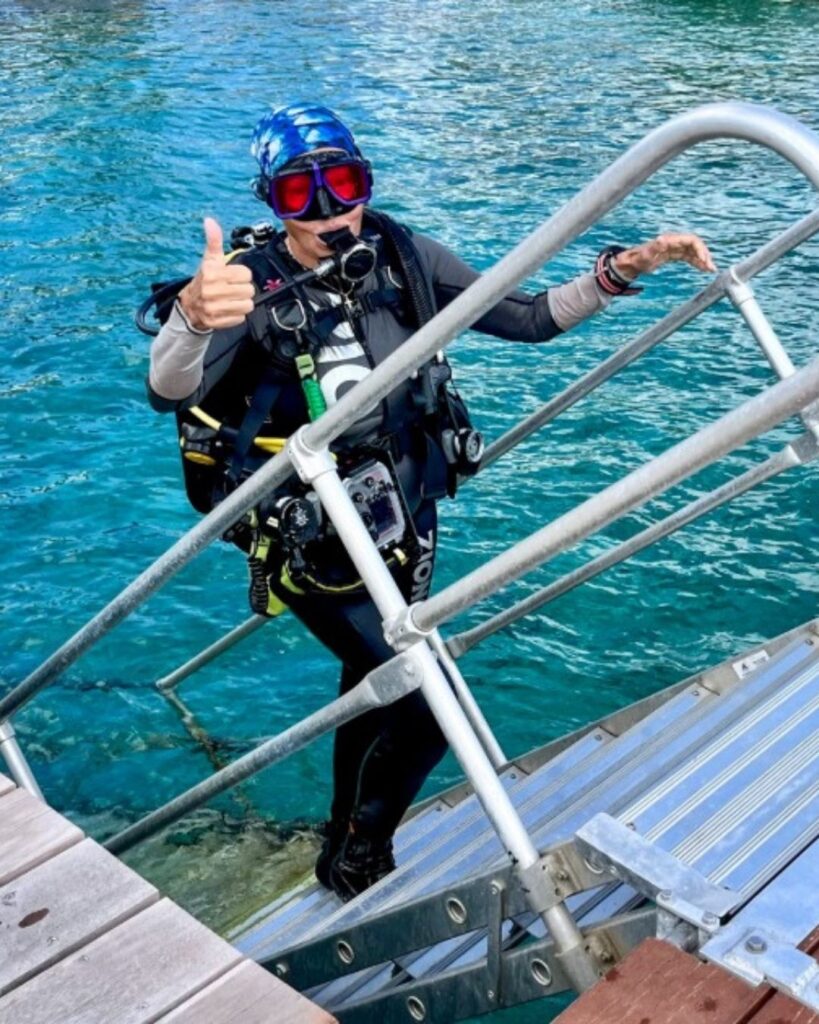
Easy water entries in Bonaire, like dock stairs, support a more controlled and comfortable start for divers over 50.
Here’s what you need: the ability to swim, generally good health without contraindications, and the basic physical capability to manage your gear on and off a boat. On a well-run guided dive trip, that process is supported.
PADI requires medical clearance for certain conditions, and that should be taken seriously. A physician who understands diving medicine can give you a clear answer about whether diving is appropriate for your specific situation.
You won’t be facing the extreme fitness demands of recreational scuba diving at moderate depths, and the cardiovascular load is lower than most people expect when conditions are calm and pace is managed well. What matters more than peak fitness is body awareness and calm: knowing how to read your own signals and respond to them rather than override them.
What Shifts When You Get Underwater
I consistently choose Bonaire as a destination for Rise & Dive because its dive conditions suit this specific kind of diver. Not because it is the most dramatic destination, or the one with the densest marine life, or the site of some spectacular dive phenomenon. But because Bonaire gives you the conditions to be fully present in the water on your own terms.
The absence of current and the quality of visibility mean your attention can go to what is actually there: a queen angelfish is working along the coral—a spotted drum tucked under a ledge. A sea turtle moving past with the particular unhurriedness of something that has nowhere to be.
At 60 feet in clear water, with no urgency above you and no fight ahead of you, something settles. It is not mystical, it’s physiological. Your nervous system registers safety, and your attention opens as a result. You stop managing, and you start actually perceiving.
The best part is that the shift isn’t limited to your time underwater. Women who dive with intention in conditions like these carry something back with them to the surface, and it’s a kind of clarity that is harder to find on land. It’s the demonstration, in their own bodies, that they are capable of being fully present in an environment that once felt uncertain.
That is worth going for.
What Comes Next
The Rise & Dive Bonaire trip is structured for women who want their diving led with intention, at a pace that meets them where they are, in conditions that reward the kind of diver you have become.
The Women In Scuba Empowered (WISE) community has been part of this trip from the start. If you want to be in that conversation before you decide, you are welcome there.
You can also sign up for the Rise & Dive email list to get updates directly.
Rising strong,

Three Questions You Have Not Said Out Loud
Is scuba diving over 50 in Bonaire safe?
For most healthy women over 50, the answer is yes. The primary requirement is a medical evaluation if you have any conditions that could be affected by pressure changes, cardiovascular exertion, or nitrogen absorption. Your physician can assess whether recreational diving is appropriate for your specific situation. Beyond medical clearance, recreational diving at moderate depths with proper supervision is well within reach for women across a wide range of fitness levels.
Can I start diving at 55, or is it too late?
It is not too late! Women in their 50s, 60s, and 70s learn to dive and dive well. What changes with age is not your ability to learn. It is how you learn best. A woman-centered structured experience where pace is managed, questions are expected, and skill-building is progressive works significantly better for an adult learner than a course built for someone with unlimited physical confidence and no other responsibilities. The age question is mostly a distraction from the real one: Is this the right environment for you to learn in?
Will I be the oldest one there?
On a Rise & Dive trip, the women who travel with me are professionals and recently retired women between 40 and their early 70s. The experience is designed for that range of women, not incidentally inclusive of it. You will not be the oldest one there. And even if you were, it would not matter; the only thing that can jeopardize you is your own worry.
