
Most of the women I take on guided diving in Bonaire could absolutely do it on their own. They are perfectly capable of renting the truck, loading the tanks, driving to the yellow rock marker on the side of the road, gearing up in the sun, and walking into the water whenever they feel like it. They have the certification, they have the dives, and they are not looking for someone to hold their hand.
But they choose a guided trip anyway. When I ask them why, the answer is almost always some version of the same thing: I know where I want my energy to go, and I want it going toward the dive.
That clarity is its own kind of skill. Bonaire is famous for independent shore diving, and for good reason. The access is real, the freedom is real, and plenty of divers love pursuing that version of the week. But a guided women’s dive trip gives you something independent diving cannot, and it has nothing to do with capability. It has to do with what becomes possible when the decisions are already made, the site is already chosen, and the only thing left is to get in the water and be present. That is a different experience, and for many women, it’s the preferred one.
What Independent Shore Diving in Bonaire Actually Looks Like
The reputation is real. Bonaire has more than 80 named dive sites along its west coast, most of them accessible directly from shore. You can be in the water before sunrise, after lunch, or both. No mandatory groups, no scheduled departure times, no guide required. For a certain kind of diver, that kind of freedom is the whole point of the trip.
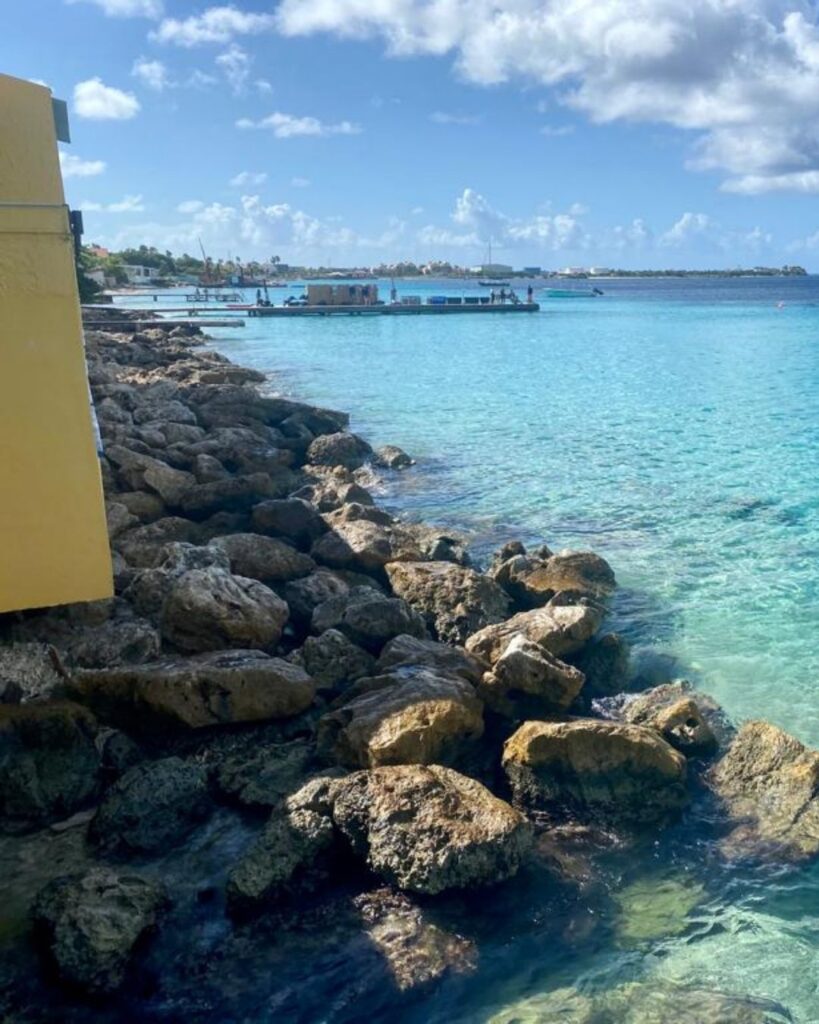
Independent shore diving sites in Bonaire offer flexibility, but require planning and effort before each dive.
But independent shore diving in Bonaire is also genuinely logistical. You coordinate tank fills and pickup windows with a local operator. You rent or drive your own vehicle, load your gear, and navigate to the site. Many of those yellow rock markers look almost identical on a stretch of coastline you have never seen before. You read the conditions yourself and decide whether the site you planned is the right one for today.
Then you do all of that again after lunch if you want a second dive, and again the next morning, and the one after that. None of it is hard once you know the rhythms of the island. But it is work, and it sits in the background of every dive day, drawing from the same reserves you came here to use underwater.
That is not a criticism of independent diving. It is just an honest description of what it takes. And it is exactly why the question of guided versus independent is worth asking before you book, not after you arrive.
What You Actually Get With Guided Diving in Bonaire
When the logistics are handled, something shifts in how you show up for the dive. You arrive at the boat knowing where you are going and why. The briefing gives you a picture of the site before you are in it, so you are oriented rather than guessing. Your guide enters the water with you and stays there. Between dives, the day has a rhythm rather than a series of decisions you have to make on the fly. By the time you are descending, the only thing left on your mind is the dive.
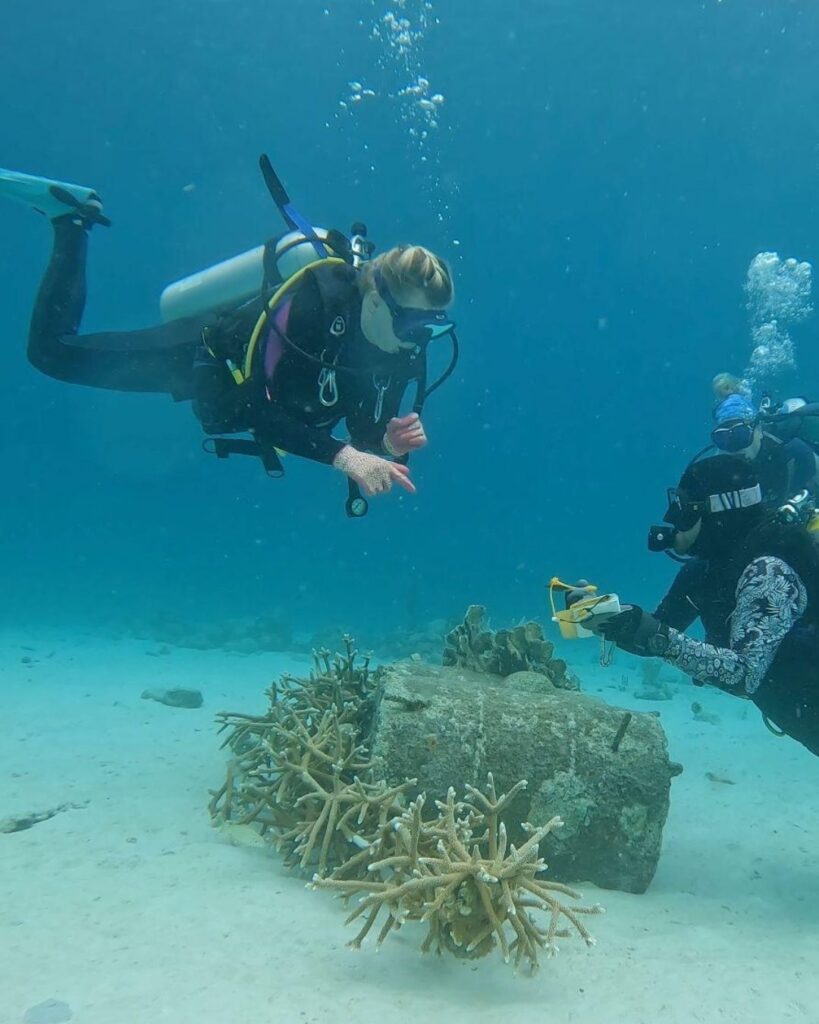
With a guide in the water, your attention stays on the reef instead of navigation.
The conditions in Bonaire only add to the experience. Visibility along Bonaire’s west coast ranges from 60 to 100 feet at most sites. Water temperature ranges from 78 to 82 degrees Fahrenheit year-round. Current is minimal on the west coast, which means slow, immersive dives where you are not fighting anything.
Healthy coral formations, green sea turtles moving through at their own pace, reef sharks in the deeper sections, and seahorses tucked into the rubble if you know where to look. The reef here is well-protected under Bonaire’s marine park system, and it shows. Guided diving in Bonaire lets you experience all of that instead of having to manage around it.
There is also access to sites that shore diving simply cannot reach. Klein Bonaire, the small uninhabited island just offshore, is home to one of the most pristine reef systems in the Dutch Caribbean, and you cannot get there from shore. It requires a boat, which a guided trip has.
For the longer version of why boat structure specifically changes the experience, the post on why a small-group guided dive trip in Bonaire changes everything goes into the operational detail.
Why Choosing Guided Diving in Bonaire Is a Self-Trust Decision, Not a Skill Question
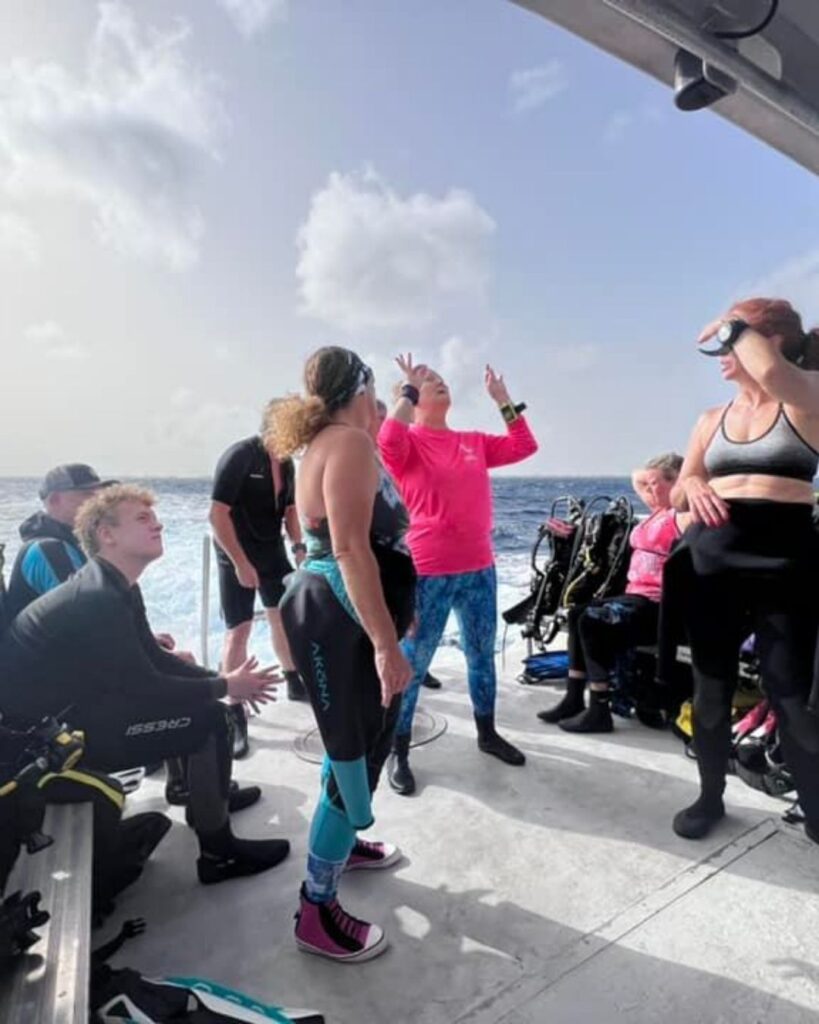
There is a version of self-sufficiency that serves you and a version that just costs you. Bonaire is a place where that distinction is clear because the independent option is genuinely available. Nobody is making you pursue guided diving in Bonaire. The freedom to do it alone is right there. Which means choosing structure is a real choice, not a default.
I have watched women, especially women over 50, spend an entire week in Bonaire managing the logistics of the trip when what they actually came for was the diving. Not because they were incapable, that couldn’t be further from the case. But the cognitive overhead of independent diving takes up more space than most divers anticipate. The women who came home most satisfied were not always the ones who logged the most dives. They were the ones who were fully present for the dives they took.
That is also true on land. Knowing where you want your energy to go and choosing accordingly, rather than powering through the version that asks more of you than it gives back, is a skill. The water is a good place to practice it. Most women I dive with on women’s guided diving in Bonaire find that clarity starts to show up in their lives, not long after they find it underwater. That is not an accident. It is the whole reason I do this work the way I do.
What the Rise & Dive℠ Trip in Bonaire Is Actually Built Around
Everything about the way I run this trip comes back to one idea: your energy belongs underwater, not on the logistics getting you there. By the time you are standing on the boat deck, every decision about where you are diving, how the day is paced, and what kind of support is available has already been made. What is left for you is the reef.
I am a PADI Instructor and am present with the group throughout the week, both in and out of the water. I vet every operator we work with for boats, crew, and approach to pacing before a trip goes on the calendar. Six days of boat diving, eleven tanks. If you want more time in the water between boat dives, the house reef is right there.
Each trip also includes a Dive Somatics℠ session. Dive Somatics℠ is a methodology I developed at the intersection of somatic practice and the underwater environment. Most of what makes diving hard lives in the body rather than the mind, and Dive Somatics℠ works directly with that. What you build underwater with that kind of attention does not stay underwater. It moves with you.
If the anxiety piece is something you are carrying, the post, “Why Bonaire Is One of the Best Places to Work Through Dive Anxiety,” goes into what actually shifts when the conditions and the support are right.
Guided diving in Bonaire is an exceptional experience for supported diving. The conditions, the reef, and the access are all real. But what I have seen over and over is that the women who leave here most satisfied are not the ones who did the most. They were the most present. That is what this trip is designed to give you. Not a checklist. Not a packed schedule. A week in the water, where your only job is to show up.
See you under the surface.
With courage and bubbles,

Frequently Asked Questions
Is Bonaire diving independent or guided?
Both options are genuinely available in Bonaire. Certified divers can dive independently from shore at any time without a guide, which is a large part of the island’s reputation. Guided diving in Bonaire is also widely available and gives you access to boat sites, structured dive days, and in-water support that independent shore diving does not. Neither is required. The question is which one gives you the week you actually came for.
Do you need a guide to dive in Bonaire?
No. Bonaire does not require a guide for certified divers. Most operators require a checkout dive before renting equipment independently, which is a reasonable safety measure. Guided diving in Bonaire is a choice, and for women who want their energy directed toward the dive rather than the logistics, it is often the right one.
Is Bonaire good for less confident divers?
Bonaire is genuinely one of the best places I know for divers who are rebuilding confidence or returning after a gap. Calm water, visibility that regularly reaches 80 to 100 feet, and forgiving depth profiles mean you are not dealing with challenging conditions on top of everything else you might be working through. Add a small group of women diving at a similar pace with a guide who has been doing this for a long time, and the environment becomes unusually supportive. The reef does a lot of the work. Your job is to show up.
What is the difference between a Rise & Dive guided trip and booking a dive shop in Bonaire?
A local dive shop in Bonaire will take you diving, and the sites will be good. But the experience is built for throughput, not for you specifically. It will most likely be co-ed, with a different group each day, and the pace will be set by whoever shows up. A Rise & Dive℠ women’s guided diving in Bonaire trip is a small group of women who dive together for a week, with me present throughout, and structured around what actually makes a week of diving meaningful rather than just efficient.
