
Cozumel has one of the healthiest reefs in the Caribbean, and the Cozumel marine life reflects it. The conditions are consistent, the current is predictable, and visibility regularly runs to 100 feet or more. That combination produces a reef where encounters with marine wildlife happen regularly, not occasionally, and where the diving itself is steady enough that you can actually pay attention to what is in front of you.
This guide covers what lives on this reef and when. There are year-round residents you can count on seeing more consistently and seasonal sightings worth planning dives around. There’s also a species found almost nowhere else on Earth.
If you are trying to decide whether Cozumel marine life is worth the trip, or planning what to look for once you are there, this is where to start.
What the Cozumel Reef System Actually Is
Cozumel sits inside the Mesoamerican Barrier Reef, the second-largest barrier reef system in the world. The reef runs along the western side of the island, where almost all scuba diving in Cozumel takes place. The eastern coast faces the open Caribbean and is too rough for recreational diving in most conditions.
Here’s what this means practically: the dive sites are protected, structured, and consistent. The reef wall drops to a depth that is gradual enough to be accessible and dramatic enough to be impressive. Coral coverage is dense, with visibility often reaching 100 feet or more.
The conditions here are not a happy accident. They are the result of geography, current, and a protected marine park designation that has governed the reef since 1996. The reef is healthy, and that health shows up in the Cozumel marine life.
The Current and Why It Matters for What You See
Drift diving changes the physical experience of being underwater. When you’re not working to stay in place, not burning through air while managing position, not splitting your attention between the reef and your own buoyancy, that reduction and redirection of effort change what happens around you.
Drift Diving, Defined
Cozumel is a drift diving destination, meaning the current carries you along the reef rather than requiring you to swim against it. Why Cozumel Drift Diving Works So Well for Building Confidence and Control explains how that works and why it matters for your experience in the water. What matters here is specifically how drift diving affects animal encounters.
When you’re not kicking so hard to maintain position, you’re not creating disturbance. You are quieter in the water. Animals that would hold back or take cover when a diver is churning through their space will instead tend to hold their position, or even come closer, when a diver drifts past with minimal effort.
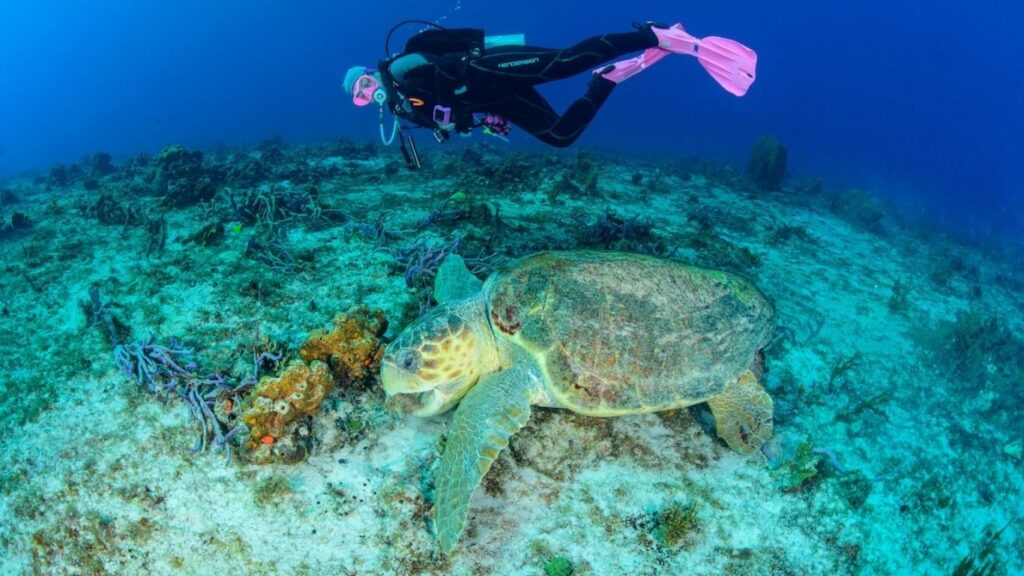
Turtle encounters at Cozumel are more common for this reason, and so are passing eagle rays. This is part of how your body experiences diving here, and it is part of why encounters feel different from other Caribbean dive destinations.
Cozumel Marine Life You Can Expect to See
Cozumel’s reef supports a broad range of Cozumel marine life, and the conditions mean you are likely to encounter more of it than you expect. The list below is long because the reef is genuinely healthy and the current regularly brings in open-water visitors. But it’s also not exhaustive. What you see on any given dive depends on the site, the season, and how much attention you bring to the smaller things.
Year-Round Residents
Sea turtles. Green, hawksbill, and Loggerhead turtles are present year-round on Cozumel’s reef. They rest on coral ledges, graze on seagrass, and move unhurriedly along the reef wall.
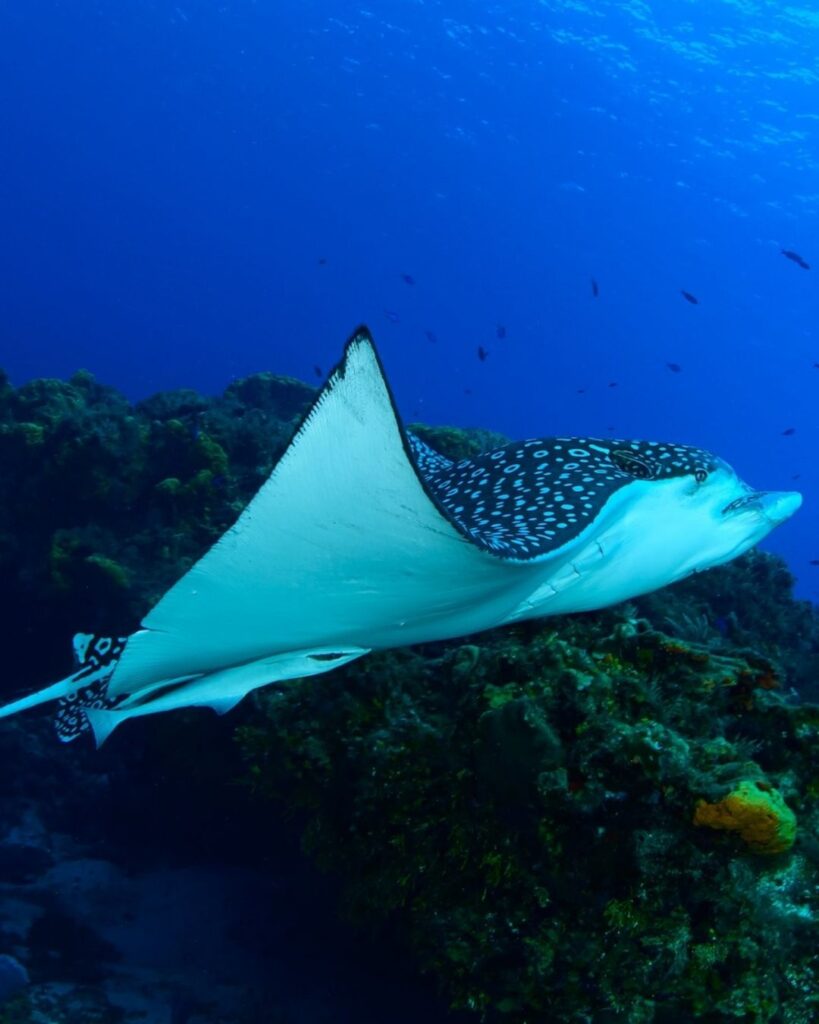
Spotted eagle rays. Eagle rays move through the water column in small groups or solo. They tend to appear mid-water, away from the wall, often during the drift portion of a dive. They do not linger, but they are visible often enough that, depending on the season, you may see one or more on a multi-day trip.
Moray eels. Giant morays and spotted morays are often spotted. It’s helpful to know the right places to look (or to dive with someone who does), but they are a consistent presence in most Cozumel dive sites.
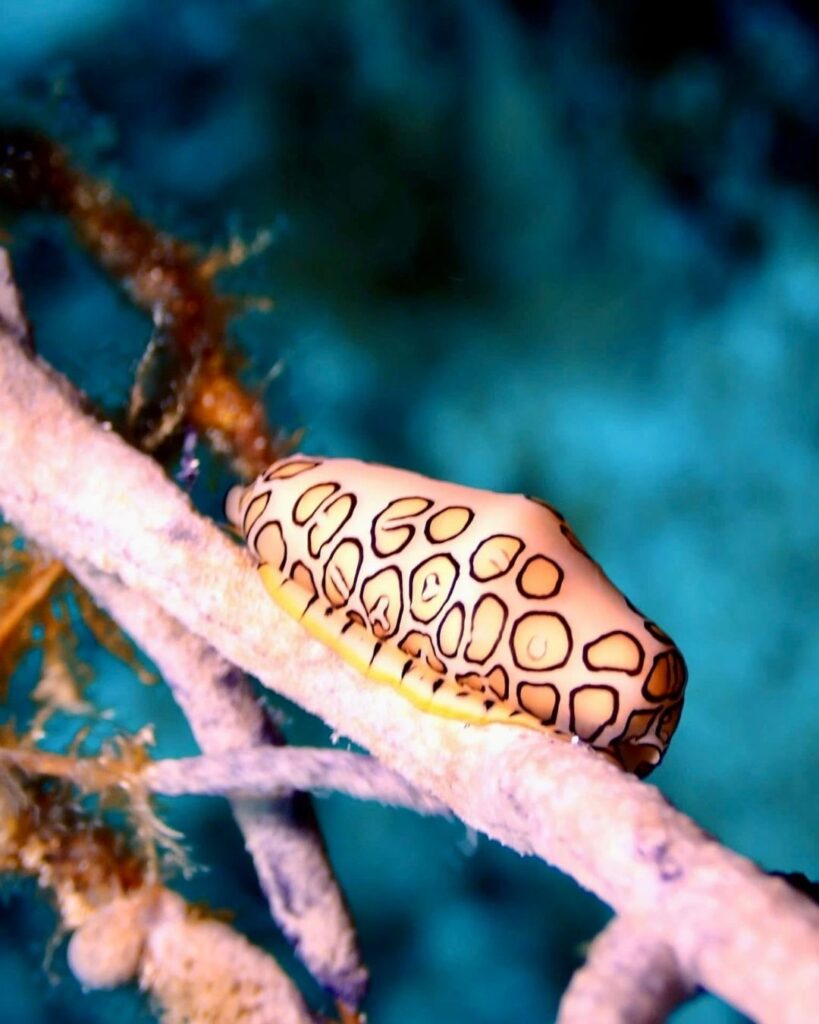
Flamingo tongue snails. One of those species that beginners often miss entirely and experienced divers find fascinating. Bright orange mantle, patterned markings, feeding slowly along a sea fan.
French and queen angelfish. Both species are common on Cozumel’s coral reef. The coloration on a mature queen angelfish is one of the more reliably beautiful things here. Yellow-trimmed, deep blue, and remarkable to look at.
Splendid toadfish. Originally believed to occur nowhere else on Earth and still almost entirely endemic to this reef, it remains one of the few species found only on Cozumel’s reefs.
Seasonal and Occasional Sightings
Spotted eagle rays (peak November through March, present year-round). Eagle rays are year-round residents at Cozumel, but they concentrate most during the winter months. During November through March, you are more likely to see them in groups, moving together over sandy bottoms between reef structures.
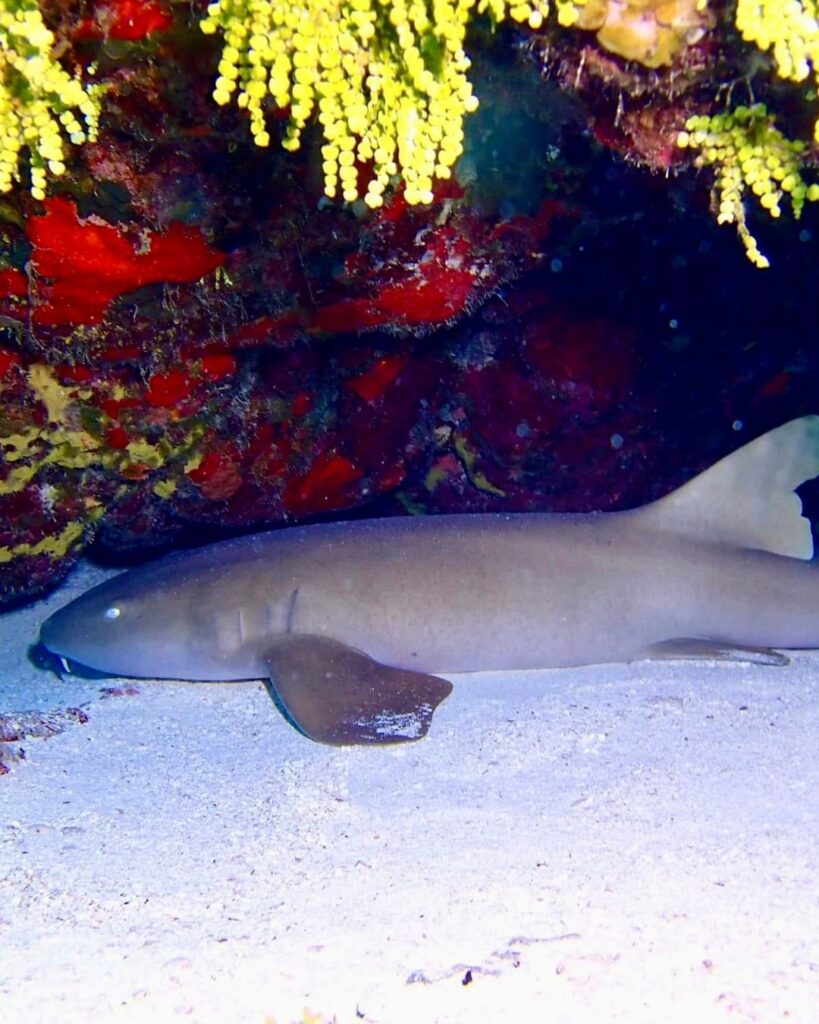
Nurse sharks (year-round). The most commonly seen shark on Cozumel’s reef. They’re bottom dwellers who are typically found resting under ledges or tucked into crevices. Present at most sites regardless of season.
Caribbean reef sharks and blacktip reef sharks (occasional). Spotted periodically at deeper sites like Palancar and Santa Rosa Wall. Both are shy around divers and tend to stay near the drop-off.
A note on nearby waters: Two of the most sought-after encounters in the region happen close to Cozumel but not at the island itself. Bull sharks aggregate at Playa del Carmen, a 45-minute ferry ride away, from November through February, with December and January as the peak months, drawn by pregnant females on their annual migration into these shallow coastal waters. Whale sharks gather off Isla Mujeres, further north, from mid-May through mid-September, with July and August bringing the highest concentrations. Both are reachable as day trips and regularly booked by divers staying on the island. Neither is a Cozumel dive, but both are worth knowing about.
Cozumel Dive Sites and What They Hold
The four sites below come up most often on a week of diving in Cozumel. Each one holds different Cozumel marine life in different conditions. This is the short version.
Palancar Reef is the most recognized site on the island. Large coral buttresses, swim-throughs, and a reef wall drop that holds consistent life across multiple depths. The 40- to 60-foot range is dense with angelfish, Nassau grouper, and the slower reef residents that like structure.
Santa Rosa Wall runs steep with a fast drift. Schools of fish stack up in the current, eagle rays move through mid-water, and large grouper hold position in the wall’s shadow. Better suited to divers comfortable with faster conditions.
Colombia Reef sits deeper than most recreational sites and rewards it. Large coral formations, one of the better sites for turtle density seasonally, and swim-throughs on a scale that most Caribbean reefs cannot match.
Chankanaab is shallower, more protected, and consistently good for flamingo tongue snails. Often used as a second dive of the day or for divers who want a quieter pace.
For a full breakdown of these sites, including conditions, depth profiles, and what to expect on your first dive at each one, “Cozumel Dive Sites Explained: What Each One Actually Feels Like” covers all of it.
How Conditions Change What You Experience
Cozumel’s conditions are unusually consistent, and that consistency directly affects the Cozumel marine life you encounter. Reliable visibility means you’re more likely to spot Cozumel marine life rather than missing it in murk. Stable water temperatures support a reef ecosystem that stays active and healthy year-round rather than cycling through stress periods that push animals off the reef or into deeper water. The current that moves you along the reef is the same current that brings in open-water visitors like eagle rays and keeps the water column rich enough to support the density of life you’ll find here.
Conditions aren’t identical in every season, and understanding what shifts and when helps you make better decisions about timing. For a full breakdown of how Cozumel’s dive conditions work, what stays predictable, and what can change, Cozumel Diving Conditions: What’s Predictable, What Changes, and Why It Matters covers it in detail.
Practical Notes Before You Go
Camera and visibility. Cozumel is consistently strong for underwater photography because visibility is high and light reaches deep. Use a wide-angle lens for reef and wall shots, and a macro lens for the toadfish, flamingo tongues, and reef detail.
Marine park fees. Cozumel’s reef is a federally protected marine park. There is a daily fee for all divers, typically collected through your dive operator at booking or check-in.
Reef contact. The reef here is healthy, specifically because the dive culture takes contact seriously. Buoyancy control matters here, not just for your own experience, but because the reef is worth protecting.
The reef and Cozumel marine life is worth the trip. What you encounter once you are there depends partly on the season, partly on the site, and partly on how settled you feel in the water, but I have no doubt you’ll come away having spotted something remarkable.
If you are looking at a structured trip designed specifically around women’s experience in the water, the Rise & Dive℠ Signature Cozumel Dive Retreat is worth a look.
See you under the surface,

Frequently Asked Questions
What Cozumel marine life can you see scuba diving?
Sea turtles, spotted eagle rays, moray eels, queen and French angelfish, flamingo tongue snails, nurse sharks, and the Cozumel-endemic splendid toadfish are consistent sightings. Caribbean reef sharks and blacktip reef sharks appear occasionally at deeper sites. Nassau grouper, parrotfish, and dense schools of reef fish are present on virtually every dive.
When is the best time to dive to see Cozumel marine life?
Cozumel diving is productive year-round. November through March brings the highest concentrations of spotted eagle rays and the best conditions for seeing nurse sharks and reef sharks at depth. Visibility and water temperature remain favorable year-round, with conditions typically at their calmest from May through August. Divers based in Cozumel during summer can also day-trip to Isla Mujeres for whale sharks and, in winter, to Playa del Carmen for bull sharks, both roughly 45 minutes away.
What makes Cozumel marine life different from other Caribbean dive destinations?
The Mesoamerican Barrier Reef’s ecological health, the protected marine park designation, active since 1996, the consistent drift-diving conditions, and the presence of the splendid toadfish, originally believed to be found nowhere else on Earth and still almost entirely endemic to this reef, make the Cozumel marine life ecosystem its own thing. Reef life is dense, encounters are reliable, and the island’s proximity to Playa del Carmen and Isla Mujeres puts two of the region’s most dramatic seasonal encounters within day-trip range.
Do you need an advanced certification to scuba dive in Cozumel?
Open Water certified divers can access a substantial portion of Cozumel’s best sites. Some sites, particularly those with stronger currents or greater depth, suit divers with drift diving experience or Advanced Open Water certification. Your certification level and how you feel in moving water will both inform which sites make sense.
Is Cozumel good for beginner divers?
Yes, with the right sites. Cozumel has excellent shallow sites with slower current, like Chankanaab, that work well for newer divers. The water clarity and reef structure make it easier to orient underwater than at many other destinations. Stronger-current sites are better saved for after you have some dives behind you.
