
Most descriptions of the Coral Triangle read like a list of superlatives stacked one after another.
- The highest concentration of coral species on Earth.
- More reef fish than anywhere in the ocean.
- An ecosystem so dense with life that it barely seems real.
All of that is accurate. And yet, none of it prepares you for what the experience of diving in the Coral Triangle actually feels like.
What surprises most people about diving in the Coral Triangle is not simply the abundance. It’s the pace. Coral Triangle diving does not reward rushing. It rewards presence. The reefs do not reveal themselves to divers who are moving quickly through the water. They reveal themselves slowly, layer by layer, to divers who have learned to settle and pay attention.
The Philippines sits at the center of this ecosystem, making it one of the most accessible places in the world to experience diving in the Coral Triangle. What makes it compelling is not just what you see. It’s what happens to you as a diver when you spend time inside an environment that is alive.
What Is the Coral Triangle?
The Coral Triangle stretches across parts of Southeast Asia and the western Pacific, encompassing the Philippines, Indonesia, Malaysia, Papua New Guinea, the Solomon Islands, and Timor-Leste. Marine scientists widely recognize it as the most biologically diverse marine region on Earth. Within this region live nearly 800 species of coral and over 2,000 reef fish, along with an extraordinary range of macro life found nowhere else in such concentration.
The Philippines is one of the most important entry points into this ecosystem. Warm, tropical water, accessible dive sites, and varied underwater terrain mean divers can move between wide coral-reef environments and dense macro habitats without traveling far. Two regions anchor this diversity particularly well: the reef slopes and walls of Puerto Galera in the north and the macro-rich sandy environments near Dumaguete in the south.
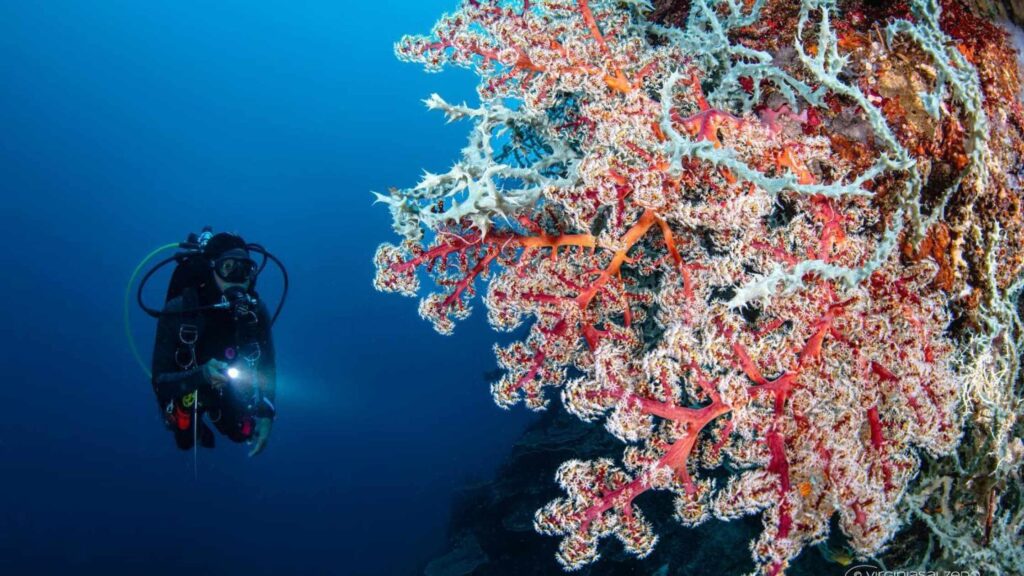
Coral walls and reef slopes in the Coral Triangle create expansive underwater environments filled with constant movement.
What Diving in the Coral Triangle Actually Feels Like
When you first experience diving in the Coral Triangle reef, it’s easy to feel almost overwhelmed. All around is a saturation of color, movement, and structure layered in every direction at once. Fish move through the water column in dense schools. The reef itself is covered in soft corals, sponges, and small organisms that shift and pulse with the current. There is no single thing to focus on because everything is in motion.
In Puerto Galera, that sense of visual saturation is vertical. Coral walls drop away beneath you while the blue water opens up in every direction. Boat rides to dive sites are short, allowing for a relaxed spacing between dives rather than long transits that interrupt the day’s pace.
Dumaguete offers a distinct expression of the Coral Triangle’s biodiversity. The environments there are slower and more deliberate. Sand slopes and rubble fields become habitats for frogfish, nudibranchs, and seahorses so well-camouflaged that a trained guide often has to point them out before your eye learns to find them.
Together, these two environments capture something important about diving in the Coral Triangle: Divers can experience expansive reef scenes and tiny critter encounters on the same trip, and often within a single dive. For underwater photographers and curious divers who want both scale and detail, few destinations in the world offer this range so consistently.
Wide Angle and Macro in the Same Dive
One of the defining qualities of diving in the Coral Triangle is how fluidly the focus of a dive can shift. A single dive might begin with a sea turtle moving across a coral slope, a school of reef fish moving through the mid-water, and soft corals swaying in the current. Minutes later, the same dive narrows to a nudibranch the size of a fingernail resting on a piece of rubble.
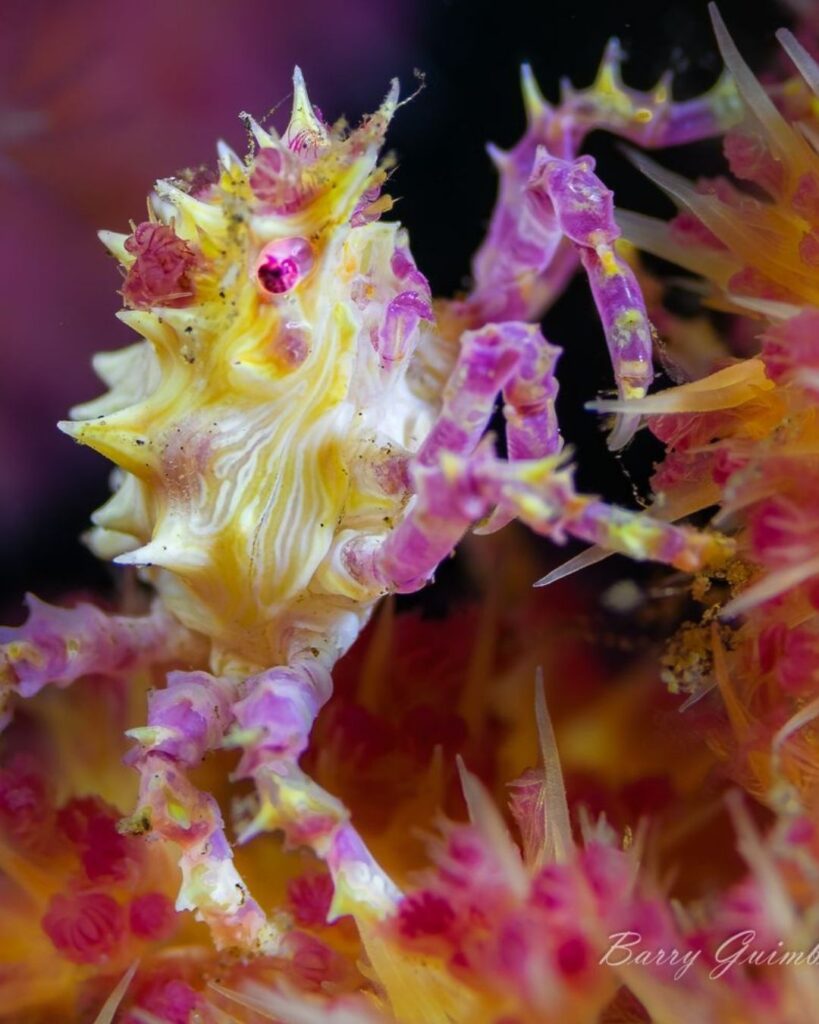
The Coral Triangle rewards patience, revealing intricate macro life like candy crab, seahorses, and frogfish to divers who slow down.
That constant movement between scale and detail does something to how you dive over time. Divers who stay in the Coral Triangle for a week or two begin to hover more and rush less. The reef stops being a backdrop and becomes a system to read. The Coral Triangle’s biodiversity recalibrates diver awareness in ways that are difficult to replicate in less dense environments.
The Shift Many Divers Do Not Expect
At some point while diving in the Coral Triangle, something changes. The reef is still vibrant and active, but many divers find their own pace slowing to match it. And this change of pacing creates a shift in how they dive. They breathe more steadily. They stop scanning and start observing. The nervous system settles in a way that has less to do with effort and more to do with the environment’s effect on attention.
I see this happen consistently when I guide divers through environments like these. Divers arrive eager to see everything at once. But by the end of the trip, they are hovering quietly above the reef, noticing creatures that were invisible to them on day one. That shift is not accidental. It is what happens when a diver stops trying to consume the reef’s sights and statistics and starts to be present within it.
Diving in the Coral Triangle does not do the inner work for you. But it creates the conditions for that work to happen naturally, if you have the structure and the support to let it.
Diving in the Coral Triangle with Structure and Intention
The Rise & Dive Philippines Adventure explores Puerto Galera and the marine ecosystems near Dumaguete as part of a women-centered dive trip, with partners and family members welcome to join. The trip is designed for confidence, connection, and exploration while diving in the Coral Triangle. Small groups, steady pacing, and calm leadership create the space for divers to absorb this environment dive by dive.
The Philippines is one of the most extraordinary places in the world to dive. Come with enough time to let it change how you move through the water.
If you want to connect with a community of women who dive with intention before the trip, the Women In Scuba Empowered (WISE) community is where that conversation lives.
With courage and bubbles,

Continue the Philippines Diving Series:
- Scuba Diving in the Philippines: Why It Ranks Among the Best in the World
- Puerto Galera vs Dumaguete: Which Philippines Dive Destination Fits Your Style
- Macro Diving in the Philippines: Rare Marine Life and Small Critters
Want the full guide? Explore the complete Philippines scuba diving guide here.
Frequently Asked Questions
Is the Philippines part of the Coral Triangle?
Yes. The Philippines sits at the center of the Coral Triangle, a marine region recognized for having the highest concentration of marine biodiversity on Earth. This location makes it one of the most accessible places for divers to experience the extraordinary variety of coral reefs and marine life that define the region.
What marine life can divers see in the Coral Triangle?
Divers regularly encounter sea turtles, reef sharks, frogfish, nudibranchs, seahorses, and schooling reef fish, as well as an extraordinary range of macro species. The combination of coral reef environments, wall dives, and sandy macro habitats allows for both large marine encounters and tiny critter discoveries, often within the same dive.
