
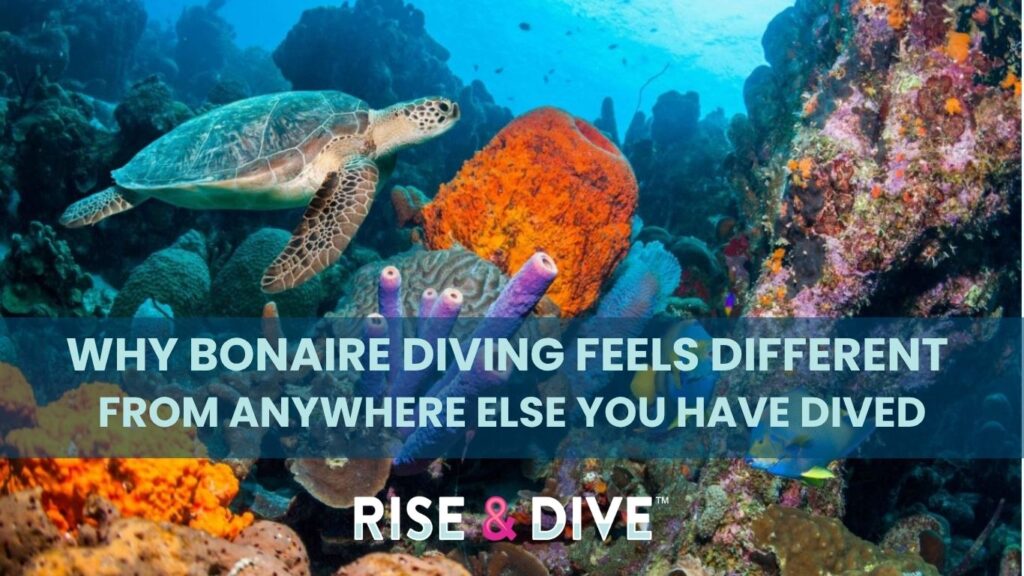
Most women who have a Bonaire diving experience say it feels different from other destinations. They usually credit the reefs, and that’s true; the reefs are genuinely excellent. But that’s also not the whole story.
Something else is happening in a Bonaire diving experience. Something structural. And once you see it, it explains a lot about why the diving there lands the way it does, especially for women who have been navigating dive travel on other people’s terms for years.
What Actually Sets Bonaire Apart
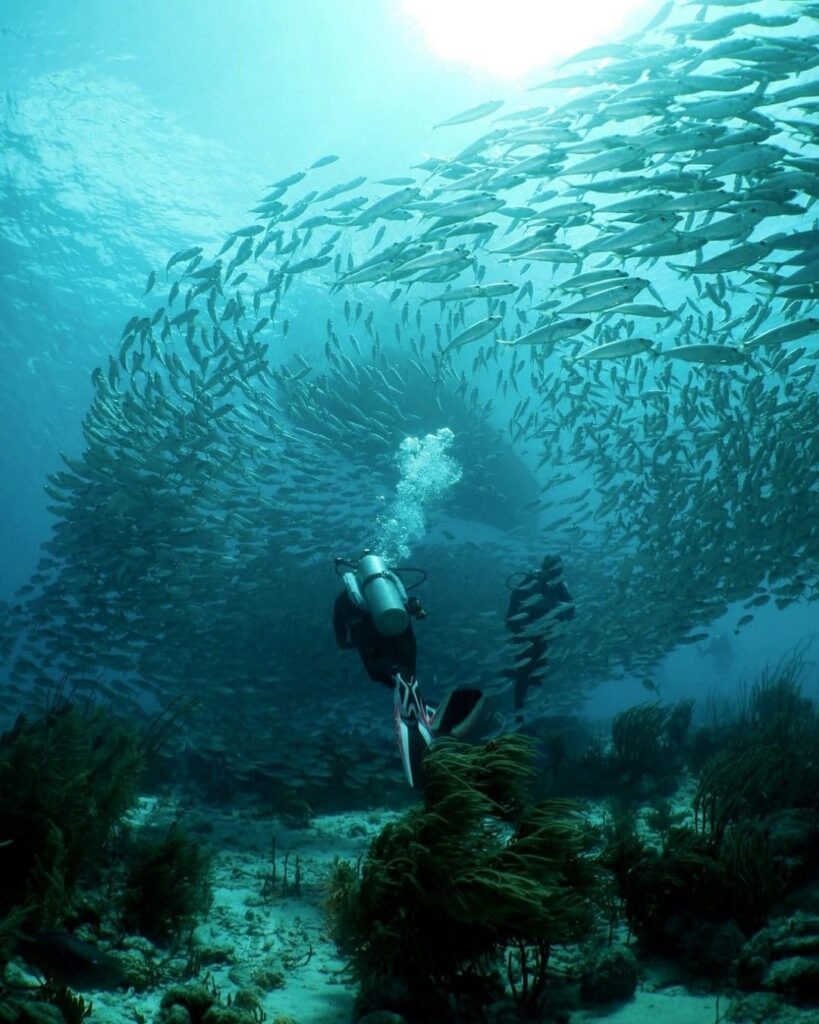
Strong visibility and healthy reefs make marine life encounters in Bonaire immersive and unhurried.
Bonaire is one of the few Caribbean dive destinations where the environment itself removes friction and anxiety rather than adding it. The water’s visibility regularly runs 60 to 100 feet. Water temperature sits between 78 and 82 degrees Fahrenheit year-round. The island sits outside the main hurricane belt, which means consistent conditions from one month to the next. The marine park protections have been in place long enough to matter, so reef health is not just a marketing claim; it’s a daily reality.
The result is a place where you can focus entirely on what is in front of you. Not on managing currents or conditions that change with the weather, not on adjusting your expectations at the surface before you go down. Bonaire is predictable in the best possible way, and that predictability has a specific effect on a diver’s nervous system.
It’s what allows you to stop managing and start noticing.
How the Boat Diving Works in a Bonaire Diving Experience
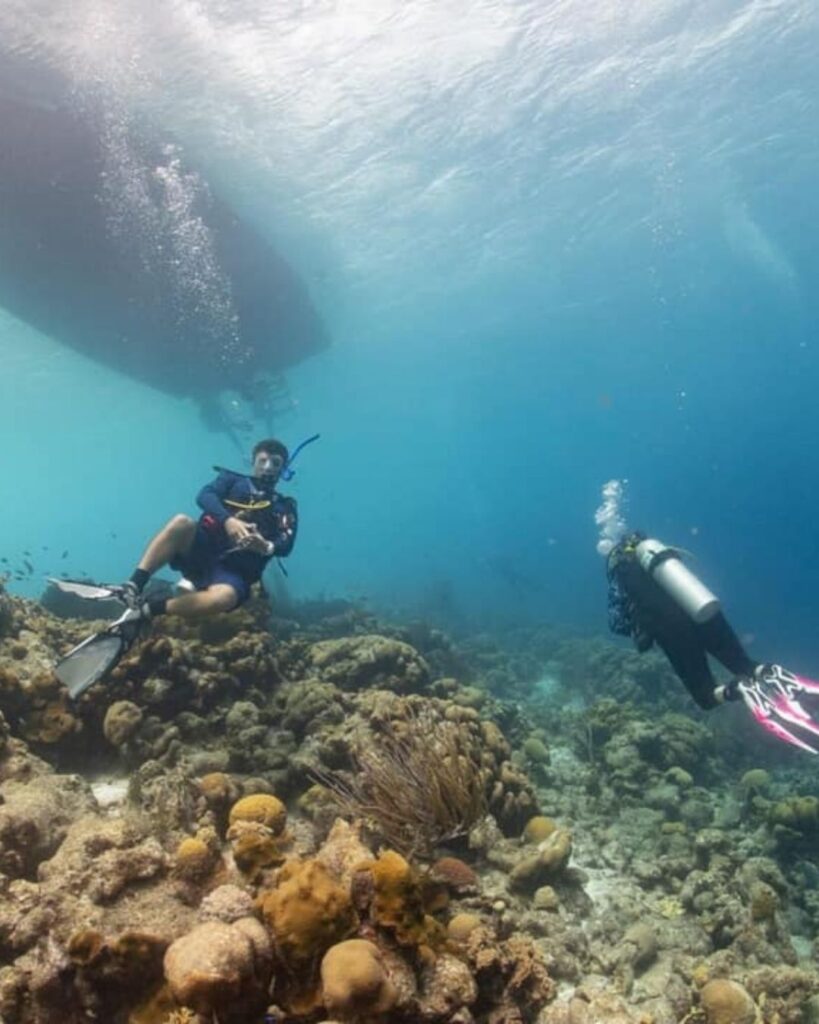
When I bring a group of women to a Bonaire diving experience, we go by boat. That matters because it determines the quality and range of what we dive.
Boat diving in Bonaire gives us access to sites that typical shore entry simply does not reach. Klein Bonaire sits about a kilometer offshore and is home to some of the most pristine reef systems in the Caribbean. The sites around the main island follow the same pattern: protected, healthy, and chosen for the dive, not just for convenience.
Our schedule runs 11 tanks across six days. Day one includes an orientation dive, which is how I read a group quickly and understand who needs what before the week builds. After that, we move as the diving moves. Two dives in the morning, back to the resort, then out again for shore diving on the house reef if the group wants it. Long surface intervals. Meals together. Time to let the dives settle.
That pace is intentional. I am in the water with the group, not watching from the boat. What I am watching for is different depending on the woman and the day. Some people need me close. Others need space to find their rhythm. I pay attention to what’s what, and I adjust.
How a Bonaire Diving Experience Compares to Cozumel
This question comes up often, and it is a fair one. Both destinations have exceptional reef health. Both offer consistent conditions. Both attract experienced divers who want quality over novelty.
The difference lies in the character of the diving and in what it asks of you.
Cozumel is current-driven, wall-heavy, and deliberately paced by the drift. You work with what the water is doing. The Cozumel wall is one of the most recognizable reef systems in the Caribbean, and the drift adds an element of surrender that has its own quality. The water leads. If you want to understand what that feels like, I wrote about it here: Cozumel Drift Diving Explained: Flow and Skill Development.
A Bonaire diving experience offers something different. Depth profiles are forgiving, bottom times are long, and the reef rewards slow, unhurried attention rather than the exhilaration of moving through it. When I choose sites for my groups here, I am choosing for observation, for the kind of diving where you can stop and stay with something that catches your eye. The pace belongs to the diver, not the current.
Both destinations are exceptional. They are not asking for the same thing from you.
What the Reef Actually Does
The marine life in a Bonaire diving experience is not a checklist to breeze through, but rather a whole ecosystem that demands your attention. Hawksbill turtles pass close and require nothing from you except stillness. Eagle rays move through mid-water with a grace that stops you in your tracks. Seahorses anchor to coral in water so clear you almost feel like you are looking at something otherworldly. None of this requires perfect conditions, since they are already the norm.
That consistent clarity across the week, the same visibility dive after dive, the same warm water, the same unhurried reef, does something cumulative. By mid-week, the diver who arrived still rehearsing her skills has usually stopped rehearsing. Instead, she started actually diving. There is a difference, and Bonaire’s particular structure is what makes that shift possible.
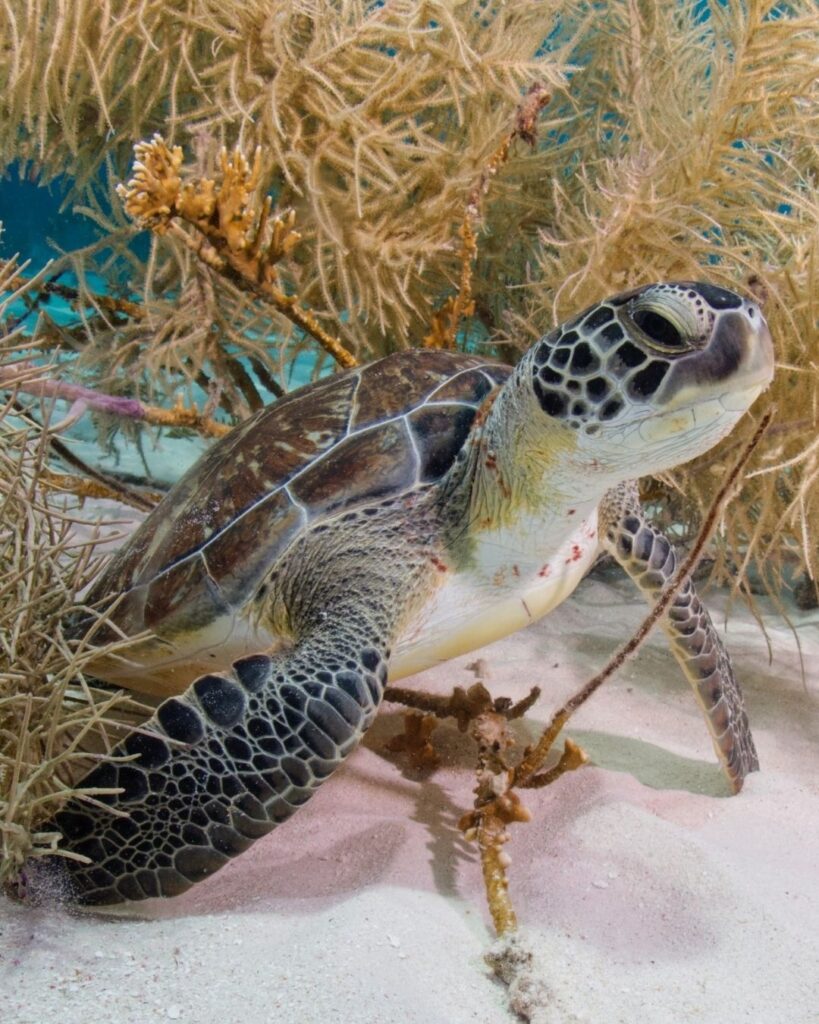
Sea turtles are a common and unhurried presence on Bonaire’s protected reefs.
The Dual-Environment Effect
I choose Bonaire as a dive destination because of how its underwater environment affects the women I bring there. The freedom that exists at depth is not separate from daily life. It is practice for it.
When you spend a week moving at a pace that belongs to you, noticing what’s actually in front of you rather than what you are supposed to notice, making decisions about your dive without waiting for someone else’s signal, that experience doesn’t simply slip away when you climb back onto the boat. It carries over into how you move through your day on land and how you claim space. It’s what allows you to trust your own read of a situation without needing external permission.
I have watched this happen in Bonaire specifically because the environment creates the perfect conditions for it. The reefs are excellent, yes. But what Bonaire actually gives a woman who is ready to receive it is something closer to clarity.
And clarity, once it arrives, tends to stay and permeate across other areas of your life, even above the surface.
Rise & Dive™ dive trips offer small-group boat diving and more. Women who are ready to dive with intention. If it is calling to you, the details and pricing are on the Bonaire trip page. If you want to dive deeper into this work year-round, Women In Scuba Empowered (WISE) is where the conversation lives.
To courage and clarity,

Frequently Asked Questions
What makes a Bonaire diving experience different from other Caribbean destinations?
A Bonaire diving experience combines consistent visibility of 60 to 100 feet, calm water at 78 to 82 degrees Fahrenheit, and marine park protections that have genuinely preserved reef health for decades. The absence of heavy current and the long, forgiving depth profiles make it a place where you can focus entirely on the dive rather than on managing conditions.
How does a Bonaire diving experience compare to Cozumel for diving?
Both offer world-class reef systems with excellent visibility and consistent water temperature. Cozumel is known for its wall diving and current-driven drift dives. Bonaire rewards a slower, more observational pace, with boat access to a wide range of sites, including Klein Bonaire. The choice depends on what kind of diver you are and what you are looking for on a given trip.
Is a Bonaire diving experience good for women who want to build presence and awareness underwater?
Yes. The conditions in Bonaire are consistent enough to remove friction and forgiving enough to create space for genuine attention. Long bottom times, calm water, and healthy reefs mean you are not spending energy managing the environment. That frees something up, and what gets freed tends to matter. It is why I bring my groups here.
What marine life can I expect to see in a Bonaire diving experience?
Hawksbill turtles, eagle rays, reef sharks, seahorses, moray eels, and schooling fish are common. Healthy coral formations and sponge systems run throughout the sites. The marine park protections mean reef health here is consistent, not seasonal or site-dependent.
