Scuba diving can bring up some big feelings–both positive and uncomfortable
When I first started diving, my dive anxiety was very real. It wasn’t something I could just wish away, and it didn’t disappear the moment I entered the water. Even after years of experience, there are still times before a dive when that familiar flutter in my chest shows up. I’ve learned that this isn’t a weakness; it’s simply my nervous system doing its job.
But here’s what diving has taught me: anxiety doesn’t have to be the end of the story. Each time I’ve moved through it, I’ve found a deeper, calmer, braver, and more connected version of myself. Diving has a way of stripping away the noise of everyday life and bringing you face-to-face with your strength. It’s not just about exploring the ocean—it’s about reclaiming your courage, finding your center, and tapping into a sense of purpose that follows you back to shore.
For women in particular, diving can be a powerful act of self-trust, claiming space in a world that often tells us to shrink, and proving to ourselves that we are capable, resilient, and worthy of the adventures we dream about.
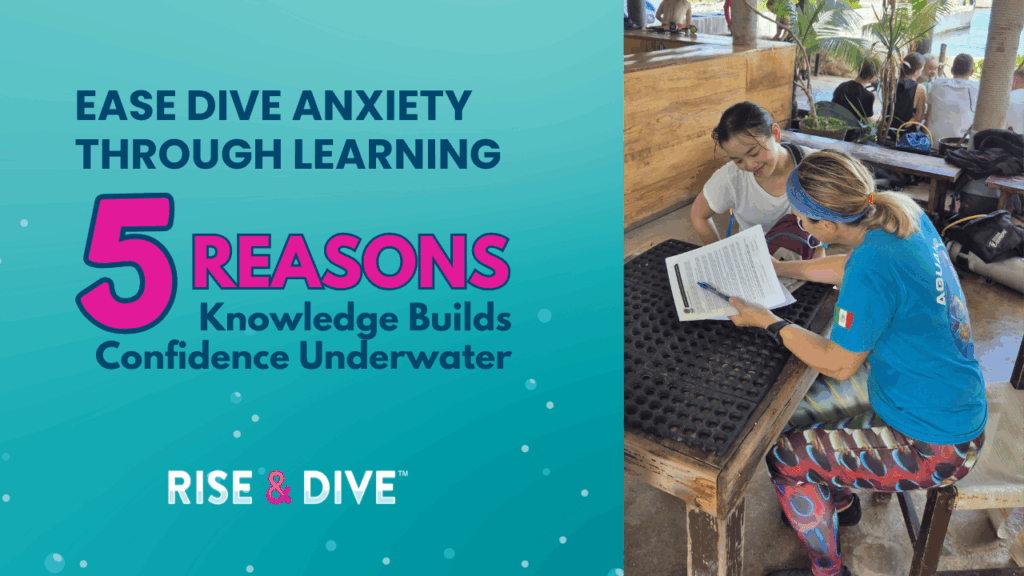
Over the years, both in my journey and with the divers I work with, I’ve seen one truth again and again: knowledge is power underwater. Whether it’s through training, experience, or simply learning at your own pace, the more you understand, the more your confidence grows and your fear loses its grip.
Here’s why learning is one of the most powerful tools you have to ease dive anxiety:
1. Learning Gives Your Brain Something To Focus on Besides Fear
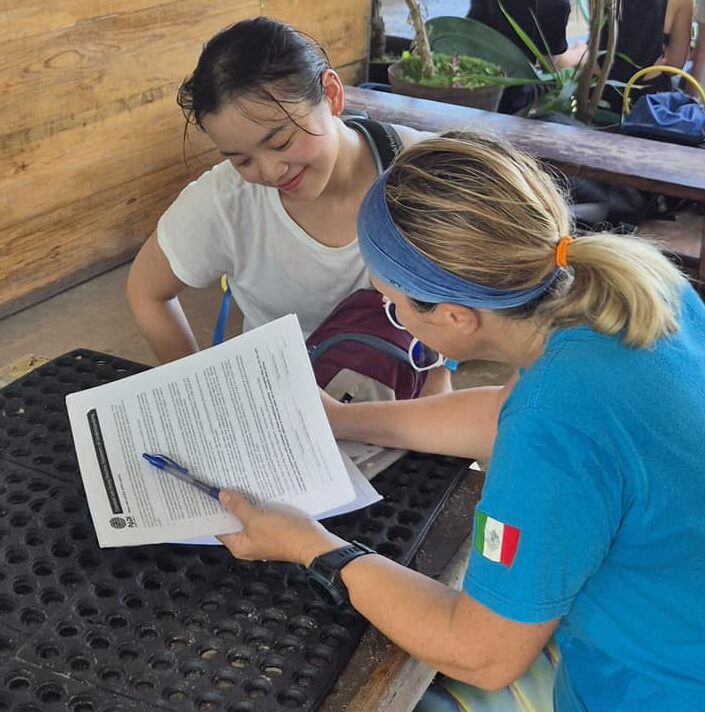
An anxious brain loves to spiral. When you feel uncertain or unsafe, your nervous system scans for danger, and fear can go into overdrive. However, when you’re actively learning, focusing on a new skill, absorbing information, or refining your technique, you redirect that mental energy into something productive and empowering. You stop looping through worst-case scenarios and start focusing on what’s happening in your body and your environment.
2. Training Builds Muscle Memory That Overrides Panic
The more you practice and move your body through the correct motions, the more your body becomes accustomed to what to do. Even when your brain is overwhelmed, that’s the power of muscle memory. Skills like mask clearing, proper ascents, or buoyancy control become second nature. So if something goes wrong, you’ve already built the ability to stay calm and respond instead of react. You can trust that your body knows what to do.
3. Education Builds Trust in Yourself, Your Gear, and the Dive Process
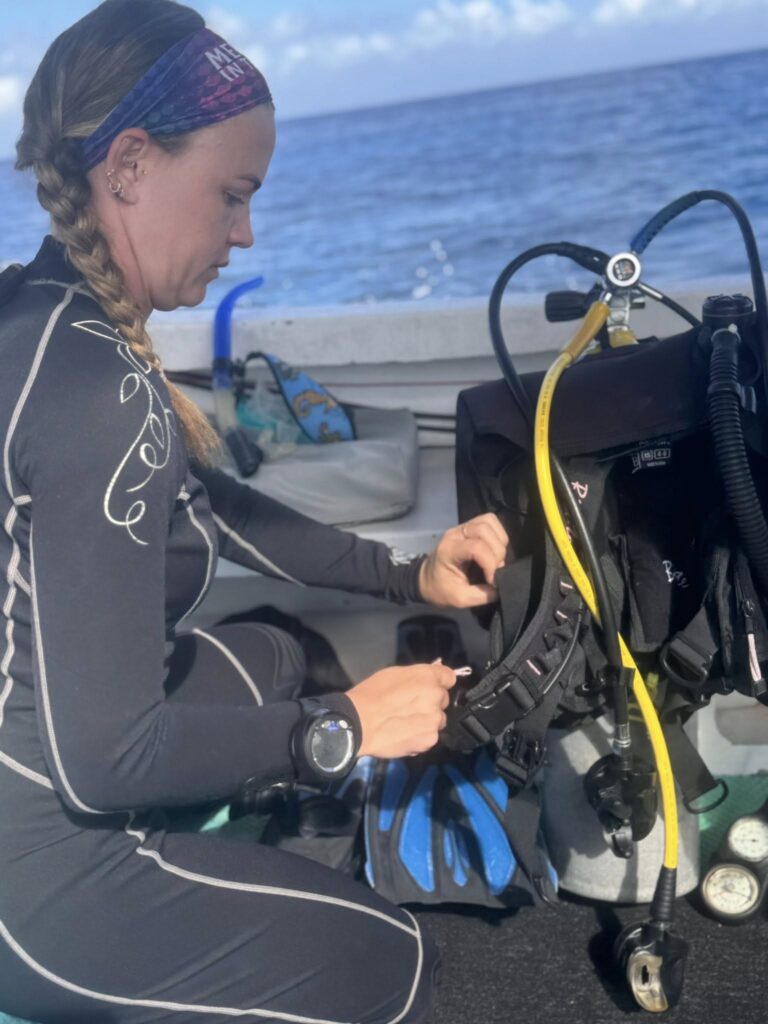
Fear often shows up when we don’t feel safe or prepared. Learning how your equipment works,
understanding dive physics, and building awareness through courses like Peak Performance Buoyancy or Rescue Diver dramatically increases your self-trust. Confidence naturally follows when you know what’s happening and why, and you’ve practiced what to do in different situations. Knowing you have a plan for when something goes wrong gives your anxiety less to feed off of and makes you less afraid of the unknown.
4. Structured Learning Supports Your Nervous System
As someone trained in trauma-informed care, I’ve seen how powerful it can be when divers feel not just physically but emotionally safe. A structured learning process with a calm, supportive instructor can keep you in your “window of tolerance,” where your brain and body are calm, regulated, and open to growth. Whether it’s private coaching, an online course, joining a community like Women In Scuba Empowered (WISE), or just learning to slow down the pace (yoga, meditation, somatics), learning in a way that respects your comfort level can create lasting change that enhances your enjoyment of diving for years to come
5. Learning Reconnects You to Your “Why”
When fear is loud, it’s easy to forget why you started diving in the first place. Learning and growing as a diver reconnects you to the joy, the awe, the freedom that brought you to diving in the first place. Whether you’re training for a certification, mastering a new technique, or finally feeling comfortable underwater, education keeps the spark alive and gives your journey meaning. Remember, it’s by challenging yourself that you keep things exciting and worthwhile.
Every step of learning adds to your confidence underwater. The more you grow, the more diving becomes not just something you do, but part of who you are. If you’re ready to keep building that trust in yourself and your skills, here are a few ways to stay connected and supported:
🐠 Follow me on Instagram @Dive_With_Nicole
📩 Get free resources & dive tips straight to your inbox
💬 Join my private Facebook group for empowering women through scuba diving
🧭 Explore my Coaching & Dive Services
Keep Rising,